
Bayou La Batre Mother Denied Bond After Fentanyl Trafficking Arrest in Mobile County
A Bayou La Batre mother was denied bond after Mobile County deputies found nearly 38 grams of fentanyl in her car, charging her with trafficking.
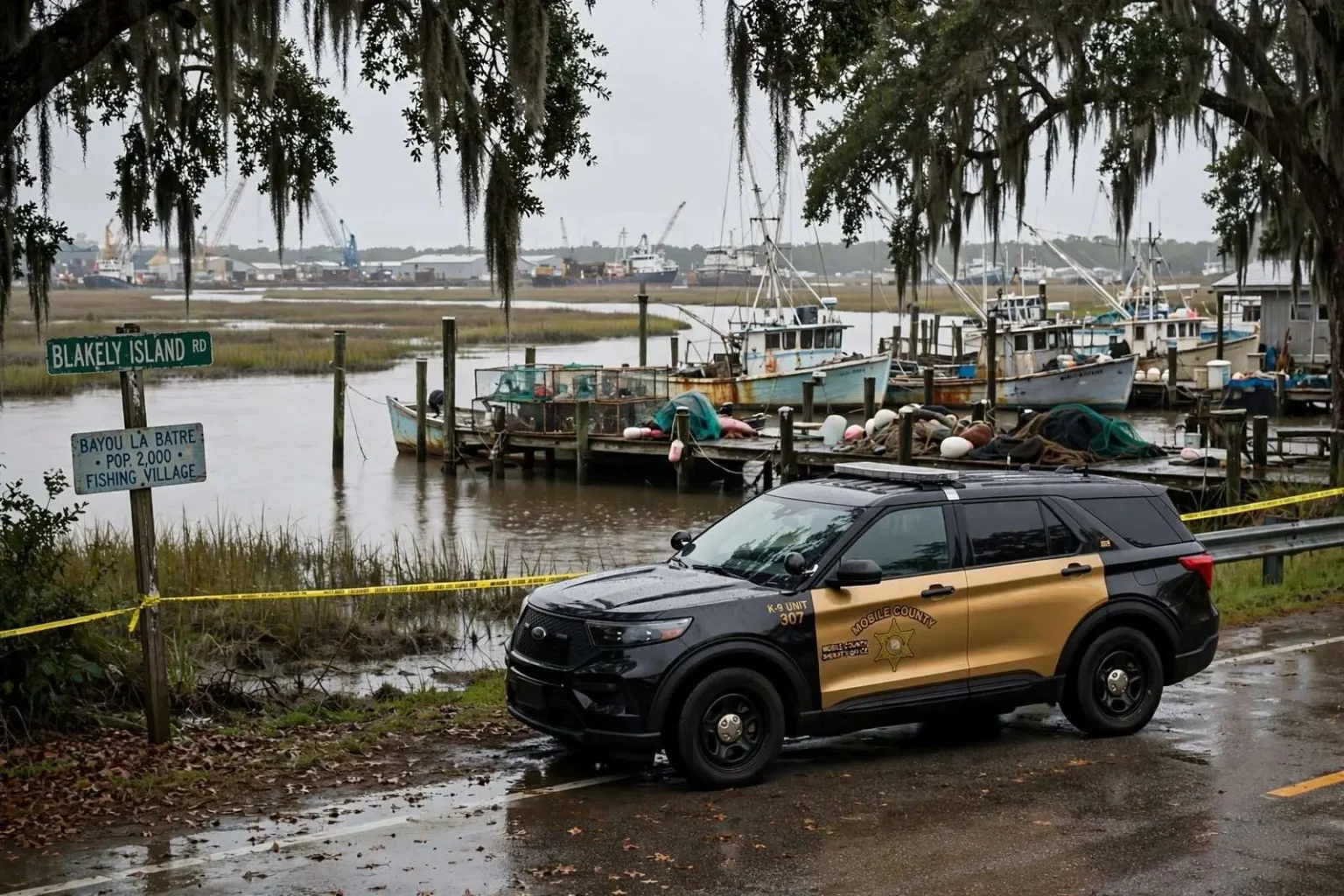
A Bayou La Batre mother remained behind bars Friday after a judge denied bond following her arrest on fentanyl trafficking and chemical endangerment charges, according to the Mobile County Sheriff’s Office.
Traffic Stop to Arrest
Sheriff’s officials said deputies received a tip about Alexis Alexander and took her into custody without incident in her driveway, after she had dropped her children off at school. She was charged with trafficking fentanyl, possession of drug paraphernalia, and two counts of chemical endangerment of a child.
The charges together paint a picture investigators describe as increasingly common: a trafficking quantity of a lethal synthetic opioid, and children whose daily lives unfolded in the same space where it was stored. Chemical endangerment laws in Alabama were written to address exactly that overlap, treating a child’s exposure to drugs or drug activity in the home as a crime distinct from the drug offenses themselves, on the theory that children cannot remove themselves from the danger and the law must do it for them.
Bayou La Batre, the small fishing community on Mobile County’s southern shoreline known for its seafood fleet and shipyards, is far from the state’s population centers but not from the opioid trade’s reach — a fact narcotics deputies across the county say they confront in every corner of their jurisdiction, from downtown Mobile to the bayou.
According to narcotics Sgt. Matthew Peak of the Mobile County Sheriff’s Office, Alexander was found with nearly 38 grams of fentanyl in her car, along with $1,000 in cash — an amount far above the threshold that now carries a potential life sentence under Alabama law.
To put the quantity in perspective, 38 grams of fentanyl represents a potentially enormous number of individual doses. Fentanyl is active in microgram amounts, and two milligrams is generally considered a potentially lethal dose, meaning the quantity recovered in the traffic-stop arrest could theoretically contain thousands of doses. The cash found alongside it is the kind of evidence investigators use to argue street-level distribution rather than personal use.
Alabama’s Tougher Fentanyl Law
The arrest came just months after House Bill 1, Alabama’s tougher fentanyl trafficking statute, took effect on July 1, 2023.
Under the law, anyone convicted of selling, manufacturing, or delivering between one and two grams of fentanyl faces a mandatory minimum of three years in prison, while amounts of eight grams or more can bring a mandatory life sentence and a minimum fine of $750,000.
The legislation’s tiered structure reflects how lawmakers rethought the state’s drug schedule for the fentanyl era. The old thresholds for trafficking were written around marijuana and cocaine — bulk quantities measured in kilograms or pounds — and a drug that kills in milligrams sailed under them. House Bill 1 lowered the trafficking trigger for fentanyl to amounts measured in single grams, deliberately recalibrating the law so that quantities capable of killing entire communities of users now carry trafficking penalties rather than simple possession ones. The mandatory life provision at eight grams, and the $750,000 minimum fine, were framed by supporters as deterrents aimed at distributors, not users.
“A very aggressive law to show that we’re not playing when it comes to fentanyl,” Peak said at the time.
Law enforcement leaders across Alabama lobbied for the statute as fentanyl deaths climbed, and its passage was one of the Alabama Legislature’s most consequential public safety actions in recent sessions. Prosecutors note that the mandatory minimums remove the discretion that once allowed large-quantity fentanyl cases to be resolved with short sentences, and judges in Mobile County have already applied the law’s tiers in sentencings since its July 2023 effective date.
Gulf Coast Drug Corridor
Peak noted that the sheriff’s office makes multiple arrests like this each month, pointing to Mobile’s position along Interstates 10 and 65 as a heavily traveled corridor for drug trafficking across the Gulf Coast region.
Geography explains much of the enforcement picture. Interstate 10 runs east-west across the entire Gulf Coast, linking the border ports of entry through Mobile to the Florida panhandle and beyond, while Interstate 65 runs north from Mobile through Montgomery to Huntsville and the Midwest. The two interstates converge in Mobile County, making the area a natural routing point for traffickers moving product between Gulf ports, Mexican cartel supply chains and markets across the Southeast. Mobile’s port — one of the nation’s busiest on the Gulf — adds shipping traffic that law enforcement monitors alongside the highway flow.
Deputies say the result is that Mobile County sits at both a destination and a crossroads: drugs moving through the region are sold locally, and local arrests regularly uncover quantities suggesting supply intended for distribution far beyond a single neighborhood.
What Chemical Endangerment Means
The two chemical endangerment counts attached to the case carry their own serious penalties under Alabama law, which was among the first states in the nation to criminalize exposing children to drug production or storage environments. The statute covers situations where a child is present in proximity to controlled substances or the paraphernalia of their manufacture and distribution, and prosecutors may charge it as a felony whose severity rises with the drug involved. Fentanyl’s potency makes the exposure question especially acute, since even accidental contact with the powder in a car or home poses a genuine poisoning risk to a child, who cannot recognize or report the danger.
Child welfare involvement typically accompanies such arrests. When a parent is taken into custody on chemical endangerment charges, the children involved are usually placed with relatives or into state care while the case proceeds, and the criminal case proceeds on a parallel track with dependency proceedings in juvenile court. Advocates for affected families note that the outcome — for both parent and children — often hinges on what happens in the months after arrest, with treatment programs and completion of court requirements playing a significant role in eventual reunification.
The Tip Line Workflow
The arrest also illustrated the routine mechanics of modern narcotics enforcement. Investigations increasingly begin with tips — from neighbors, from other arrests, from family members — and deputies work them through surveillance, records checks and traffic stops like the one that ended in this driveway arrest. The decision to arrest without incident, after the school drop-off, reflects both planning and an effort to keep children out of the encounter entirely, something deputies say they try to arrange whenever the information allows it.
Sheriff’s officials encourage residents who observe suspected drug activity to report it, noting that tips — even fragmentary ones — frequently provide the thread that pulls together a case. In a county of more than 400,000 residents spread from the city limits of Mobile to the bayou’s docks, that community-sourced flow of information remains the backbone of street-level enforcement.
A Community Watching the Opioid Toll
Behind the legal architecture of the case sits the reason the law exists: fentanyl has transformed overdose death rates across Alabama and the nation, appearing pressed into counterfeit pills, mixed into other drugs without users’ knowledge, and sold in pure powder form. First responders in Mobile County carry naloxone for overdoses, schools run awareness programs for students, and the medical community continues to treat addiction as a disease even as law enforcement targets the supply chain. Arrests like this one sit at the intersection of those efforts — the enforcement end of a problem that families, courts, treatment providers and deputies across the county are all working from different directions.
Alexander remained in the Mobile County Metro Jail as the case moved toward the courts, where the quantity alleged — nearly 38 grams — places the charges squarely within the new statute’s most serious tier, with the outcome to be determined by prosecutors and a judge in the months ahead.
Fentanyl and the Fishing Village
Bayou La Batre’s place in the story is worth a moment of its own. The community of roughly 2,000 residents built its life around the water — shrimp boats, oyster reefs and the shipyards that repair the fleet — and generations of families have worked the same docks their grandparents did. But small coastal towns sit inside the same supply routes as big cities, and deputies say the drug trade does not respect municipal boundaries. The town has weathered hurricanes, the BP oil spill’s devastation of its seafood waters and economic cycles in the fishing industry, and residents have watched the opioid era touch their community the way it has touched every corner of the Gulf Coast.
Enforcement data across the region reflect the same pattern: mobile trafficking networks use the highways and ports, while the retail end of the trade operates in every jurisdiction — urban, suburban and rural alike. That is why the sheriff’s office describes its narcotics caseload as county-wide, and why an arrest in Bayou La Batre is described not as an anomaly but as a routine data point in a much larger enforcement picture.
The Courtroom Ahead
What follows for the defendant is the machinery of the new law in motion. Prosecutors will present the case to a grand jury, the trafficking count will be weighed against the gram thresholds of House Bill 1, and the chemical endangerment counts will proceed as separate felonies. Bond, denied at the initial stage, can be revisited later by motion, but judges handling fentanyl trafficking cases since the statute’s passage have generally set the bar high where quantities in the statute’s top tier are alleged, citing both the potential sentence and the community’s stake in the outcome.
For the children at the center of the chemical endangerment counts, the system’s attention now shifts from the courtroom to the question of custody and care, where relatives and the Department of Human Resources will determine where they live while the case proceeds — a reminder, advocates say, that every one of these arrests is also a family’s crisis, whatever the outcome of the charges.


