Bayou La Batre Under Nighttime Curfew Tuesday and Wednesday as Hurricane Sally Nears the Coast
Bayou La Batre's mayor ordered a curfew for Tuesday and Wednesday nights, 8 p.m. to 6 a.m., as Hurricane Sally threatened the Alabama Gulf Coast.
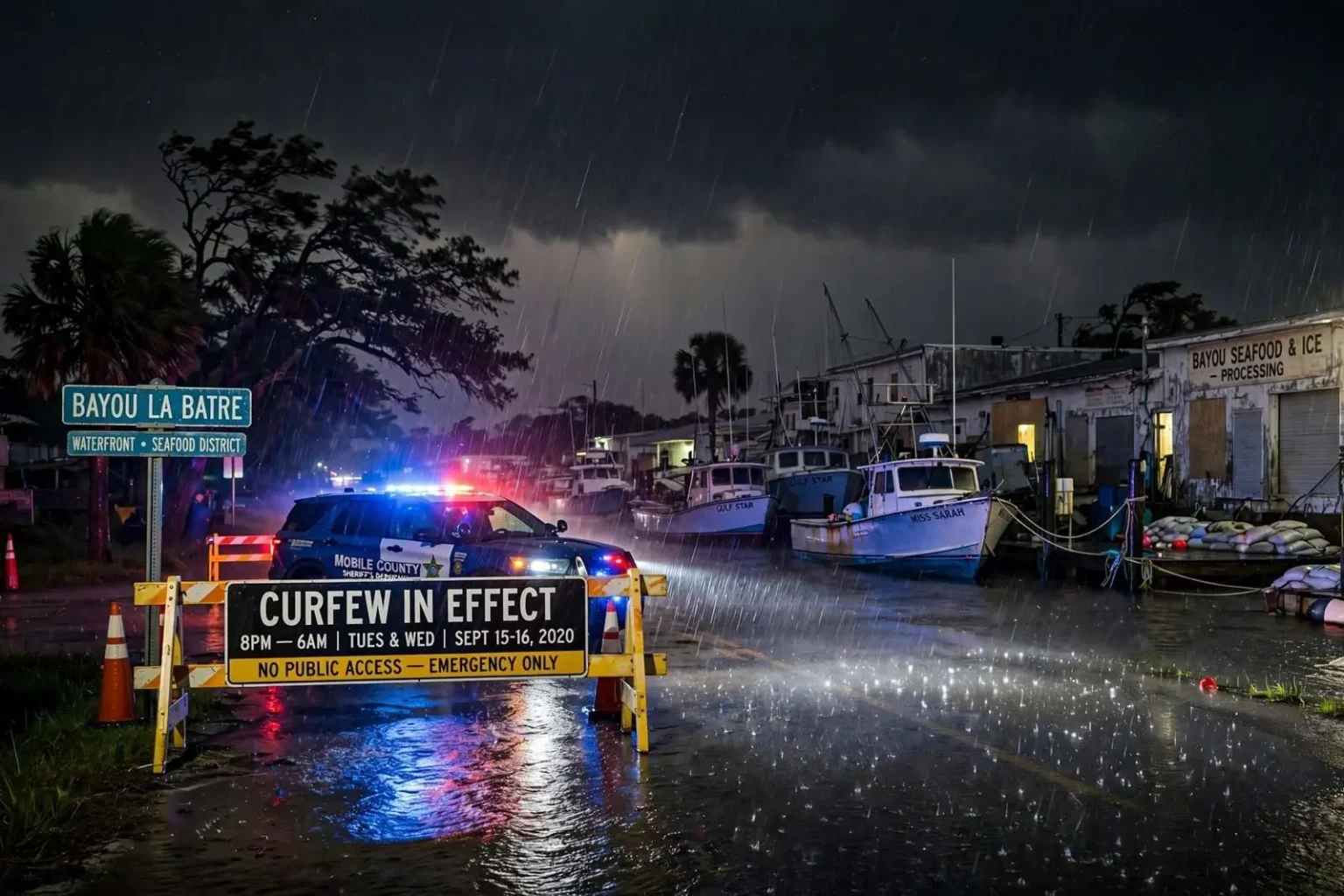
BAYOU LA BATRE, Ala. — Bayou La Batre city leaders have imposed a nighttime curfew as Hurricane Sally threatened the Alabama Gulf Coast with heavy rain, storm surge, and damaging winds. The order put the small seafood community on a wartime-style footing ahead of one of the most serious storms to target the region in years, with officials determined that no one should be on the streets when the worst of the weather arrives.
Mayor Downey enacted the curfew for Tuesday, Sept. 15, and Wednesday, Sept. 16, 2020. Under the order, residents must remain off the streets from 8 p.m. until 6 a.m. each night while the storm passes through the area. The hours cover the darkest, most dangerous stretch of each night — the window when flooding is hardest to see, winds are hardest to judge, and emergency help is hardest to deliver. Residents who work the seafood industry that anchors the town were urged to secure boats, docks, and gear well before the curfew took effect each evening.
The curfew is a standard emergency measure for coastal communities ahead of a hurricane landfall. It keeps drivers off flooded and debris-strewn roads in the dark, allows crews to work safely, and helps police and first responders concentrate on emergencies during the worst of the weather. Curfews also deter the looting and opportunistic crime that can accompany power outages and emptied neighborhoods, and they give law enforcement a clear legal basis to stop and turn back anyone who does not belong in an evacuation zone after dark.
Why Bayou La Batre acts early
The curfew was one piece of a wider mobilization across south Mobile County as Sally’s forecast sharpened. Neighboring jurisdictions issued their own emergency measures, the county’s emergency management agency coordinated sheltering and road closures, and coastal communities from Coden to Dauphin Island braced for the surge that forecasters said would accompany the storm’s slow landfall. In towns built on the water, the days before landfall followed a familiar choreography: fuel runs, hardware-store lines, boarded windows, and boat owners making hard calculations about what to move and what to leave.
Sally’s slow movement made those preparations harder rather than easier. A fast storm arrives and leaves; a slow one lingers over the warm Gulf waters, strengthening while residents watch the radar and wait. That waiting period taxes supplies, patience, and attention, and it forces officials to make decisions — curfews among them — before the last pieces of the forecast are certain. Mayor Downey’s decision to impose the curfew for two full nights reflected that reality: the city could not know exactly when Sally’s worst conditions would pass over the bayou, so the order covered the whole window when the community might be in the dark.
Bayou La Batre, a small fishing village on the west side of Mobile County, is among the most flood-prone communities on the Alabama coast. Sitting at sea level along the Mississippi Sound, the city suffered catastrophic damage from Hurricanes Katrina and Ivan in past decades, and officials there tend to act early when storms approach. The town’s entire geography argues for caution: canals and bayous thread through the community, working boats line its waterfront, and elevation offers almost no buffer between a surge and the streets where people live.
The memory of those earlier storms shapes every preparation. Katrina’s surge in 2005 destroyed boats, docks, and processing houses across the seafood industry that has defined Bayou La Batre for generations, and Ivan’s strike in 2004 delivered its own punishing lesson about the Gulf’s power. City leaders learned from both that the hours before landfall are the cheapest time to prevent loss — that a curfew, an evacuation order, or a closed road costs little compared with a water rescue or a life lost in floodwater.
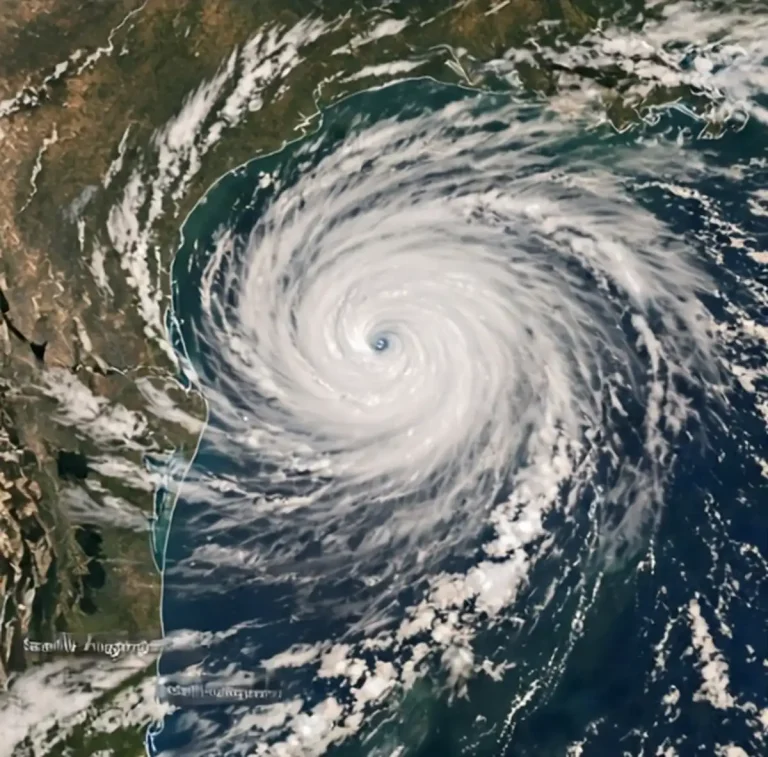
Sally’s approach put all of that institutional memory to work. The storm’s slow movement meant the area would face not a brief burst of wind but a prolonged siege of rain bands, with the potential for extreme rainfall totals that could flood streets and homes even well inland of the surge. Forecasters warned that Sally could produce dangerous storm surge along the Mississippi Sound, where Bayou La Batre, Coden, and their neighboring bayou communities sit fully exposed to the water.
A vulnerable working waterfront
For a working waterfront town, a hurricane is an economic threat as much as a physical one. Bayou La Batre’s fleet — shrimp boats, oyster boats, and processing operations that supply seafood markets across the region — represents both the town’s livelihood and its identity, and each boat that rides out a storm at the dock carries the risk of sinking, breaking loose, or being thrown against the seawall. Ahead of Sally’s arrival, harbor crews and boat owners moved vessels where they could and doubled up moorings where they could not, all under the pressure of a timeline that shortened as the storm crept north. The boats that anchor the town’s famous seafood industry have been destroyed and replaced so many times over the decades that the fleet’s own history reads like a record of Gulf storms.
Processing plants, ice houses, and docks sit directly on the water at sea level — precisely where storm surge does its worst damage. Rebuilding after a major storm takes years and depends heavily on federal disaster assistance, which is why the town’s leadership treats every warning with such seriousness. A single flooded plant or a destroyed dock can ripple through the local economy for seasons, costing processing jobs, cutting landing volumes, and pushing buyers toward suppliers in other ports while Bayou La Batre recovers.
County and state emergency officials, meanwhile, urged residents across the flood-prone coastal zones to treat the warnings seriously: never drive through flooded roads, keep emergency kits and fuel on hand, and check on elderly neighbors before conditions deteriorated. Those messages, repeated at every briefing, form the safety net beneath the formal orders like Bayou La Batre’s curfew.
Sally comes ashore
Sally ultimately came ashore near Gulf Shores on Sept. 16, 2020, as a Category 2 hurricane, pushing significant storm surge into bayou communities like Bayou La Batre and Coden. The landfall, on the storm’s slow northeast crawl, put the Alabama coast on the surge side of the storm and validated the precautions taken across Mobile County — including the curfew that kept Bayou La Batre’s streets empty on the very night the water pushed inland. Water surged into low-lying streets and properties along the Sound, and the communities that had enacted curfews and evacuation orders spent the day after landfall assessing flooding, clearing roads, and accounting for residents.
The slow pace of the storm magnified the rainfall problem. Bands of rain wrapped around Sally’s center for hours on end, dropping totals measured in feet rather than inches across parts of the Panhandle and south Alabama, swelling rivers and bayous and turning streets into canals far from the immediate coast. For emergency managers, Sally was a reminder that wind category alone does not describe a hurricane’s threat — water, in surge and in rain, has become the deadliest dimension of modern Gulf storms.
What the curfew meant for residents
For residents, the curfew order carried practical instructions: be home before 8 p.m., stay off the roads until 6 a.m., and leave the streets to first responders. The measure is enforceable — police can stop, question, and cite violators — but its primary function is protective rather than punitive. In a town where many families have lived through Ivan and Katrina, compliance was less a legal question than a matter of hard-earned experience. Generators would hum behind locked doors, boats would knock at their moorings, and the only headlights on the roads would belong to patrol cars and utility crews checking the damage as it happened.
The curfew also complemented the broader emergency posture across Mobile County as Sally approached. Schools and government offices closed, shelters opened inland, and officials urged residents in low-lying and mobile-home communities to move to safer ground before the weather deteriorated. Along the waterfront, the seafood operations that power the local economy shut down and secured their facilities, sending the message that the storm was being treated with the seriousness its forecast deserved.
By the time Sally cleared the region, the value of those early decisions was visible in the contrast between preparedness and surprise. Flooding was real and damage was significant in the bayou communities — the surge saw to that — but the town entered the storm with its people off the streets at night, its responders positioned, and its most dangerous hours covered by an order designed for exactly the conditions Sally delivered. For Bayou La Batre, a community that has rebuilt before, the curfew was one more chapter in the enduring work of living at sea level on the Gulf of Mexico: watch the storm, prepare early, protect the people, and rebuild what the water takes.