Blacktip Sharks: Common Visitors to Gulf Coast Beaches
Blacktip sharks are one of the most common shark species along the Gulf Coast, growing to five to six feet and migrating along Alabama beaches.
The Gulf’s most familiar shark
Blacktip sharks are one of the most common shark species found along the Gulf Coast, according to marine experts. For all the attention that great whites and bull sharks attract, the shark most likely to share the water with swimmers, anglers and surfers along Alabama’s beaches is the sleek blacktip, a coastal species that spends its summers patrolling the surf zone in numbers no other large shark matches locally. Most beachgoers who see a fin slicing along the first sandbar are looking at a blacktip, whether they know it or not.
Dr. Sean Powers, director of the University of South Alabama School of Marine and Environmental Sciences and senior marine scientist at the Dauphin Island Sea Lab, says blacktip sharks are primarily seen along the beach in summer months. “If they’re fishing, they might hook one,” Powers said. “But they also occur in immense schools. All sharks will migrate along the beach in Orange Beach and Gulf Shores.” The image of sharks moving in immense schools along the beach runs against the common picture of the solitary hunter, but coastal sharks like blacktips are frequently social, and the warm months bring them into the very waters where people swim.
Power’s dual role — leading marine programs at the University of South Alabama while serving as a senior scientist at the Dauphin Island Sea Lab — places him at the center of shark research on the Alabama coast. The Sea Lab, on the eastern end of Dauphin Island, has anchored marine science in the region for decades, and its researchers conduct the surveys, tagging work and fisheries studies that inform what is known about the Gulf’s shark populations. When experts speak about the sharks of Orange Beach and Gulf Shores, the underlying data usually traces back to that research community.
Size, shape and diet
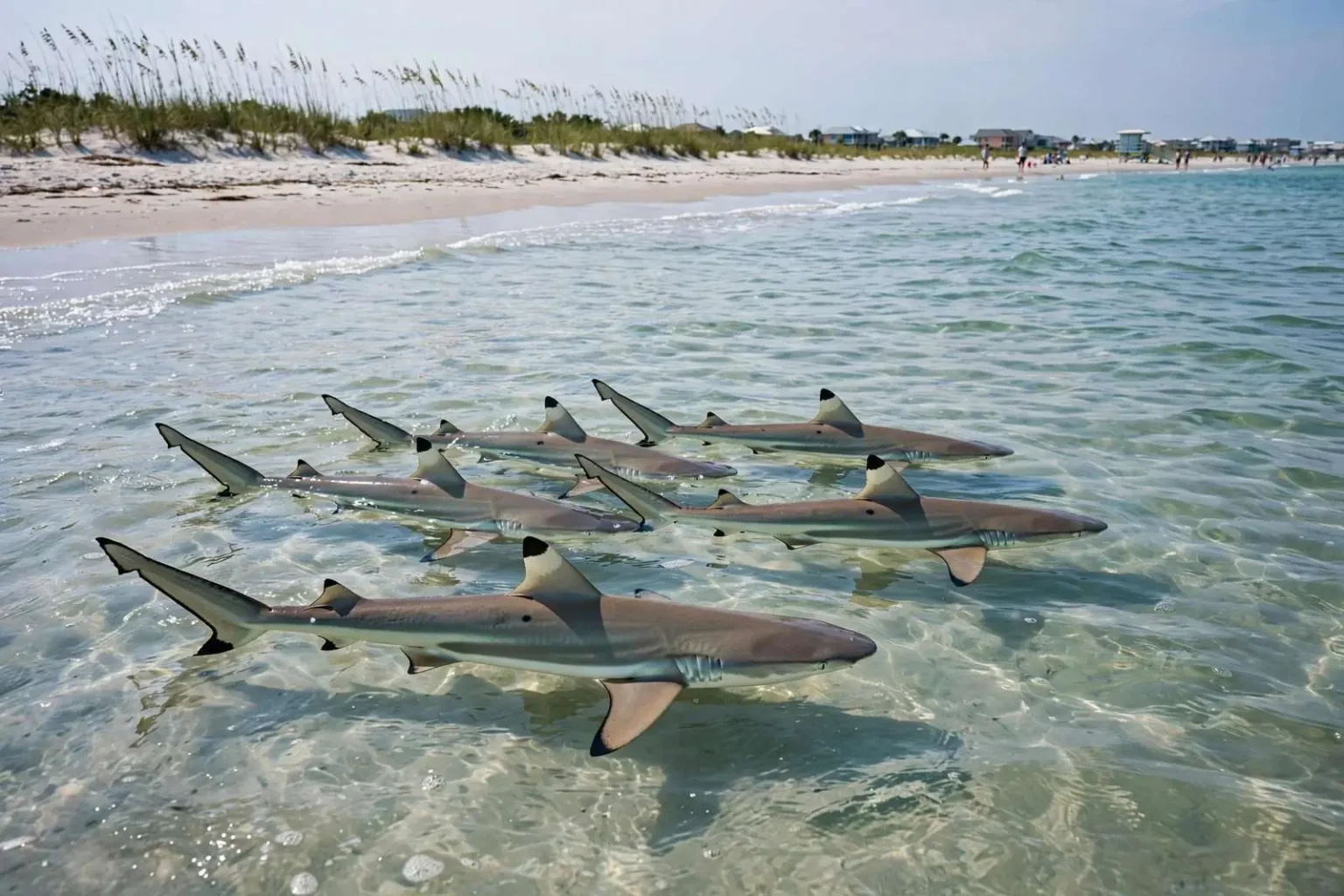
Blacktip sharks grow to about five to six feet long and are considered medium-sized coastal sharks. They get their name from the black markings on the tips of their dorsal and tail fins, a giveaway identifier that distinguishes them from the similar-looking spinner shark that shares their range. Their build is athletic rather than bulky, and their speed is put to spectacular use: blacktips are known for leaping fully out of the water while feeding, a behavior that has made them a favorite of shark documentaries and a familiar sight for boaters who spot the splashes of feeding activity in the shallows.
They mainly eat small fish, invertebrates, crabs, and sometimes stingrays. That diet puts them squarely in the middle of the coastal food web, chasing the menhaden, mullet and other schooling fish that move along the beaches in the same warm months when people flock to the water. Their preference for small prey is central to their low risk to humans — an animal built to swallow schooling fish a few inches long has little interest in a swimmer far too large to be prey, though that has not stopped blacktips from being implicated in the region’s minor bite incidents.
What test bites mean
While blacktip sharks are not considered highly dangerous to swimmers, they do engage in what experts call “test bites.” Powers explains that blacktip sharks aren’t looking to eat humans, but if they see something splashing, they may take a test bite. The behavior is exactly what the name suggests: an investigative nip from a predator trying to determine whether an unfamiliar object is food. In murky or churned-up water, where visibility is poor, a splashing swimmer or surfer can resemble the wounded fish that trigger feeding behavior, and the shark’s way of checking is to bite once and assess.
These bites don’t account for many fatalities, but can cause injuries. Blacktip teeth are small and adapted for gripping fish rather than shearing large prey, so the wounds they inflict are rarely life-threatening — but a bite from any five-to-six-foot shark is a genuine injury, and blacktips have been linked to a substantial share of the minor shark bites recorded in Florida and along the Gulf Coast. The practical takeaway for beachgoers is the standard advice from lifeguards and marine scientists: avoid swimming at dawn and dusk when sharks feed, stay in groups, steer clear of fishing activity and leave the water if fish are schooling or birds are diving nearby.
Sharing the surf zone
The summer migration that brings blacktips along the beaches of Orange Beach and Gulf Shores is a predictable, annual event, and the sharks’ presence in the surf zone says more about the health of the coast than about any danger to it. The same waters that draw the sharks draw their prey: baitfish school in the warm shallows, crabs and invertebrates work the sand bottom, and the blacktips follow the food. Beaches with abundant bait activity are beaches with sharks nearby, and the region’s clear Gulf water makes the sharks more visible than they would be on the Atlantic side of Florida.
Anglers encounter the species more directly than swimmers do. Fishing from the beach, a pier or a boat in coastal waters, an angler hooked into a blacktip gets one of the strongest fights in inshore fishing — the species jumps repeatedly when hooked, and the display is often the memorable part of the encounter. Powers’ remark that fishermen “might hook one” reflects how routine those encounters are; catch-and-release shark fishing from the sand is a regular summer activity, and released blacktips generally swim off vigorously.
The Gulf’s shark diversity
The Gulf of Mexico is home to about 50 shark species out of approximately 440 worldwide, according to Powers. That figure puts the Gulf’s diversity in perspective: a body of water better known for its red snapper and speckled trout holds a shark fauna that includes everything from the bus-sized whale shark, which feeds on plankton, to the small bonnethead, a shovel-nosed member of the hammerhead family that cruises the grass flats. Most of those 50 species are small, offshore or rare, and only a handful — blacktips, spinners, bull sharks, hammerheads and a few others — regularly come near swimmers.
The nearshore species occupy overlapping but distinct niches. Bull sharks tolerate fresh water and range into rivers and bays; spinner sharks feed by launching into spinning leaps through bait schools; blacktips patrol the open beach. For the northern Gulf Coast, the seasonal rhythm is consistent: sharks move into the coastal shallows as the water warms in late spring, remain through the summer, and shift offshore or south as temperatures drop. Swimmers who understand that pattern can make sensible choices about when and where to get in the water.
Research along the Alabama coast
Marine scientists at the Dauphin Island Sea Lab and the University of South Alabama keep continuous watch on the region’s shark populations through longline surveys, acoustic tagging and cooperative research with commercial and recreational fishermen. Those programs track which species are present, how their numbers change and how they use the coastal habitat — data that feeds directly into federal management of Atlantic and Gulf shark fisheries, which are regulated to keep harvests sustainable. The work also informs local public safety, because knowing where sharks are and what they are doing is the foundation of sensible beach advice.
Public fascination with sharks gives that research an eager audience. Shark-tagging stories, aerial surveys and the occasional dramatic photograph of a fin off Gulf Shores draw wide attention each summer, and scientists like Powers use those moments to communicate what the data actually shows: sharks are present along the beaches in predictable numbers, bites are rare and the species most often involved are the smaller coastal sharks like the blacktip rather than the monsters of popular imagination.
A healthy coast with residents of its own
The bottom line for Gulf Coast beachgoers is coexistence rather than alarm. Blacktip sharks have shared the surf zone with swimmers for as long as people have been swimming there, their numbers ebb and flow with the seasons, and the risk they pose — occasional test bites, almost never fatal — is small enough that Gulf Coast beaches draw millions of visitors every summer without incident. Understanding the species is the best inoculation against fear: a five-to-six-foot shark hunting small fish and crabs, migrating in schools along the same beaches it has always migrated along, is a feature of a healthy coast, not a threat to it.
The next time a dark fin cuts across the first sandbar off Gulf Shores or Orange Beach, the odds are overwhelming that it belongs to a blacktip — one of an immense school of summer residents doing what blacktips have always done in the Gulf’s warm shallows. The experts’ advice amounts to common sense, and the experts’ description of the animal amounts to reassurance: common, coastal, quick to investigate and almost never dangerous.
What to remember before you swim
The accumulated advice from marine experts along the Gulf Coast boils down to a handful of habits that sharply reduce the already-small risk of a shark encounter gone wrong. Swim at guarded beaches and during lifeguard hours. Avoid dawn and dusk, when blacktips and other coastal sharks feed and visibility is lowest. Stay in groups rather than swimming alone, keep clear of piers and anyone fishing, and get out of the water if baitfish start jumping or birds begin diving — signs that feeding activity is underway in exactly the water you are sharing with the fish that attract it.
Jewelry and shiny objects are worth a thought as well, since the flash of a watch or anklet underwater can catch a shark’s eye the way a wounded baitfish would. None of these precautions amount to much of a burden, and locals who spend every summer on the water follow them automatically. The same experts who describe the blacktip’s habits are quick to note the conclusion they support: Gulf Coast beaches are among the safest large-shark coastlines anywhere, and the species most often seen — and most often hooked, and occasionally responsible for the rare test bite — is a five-foot fish-eater with no interest in people.