Bug in a Cadillac: How Investigators Took Down Mobile Drug Kingpin Sentenced to Life
Federal prosecutors say an innovative surveillance device planted inside a 2021 Cadillac Escalade helped bring down Mobile drug trafficker Glennie 'Little Man' McGee, who was sentenced Friday to life in prison after moving close to 1,000 kilograms of cocaine.
Federal investigators had been building a case against Glennie Antonio “Little Man” McGee for months, methodically gathering evidence to dismantle his multimillion-dollar drug operation in Mobile. In the end, prosecutors say, an unconventional surveillance tactic helped crack the case wide open — and on Friday, McGee was sentenced to life in prison.
An Innovative Approach to a Difficult Target
Assistant U.S. Attorney George May, one of the prosecutors who tried McGee, said agents obtained multiple wiretaps to monitor his phone conversations, but that those wiretaps only captured a portion of the case. “We only were on his phones for a certain period of time in the case,” May said.
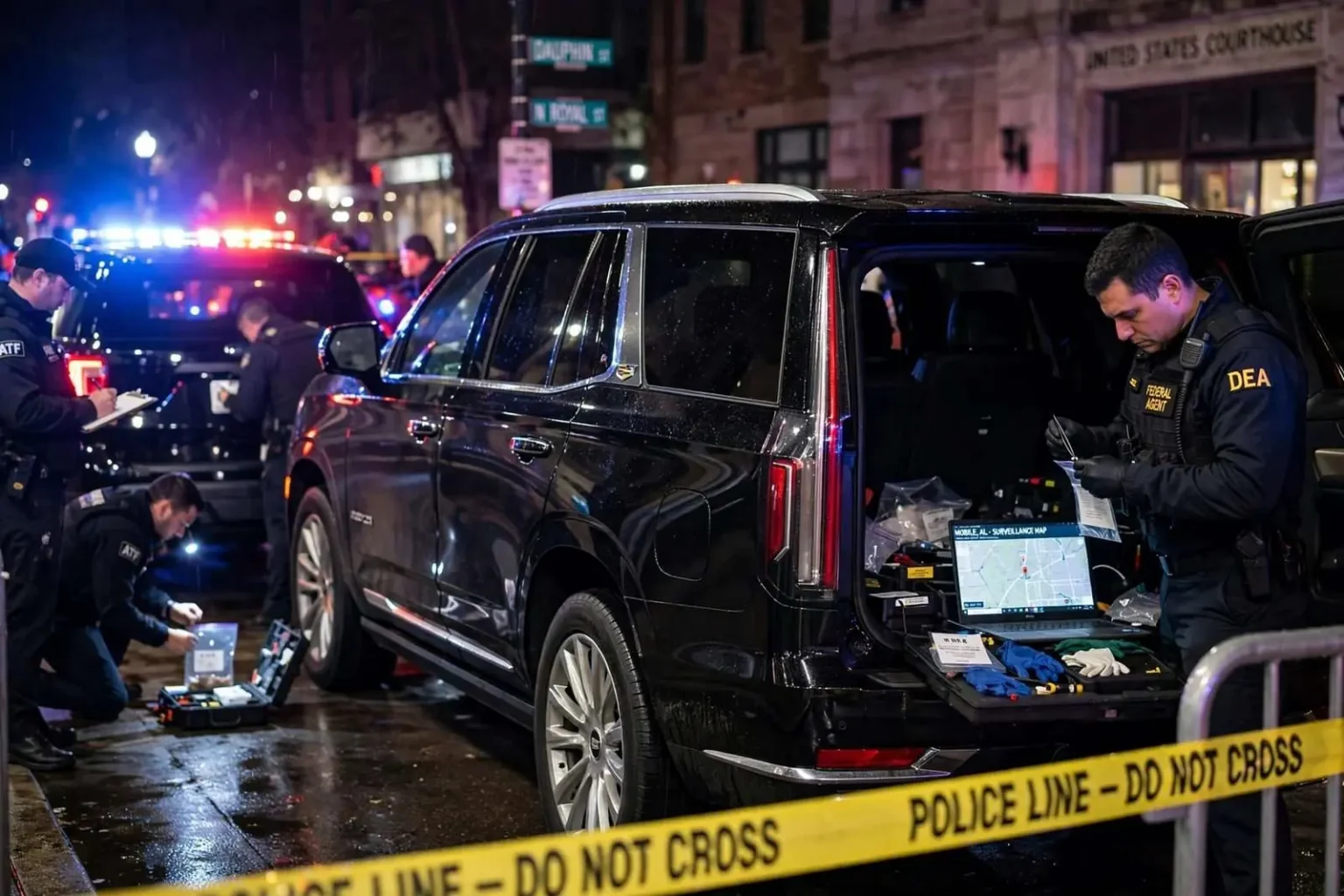
High-level drug dealers are typically careful about switching phones to avoid leaving incriminating evidence behind, May said, so investigators got creative. “Sometimes defendants thwart the wiretaps,” he told reporters. “So we did something innovative by putting a bug, basically, in his Cadillac. We get an order from the court to take the Cadillac when he’s not suspecting it and put the bug in there. And that opened up everything.”
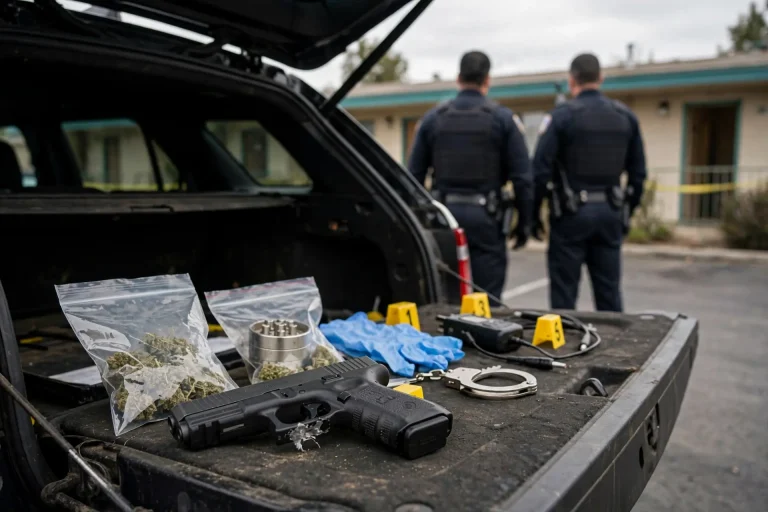
A closed-circuit recording device was installed in McGee’s 2021 Cadillac Escalade in April 2024 under a court order. The device captured numerous conversations McGee had inside the vehicle, along with video recordings — including footage prosecutors say showed him handling bags of fentanyl pills. That evidence made up a significant portion of what prosecutors presented at McGee’s trial in January.
The Escalade, prosecutors suggested at trial, had effectively become a rolling office for the operation — the place where deals were discussed, counted and arranged while McGee moved around Mobile. Vehicle-based surveillance of that kind sits in a well-settled corner of federal law: courts require a warrant showing probable cause before a bug may be planted in a private vehicle, and the recording must be limited to what the order authorizes. When the evidence is lawfully obtained, though, its power at trial is difficult to overstate — jurors hear the defendant’s own voice and see his hands, not just the recollections of cooperating witnesses.
Mobile has appeared repeatedly in recent years in the Drug Enforcement Administration’s account of Gulf Coast fentanyl trafficking, and prosecutors in the Southern District of Alabama have made fentanyl cases a signature priority. The pill form of the drug, pressed to look like legitimate pharmaceuticals, has driven overdose deaths across the region, and federal prosecutors have responded by charging distributors at the kilogram level — cases like McGee’s that trace the supply chain from the border to the street corner.
A Long History With the Justice System
McGee’s criminal history with federal prosecutors goes back nearly two decades. He pleaded guilty in 2006 to a crack cocaine charge — a case prosecuted by Sean Costello, who was then an assistant U.S. attorney and now serves as the U.S. Attorney for the Southern District of Alabama — and received a sentence of 10 years and one month in prison. A judge granted his request for an early end to his post-prison supervision in 2013. May said prosecutors believe McGee returned to the drug trade around that time.
The arc of that history — a decade-long federal sentence, early release from supervision, and a return to trafficking that ended in a life term — mirrors what prosecutors describe as the recurring pattern in recidivist drug cases. Under federal law, a defendant with a prior felony drug conviction who is later convicted of a serious trafficking offense faces dramatically enhanced penalties, and career-offender provisions can remove much of the sentencing judge’s discretion. The 2006 case, handled by the very office that would one day lead the prosecution two decades later, became the foundation of the enhancement framework that made a mandatory life sentence possible.
Life Sentence for Nearly 1,000 Kilograms of Cocaine
In sentencing McGee to life in prison Friday, U.S. District Judge Terry Moorer said prosecutors had successfully demonstrated that McGee sold more than 450 kilograms of cocaine. May said the true total is difficult to calculate precisely. “It goes well over the 450-kilogram threshold,” he said. “If I had to put a number on it, I would say probably close to 1,000 kilos of cocaine.”
The scale of the operation — and the difficulty investigators faced in building a case against a dealer experienced at avoiding detection — is part of why prosecutors describe the Cadillac surveillance operation as a turning point. Federal drug conspiracy cases involving quantities at that scale typically carry the possibility of a mandatory life sentence under federal sentencing guidelines, particularly for defendants with a prior drug trafficking conviction.
Numbers of that magnitude place the case among the largest volume prosecutions the district has pursued. A half-ton of cocaine moved through a single organization represents not just a string of transactions but an infrastructure — suppliers, couriers, stash locations, money handlers — and the conspiracy charge is the tool federal prosecutors use to hold the operation’s leader responsible for the whole. At sentencing, the government must prove drug quantities to the jury or judge by a preponderance of the evidence, and the 450-kilogram finding was the threshold that locked in the statutory maximum.
McGee’s sentencing closes out one of the largest drug trafficking prosecutions Mobile federal prosecutors have brought in recent years, and it comes after related proceedings in the case: McGee’s wife and sister-in-law were previously sentenced to lengthy prison terms for their roles, while his own sentencing had been postponed. With Friday’s hearing, all of the defendants tied to the case have now been sentenced.
Prosecutors said the family members’ sentences reflected their supporting roles in the operation rather than leadership, but their convictions underscored how the investigation expanded from a single target into a network case. Sentencing postponements like McGee’s are common in multi-defendant prosecutions, often to allow continued cooperation or to resolve related charges before the guideline calculations are finalized. In the end, the judge had no discretion to go below the life term that the drug quantities and the prior conviction together required — the outcome, May suggested, that the operation’s scale had always pointed toward.
The wiretap phase of the investigation reflected the standard escalation in major drug conspiracies. Federal agents typically begin with street-level observation, informants and financial records, then seek court authorization to intercept communications once they can show that less intrusive techniques have been tried and have not been enough. Each wiretap order runs for a limited period and must be renewed, and the affidavit behind it must name the offenses, the facilities and the individuals whose conversations may be recorded. In a case like McGee’s, the product of those intercepts — thousands of hours of recorded calls — becomes both an investigative roadmap and, ultimately, a trial exhibit that can take days to play for a jury.
What the wiretaps could not capture, though, was the conversation that never happened on a monitored phone. Experienced trafficking organizations rotate devices, use messaging applications and conduct sensitive business face to face for exactly that reason, and prosecutors said McGee was among the most disciplined they had encountered at staying off compromised lines. The vehicle bug was designed to fill that gap — to record the in-person conversations that replaced the phone calls, in the one location where investigators knew the operation’s business would be discussed.
The resulting evidence gave the trial something beyond the usual architecture of cooperating witnesses and intercepted calls. Defense attorneys in federal trafficking cases frequently attack witness credibility, arguing that cooperators have every incentive to exaggerate a defendant’s role in hopes of lighter sentences of their own. Recordings from the Escalade could not be cross-examined. The video and audio placed McGee at the center of the operation in his own words, and jurors who heard those recordings in January returned verdicts that set the stage for Friday’s sentencing.
Life sentences for drug trafficking remain rare outside the career-offender context, and the outcome in this case will likely be cited by the U.S. Attorney’s office as it weighs how to handle the region’s largest distribution networks. The message prosecutors have drawn from the case is twofold: that the district will commit the investigative resources needed to reach traffickers who avoid conventional surveillance, and that the sentencing consequences for returning to large-scale trafficking after a federal sentence are as severe as the law allows.
The case also illustrated the coordination among agencies that large-scale prosecutions require. Investigations of this size draw on the DEA’s Mobile resident office, federal agents detailed from other posts, the Bureau of Alcohol, Tobacco, Firearms and Explosives where firearms intersect the drug trade, and local police departments whose street-level intelligence points investigators toward the upper tiers of a network. Prosecutors credited the months of patient work — surveillance logs, purchase records, phone analysis and the court-ordered installation itself — for building a case that survived every challenge mounted at trial.
For Mobile neighborhoods where fentanyl pill distribution has driven overdose spikes, the conclusion of the case closes a chapter that public health officials have tracked closely. Federal prosecutions of high-volume distributors are one instrument in that response, alongside the overdose-reversal programs, treatment referrals and community education efforts that run parallel to the courtroom work. The 2021-model Escalade that carried the case’s crucial bug is gone from the streets; the broader market pressures it served are what prosecutors and health officials alike say will require the sustained effort the district has promised.