Larry Wooten Jr. Gets 37 Months in Federal Prison After Gun Found at Daphne Motel
Larry Wooten Jr., a Baldwin County man arrested at Daphne’s Eastern Shore Motel in January with a loaded handgun bearing a damaged serial number, was sentenced to 37 months in federal prison as a felon in possession of a firearm.
MOBILE, Ala. — Larry Wooten Jr., a Baldwin County man arrested at a Daphne motel in January with a loaded handgun whose serial number had been damaged, has been sentenced to 37 months in federal prison for possessing a firearm as a convicted felon, according to the U.S. Attorney’s Office for the Southern District of Alabama.
Chief U.S. District Judge Jeffrey U. Beaverstock imposed the sentence Monday, Oct. 5, and federal prosecutors announced it Tuesday.
Domestic violence call led to arrest
According to court documents, Daphne Police Department officers went to a room at the Eastern Shore Motel on Jan. 2, 2026, after receiving a report of domestic violence. When they arrived, officers saw a woman who was crying and appeared to be in distress.
Wooten became combative with the officers, the documents state, and one officer used a Taser. The probes did not stop him, and Wooten pulled them out of his body with his hands, according to prosecutors. Several officers eventually gained control of him after a struggle and placed him under arrest.
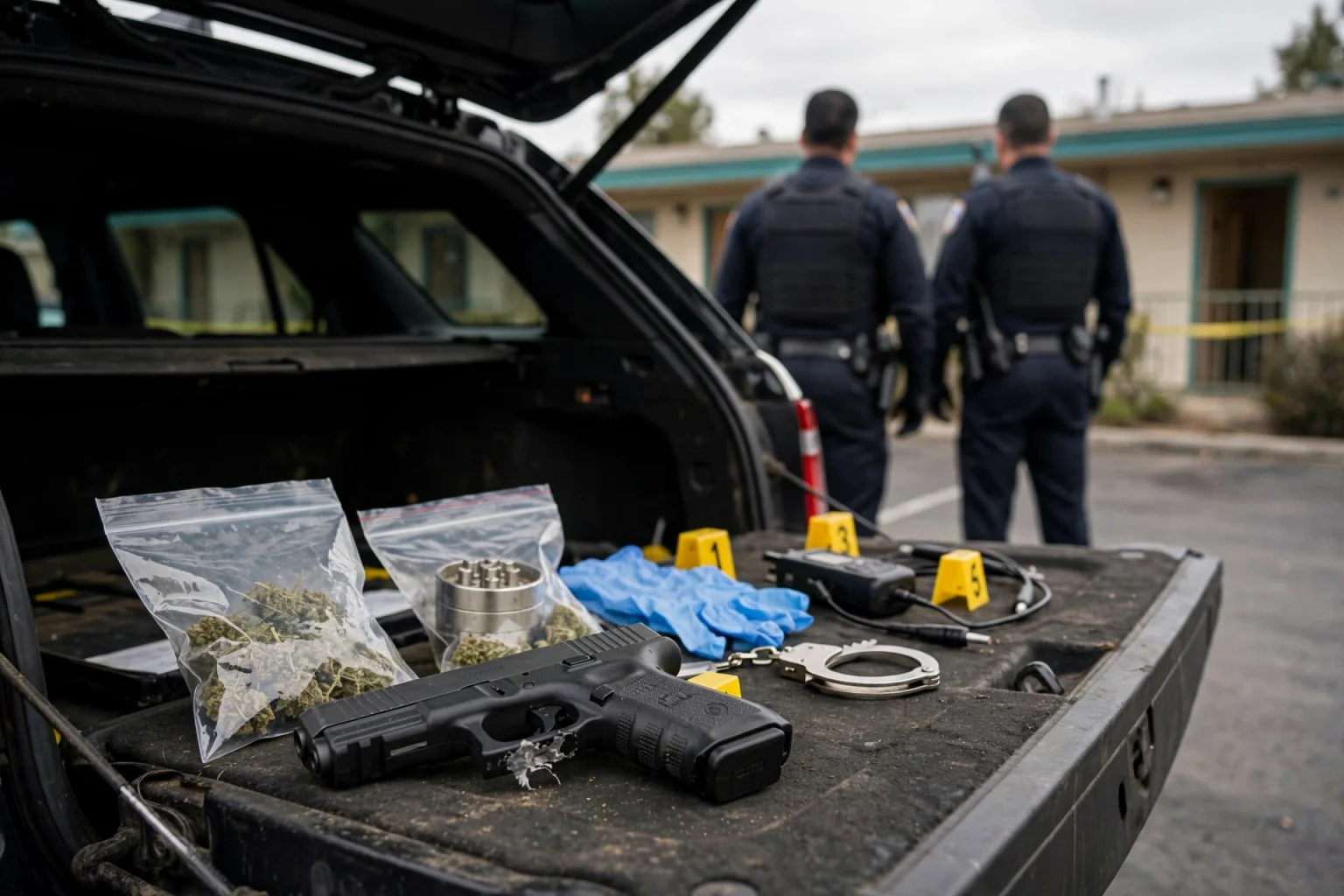
While arresting Wooten, officers found a loaded handgun in his right pants pocket, court documents show. Officers also saw marijuana in the room. They secured the room while they obtained a search warrant, and the search that followed turned up marijuana and a used marijuana grinder on a bedside table.
A damaged serial number
The gun was a Hi-Point Model C9 9 mm handgun, according to prosecutors. The serial number stamped on the underside of the frame, in front of the trigger guard, had been damaged, and the plastic around it showed signs that someone had tried to obliterate it, apparently with a file or a similar tool.
On closer examination, agents were still able to identify the serial number, according to court documents.
Two prior felony convictions
Federal law prohibits anyone with a felony conviction from possessing a firearm. At the time of his arrest, Wooten had two prior felony convictions in Baldwin County Circuit Court, prosecutors said:
- Breaking and entering a vehicle, stemming from conduct on or about June 17, 2025.
- Third-degree robbery, stemming from conduct on or about Aug. 29, 2014.
Who handled the case
U.S. Attorney Sean P. Costello of the Southern District of Alabama announced the sentence. The Bureau of Alcohol, Tobacco, Firearms and Explosives and the Daphne Police Department investigated the case, and Assistant U.S. Attorney George F. May prosecuted it.
The Justice Department said the case is part of Operation Take Back America, a nationwide initiative that the department describes as using its full resources to combat illegal immigration, eliminate cartels and transnational criminal organizations, and protect communities from violent crime. According to the department, the effort draws on resources from its Homeland Security Task Forces and Project Safe Neighborhoods.
Project Safe Neighborhoods is a long-running Justice Department program that brings together federal, state and local law enforcement agencies, prosecutors and community partners to reduce violent crime, with a particular focus on gun crime.
Background: the federal felon-in-possession law
Under federal law, a person who has been convicted of a crime punishable by more than one year in prison generally may not ship, transport, receive or possess a firearm or ammunition that has moved in interstate commerce. The offense is one of the most commonly prosecuted federal firearms charges, and cases often begin, as this one did, with an arrest by local police that is later referred to federal authorities.
For offenses committed after a 2022 change in federal law, the charge carries a maximum penalty of 15 years in prison. Federal judges consider the advisory U.S. Sentencing Guidelines, a defendant’s criminal history and the circumstances of the offense when deciding on a sentence.
No parole in the federal system
Unlike some state systems, the federal prison system does not offer parole for crimes committed after 1987. Federal inmates may earn limited credit for good conduct, which can reduce the time actually served, but most of a federal sentence is typically served in custody. Federal prison terms are often followed by a period of supervised release set by the judge.
The release announcing Wooten’s sentence did not specify his age or hometown beyond identifying him as a Baldwin County man.