
Bull Sharks: The Gulf Coast Most Aggressive Shark Species
Bull sharks are the most aggressive shark species in the Gulf Coast, growing to 400 pounds and implicated in the most shark attacks.
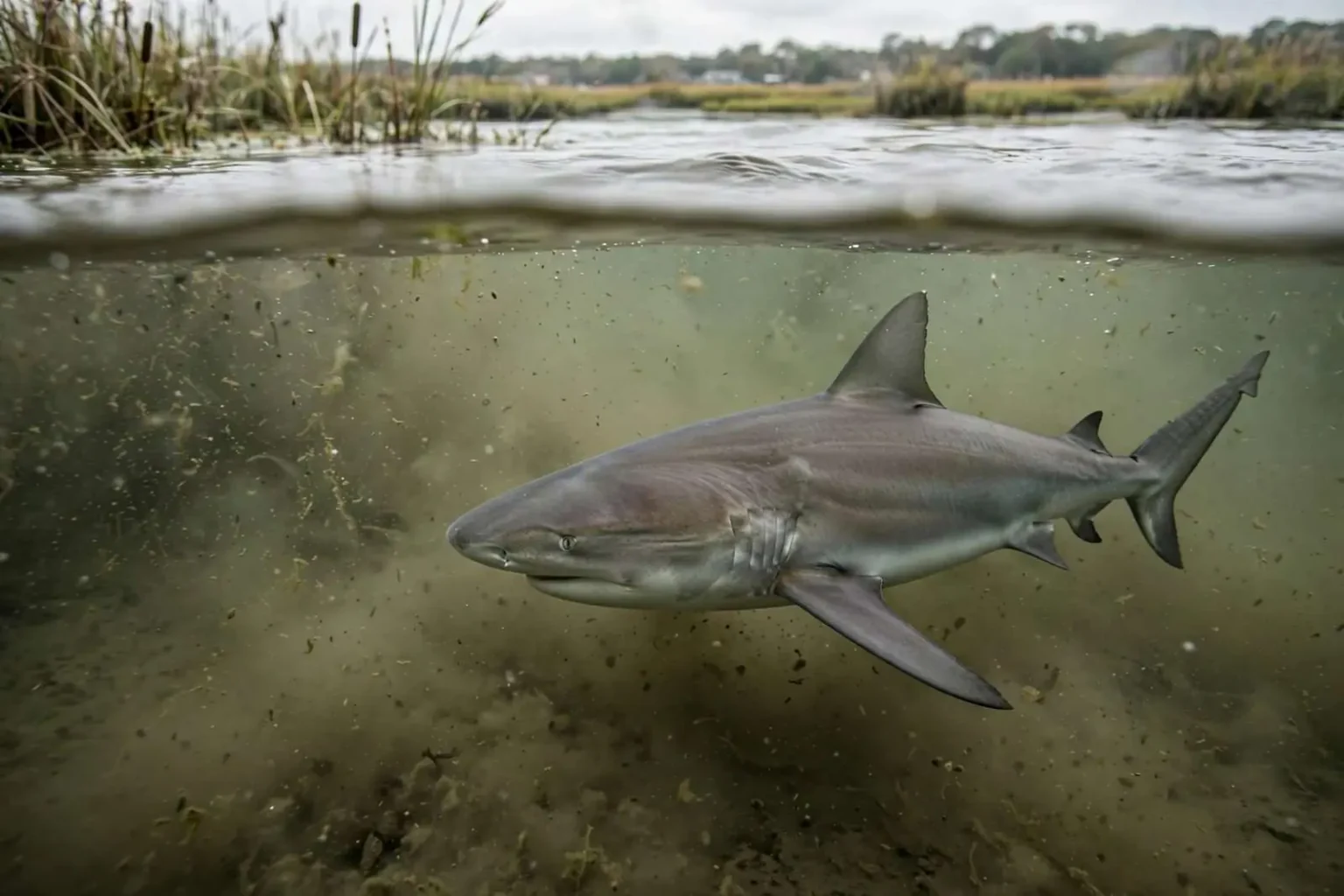
Bull sharks are one of the most common and aggressive shark species found in the Gulf Coast, according to marine experts — and for swimmers along the Alabama shoreline, they are the species most worth understanding. Unlike most sharks, which are strictly saltwater animals, bull sharks thrive in the bays, rivers and brackish estuaries that define the northern Gulf Coast, putting them in regular contact with the waters where people swim, fish and boat.
Dr. Sean Powers, director of the University of South Alabama School of Marine and Environmental Sciences and senior marine scientist at the Dauphin Island Sea Lab, says bull sharks are very common in all waters along the Alabama coast. That range includes Mobile Bay and the estuarine waters where the Mobile-Tensaw delta meets the Gulf — precisely the low-salinity environment that bull sharks are built to exploit.
“It’s actually specialized for the low salinity areas that we have all along the Alabama coast,” Powers said. “They’ve reported this shark as far north as Saint Louis in the Mississippi River.”
That last point is the species’ signature trait. Bull sharks are among the only large sharks capable of extended travel far up freshwater rivers, a physiological adaptation that lets their kidneys and specialized glands regulate salt levels in ways other shark species cannot. It is how a Gulf shark ends up recorded more than a thousand river miles inland, and it explains why the species turns up in waters that swimmers assume hold no sharks at all.
Size and Diet
Bull sharks can grow to about 400 pounds and are considered impressive animals by any standard. Thick-bodied and powerful, with a blunt, rounded snout that gives the species its name, they are built for short bursts of speed rather than long chases — a hunting style suited to the murky bays and river mouths where they spend much of their time.
They are opportunistic feeders that will eat just about anything, which is central to both their success and their reputation. A bull shark’s menu includes fish, rays, other sharks, dolphins, and whatever else is available in its territory, and that willingness to eat anything makes them very aggressive in the presence of potential prey. In the productive waters of Mobile Bay and the Gulf, food is abundant, and bull sharks sit near the top of that food chain.
“They’re really big fish and they’re really aggressive,” Powers said. “So it’s also one of the ones that swimmers need to be afraid of.”
The combination of size and temperament is what distinguishes bull sharks from the many harmless shark species that share the Alabama coast. Small sharks like Atlantic sharpnose or bonnethead are common in the same waters and pose no meaningful threat, but a 400-pound apex predator that tolerates fresh water and feeds aggressively in shallow areas is in a different category entirely.
Most Dangerous Shark Species
Marine scientists rank shark species by their documented interactions with people, and bull sharks lead that list in the categories that matter. Bull sharks operate in turbid waters and are implicated in the most fatalities and bites of all shark species. They have the biggest bite force of any shark, at about 1300 pounds per square inch — a measurement that reflects the jaw musculature and tooth structure of an animal evolved to process tough prey, from sea turtles to large fish.
“Sharks are very aggressive. Plus, they operate in really turbid waters,” Powers said. “So, yes, they’re implicated in the most fatalities and bite of all sharks.”
The turbidity point deserves emphasis, because it explains much of the risk equation along the Gulf Coast. Bull sharks hunt in the same murky, low-visibility water that characterizes river mouths and bay systems — the Mobile Bay outflow chief among them. In that environment, a bull shark cannot rely on sight to distinguish prey, and a swimmer’s splashing silhouette can resemble the movements of the wounded fish or stingrays the species naturally targets. Clear water, by contrast, lets a shark identify a human as something else entirely and pass on by.
While shark attacks aren’t very common, when they do occur in the Gulf Coast region, it’s most likely to be a bull shark. That statistical reality frames how swimmers and beachgoers should think about the risk: the odds of any encounter remain small, but the species most likely to be involved is the one best adapted to inshore Alabama waters.
Where Bull Sharks Live Along the Alabama Coast
The Alabama coastline offers bull sharks nearly ideal habitat. Mobile Bay, the largest estuary in the state, receives the flow of the Mobile-Tensaw River Delta and shifts from nearly fresh water at its northern end to full salinity at its mouth. That salinity gradient is exactly the range bull sharks prefer, and the bay’s abundant menhaden, mullet and other forage fish sustain a resident population year-round.
The waters around Dauphin Island, where Powers’ Sea Lab is based, and the beach towns east along the Fort Morgan peninsula provide the connection to open Gulf waters, and bull sharks move freely between the bay system and the Gulf. Studies of tagged sharks in the northern Gulf have documented the species using river mouths and bay systems as nursery areas, with juvenile bull sharks spending their early years in the protected, low-salinity upper reaches of estuaries before venturing into open water.
That nursery behavior matters for anyone fishing or swimming near river mouths and bayous. The same protected waters that make good nurseries are the waters people use for water skiing, wade fishing and swimming, and bull sharks of all sizes move through them regularly — most often unnoticed.
Practical Precautions for Gulf Coast Swimmers
Marine experts stress that living safely alongside bull sharks is mostly a matter of behavior. Swimmers can sharply reduce their already-low risk with a handful of habits grounded in what is known about the species’ hunting patterns: avoid swimming at dawn and dusk, when sharks feed and visibility is low; stay in groups, since sharks are more likely to approach solitary swimmers; avoid wearing shiny jewelry, which reflects light the way fish scales do; and steer clear of areas where people are fishing or where bait and fish cleaning occurs.
Geography matters as well. Waters near river mouths, passes and channels — the places where freshwater meets the Gulf and forage fish concentrate — carry a higher likelihood of bull shark activity than open beachfront with clear water. After heavy rains, when turbidity increases along the coast, that caution applies more broadly.
None of this amounts to a warning against the Gulf, experts emphasize. Millions of people swim Alabama’s beaches each year without incident, and the species responsible for bites is the same one that has always shared these waters. But Powers’ assessment makes the underlying reality plain: of the sharks that inhabit Alabama’s coastal waters, the bull shark is the common, aggressive species with the strongest jaws, the widest tolerance for fresh water, and the longest list of encounters with people — and swimmers who understand that are better equipped to enjoy the Gulf safely.
The Dauphin Island Sea Lab, where Powers serves as senior marine scientist, functions as Alabama’s primary marine research and education institution, and its scientists have documented the shark populations of Mobile Bay and the adjacent Gulf waters for decades. The Sea Lab operates the Alabama Aquarium and coordinates research across the state’s marine consortium universities, and work by its researchers — including longline surveys and acoustic tagging studies — has mapped how sharks use the estuary through the seasons. Powers leads the University of South Alabama’s School of Marine and Environmental Sciences in addition to his Sea Lab role, bridging the academic program that trains the state’s marine scientists and the research institution that studies the waters they work in.
That research matters for public safety because shark risk management depends on data rather than fear. Knowing which species occur where, when they arrive, and what conditions bring them close to shore lets beach managers and lifeguards make decisions grounded in biology. In Alabama’s case, the biology is clear: the bull shark is not an occasional visitor but a year-round resident of the estuarine system, adapted to the very salinity levels that define the coast.
Why the Species Succeeds
Evolutionary biologists consider the bull shark one of the most successful large predators on the planet, and the reasons are visible along the Gulf Coast. Its physiological tolerance for fresh water opens habitats that other sharks abandon, from the Mississippi River to coastal rivers around the Gulf. Its opportunistic diet means it never depends on a single prey species. Its preference for shallow, turbid water puts it where large competitors hunt less effectively. And its reproductive strategy — live birth of pups in protected nursery areas — gives young sharks a head start in the safest waters available.
The cost of that success, from the human perspective, is proximity. A shark that lives in bays, river mouths and even rivers is a shark that shares space with swimmers, wade fishermen and boaters far more often than a deepwater species ever will. Most of those overlaps end without incident — the shark investigates or ignores and moves on — but the frequency of contact is why bull sharks, rather than the more famous great white, top the list of confirmed bites and fatalities worldwide.
Along the Alabama coast, the practical takeaway for residents and visitors is not alarm but awareness. The species Powers describes is already present in the waters people use every day, from the bay’s edge to the surf line, and has been for as long as anyone has swum here. Understanding what it is — big, aggressive, comfortable in fresh water, and most at home in the murk — is the foundation for the simple precautions that keep the risk at the margins where it belongs.