Citronelle Man Sentenced to 46 Months for Illegal Firearm Possession
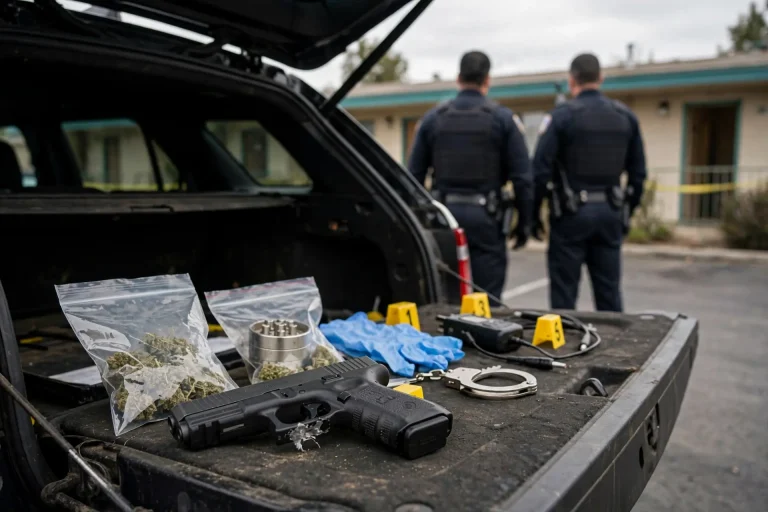
A Mobile County man with seven prior felony convictions has been sentenced to nearly four years in federal prison after officers found a gun in his pocket during an unrelated theft investigation in Citronelle.
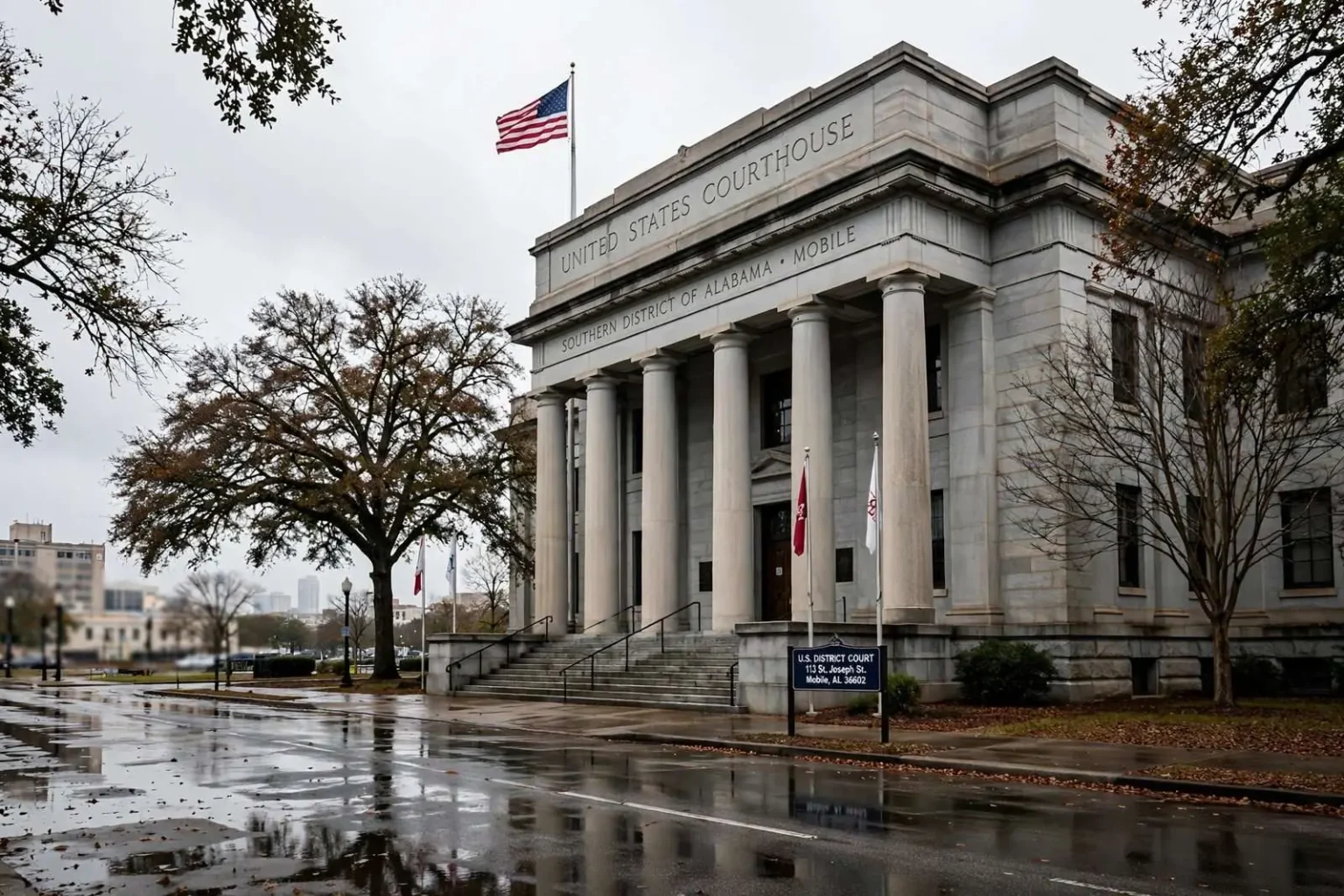
A Mobile County man has been sentenced to nearly four years in federal prison after being convicted of possessing a firearm as a convicted felon, according to the U.S. Department of Justice. Andre Jerrard Davis Sr., of Citronelle, received a sentence of 46 months — a term that falls just short of the four-year mark — following his conviction on a federal charge of illegal firearm possession.
The case moved through the federal system, where prosecutions for gun possession by people with prior felony convictions have become a staple of public safety strategy along the Gulf Coast. Federal prosecutors in the Southern District of Alabama, which covers Mobile and the surrounding counties, routinely bring these charges in coordination with local police departments and sheriff’s offices that make the initial arrests.
What the charge means
Federal law prohibits anyone with a qualifying felony conviction from possessing a firearm or ammunition. The prohibition applies regardless of whether the weapon was used in another crime, and prosecutors do not have to prove that the gun was fired, displayed or connected to a separate offense — only that a prohibited person had it. That lower evidentiary bar is by design: Congress built the felony-in-possession statute as a tool to take guns out of the hands of people the justice system has already identified as repeat or serious offenders.
Because the offense is federal, the case was handled in federal court rather than in the Mobile County circuit system, and any sentence is served in a federal facility rather than a state prison. Federal convictions for firearm possession also typically carry terms of supervised release after the prison sentence ends, during which the person remains under federal supervision and subject to conditions and random checks — a feature that distinguishes the federal system from Alabama’s state sentences.
Sentencing in these cases is driven by advisory federal guidelines that weigh the circumstances of the offense and, often decisively, the defendant’s criminal history. A 46-month term reflects that calculation: longer than what first offenders might face, shorter than what applies when the law’s enhanced penalties are triggered by prior convictions for violent felonies or serious drug offenses. Prosecutors and defense attorneys argue over the applicable range, and the judge determines the final sentence within the statutory limits.
How these cases reach federal court
The path from a street arrest in Citronelle or anywhere else in Mobile County to a federal indictment usually begins with a local agency. A municipal police department or the Mobile County Sheriff’s Office recovers a weapon during a traffic stop, a domestic call or an investigation, and the person carrying it turns out to have a prior felony record. From there, the case can be referred to federal authorities — working with agents from the Bureau of Alcohol, Tobacco, Firearms and Explosives — who review the defendant’s history and decide whether federal prosecution adds value.
The rationale is straightforward. Federal gun possession charges remove defendants from the local jail cycle, where shorter state sentences and crowded dockets can mean quick returns to the street, and place them in the federal system, where prison time is served in full and supervision follows release. For communities dealing with repeat gun offenders, the federal route is often described by law enforcement leaders as the option with the most durable impact.
National initiatives such as Project Safe Neighborhoods have encouraged exactly this kind of coordination since the early 2000s, pairing federal prosecutors with local police in targeted efforts against gun violence. Districts along the Gulf Coast, including the one headquartered in Mobile, have used the framework to prioritize armed repeat offenders, and the pace of felon-in-possession prosecutions in the Southern District of Alabama reflects that ongoing emphasis.
Citronelle and the north Mobile County landscape
Citronelle, where Davis lives, sits in the northern reaches of Mobile County, near the Washington County line and a short drive from the Mississippi border. It is one of the smaller municipalities in a county whose population is concentrated around the city of Mobile and the suburban corridor along the Eastern Shore, and its policing is handled through a combination of the city’s own department and the Mobile County Sheriff’s Office, which covers the unincorporated areas and supports the county’s small towns.
The case underscores the kind of day-to-day public safety work that residents of Mobile and the surrounding communities have come to expect from their local law enforcement agencies. Residents across Mobile County and Baldwin County rely on a network of municipal police departments, the Mobile County Sheriff’s Office, the Baldwin County Sheriff’s Office, and state troopers to handle day-to-day calls. Major cases are typically handled by the investigative divisions of those agencies, often working in coordination with one another.
That coordination extends across jurisdictional lines more often than residents may realize. A single investigation can involve a municipal department, the sheriff’s office, state troopers and federal partners, particularly when a firearm, a drug operation or a fugitive carries the case across city or county boundaries. Mobile-area news outlets and the police agencies themselves frequently release updates on investigations, arrests and charges, and the public can typically follow developments through official statements and court records.
The county behind the case
Mobile County is the second-most-populous county in Alabama and stretches from the city of Mobile across the Mobile River delta to the Mississippi line. The county is governed by a three-member commission and includes the city of Mobile as well as smaller municipalities and unincorporated communities like Citronelle, each with its own town hall, budget and public safety arrangements.
Mobile itself is the third-largest city in Alabama, situated at the head of Mobile Bay where the Mobile River meets the Gulf of Mexico. Founded by French colonists in 1702, it is the oldest city in the state and the site of the original capital of French Louisiana. Today the city serves as a major regional hub for shipping, aerospace, steel manufacturing and healthcare, and is home to the University of South Alabama and Spring Hill College.
The county’s size and spread shape its justice system as much as its economy. With a population spread across a large urban core, suburban cities and a rural north, court dockets and jail populations draw from a wide range of communities, and the mix of state and federal prosecutions reflects that range. Rural-area cases like this one move through the same federal courthouse as cases originating downtown, but they begin with the smaller departments that serve the county’s outlying towns.
Local and state government decisions frequently shape how Mobile, Baldwin County and the broader region grow and govern themselves. City and county governments along the upper Gulf Coast hold regular public meetings, with agendas and minutes typically posted online and broadcast or recorded for residents who cannot attend in person. Public safety budgets — sheriff’s staffing, municipal police pay, jail operations — are among the recurring items those bodies debate, and they are the levers that determine how many officers are available for the kind of work that produces cases like this one.
One regional economy, shared concerns
Mobile and Baldwin County together form a single regional economy, with commuters, students and shoppers moving daily across the bay, and with shared concerns about transportation, schools, public safety and growth that play out in both counties’ public meetings and local news coverage. Crime does not respect the county line either, which is why the two sheriff’s offices and the region’s municipal departments have long histories of cooperation and mutual aid.
News from across south Alabama frequently highlights the ways in which local decisions in city halls, county commissions, school board meetings and state offices in Montgomery interact with daily life for residents from Saraland to the Eastern Shore and from downtown Mobile to the Gulf beaches. Saraland, Satsuma, Citronelle and the county’s other municipalities each sit inside that larger web, and each depends on the same overlapping layers of county and state support that bigger cities lean on.
Long-running coverage of the Port of Mobile, the Brookley aeronautics complex and the industrial corridor along the Mobile River connects stories about steel, shipbuilding, aerospace and shipping into a single regional narrative. Public safety fits into that narrative as well: a port city and industrial hub draws workers, traffic and commerce from across the region, and the area’s law enforcement agencies scale their operations to match.
Local school systems, including Mobile County Public Schools and the Baldwin County Public Schools system, are among the largest employers in the region and are a focus of ongoing community attention, particularly around school construction, teacher staffing and student performance. School resource officers and campus safety programs tie the education system directly into the public safety network, another point where the region’s institutions overlap.
Hurricane and severe-weather preparedness is a recurring topic for residents across the coast, with annual public drills, sandbag distributions and updates from local emergency management agencies as the Atlantic hurricane season progresses each year. The same agencies and deputies who handle storm response are the ones who handle criminal investigations the rest of the year, a dual role that residents of a Gulf Coast county come to take for granted.
Following the case and the system
Residents who want to follow ongoing coverage of the issues that affect their community can typically find it in the daily local newspaper, on regional television stations and in a growing number of local digital outlets that focus specifically on the cities and towns of south Alabama. Federal court records, which include indictments, plea filings and sentencing minutes, are public, and the U.S. Attorney’s Office for the Southern District of Alabama announces significant prosecutions through its own releases.
For the defendant, the 46-month sentence begins a period of incarceration in the federal Bureau of Prisons, to be followed by supervised release whose conditions are set by the court. For the community, the case closes out one more firearm prosecution in a steady pipeline of similar cases that federal and local authorities in south Alabama have prioritized for years.
Officials across the region have consistently framed these prosecutions as a backstop rather than a solution — one tool among many that includes local policing, youth programs, reentry services and community engagement. The measure of the system, they argue, is not any single sentence but the cumulative effect of removing illegally possessed guns and repeat offenders from circulation, one case at a time, in the communities from downtown Mobile to Citronelle where the work begins.