Claiborne Street Lane Closure Begins as MAWSS Moves Utilities for Mobile River Bridge Project
MAWSS crews will close the right westbound lane of Claiborne Street from Canal Street past the I-10 on-ramp weekdays from 8 a.m. to 3:30 p.m. through Dec. 15 for Mobile River Bridge utility work.
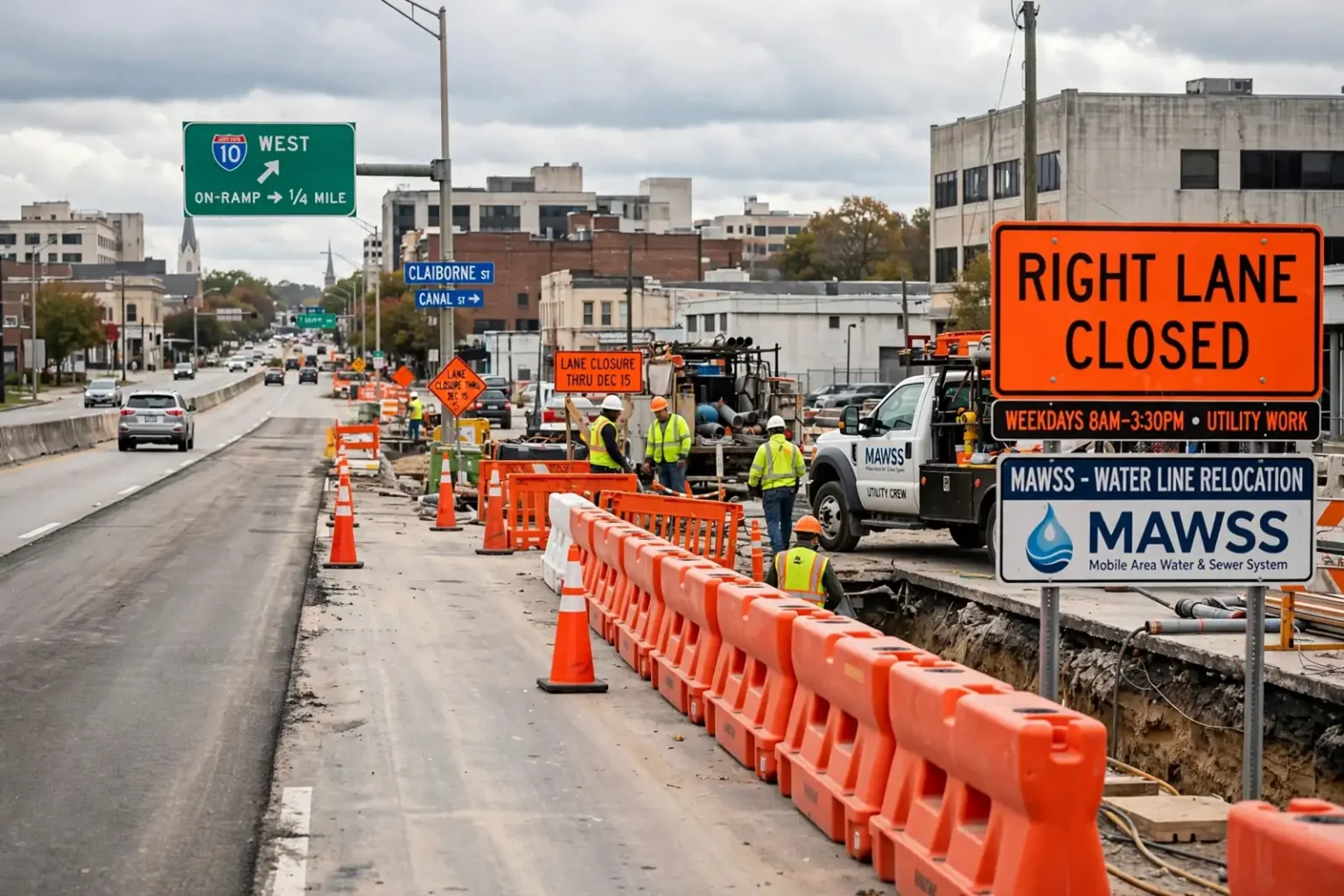
MOBILE, Ala. — Drivers who use Claiborne Street to reach Interstate 10 in downtown Mobile should plan for a narrower road on weekdays through mid-December. A Claiborne Street lane closure begins Thursday, Oct. 22, as Mobile Area Water and Sewer System crews start relocating utilities and water lines to make way for the Mobile River Bridge and Bayway project.
According to the Alabama Department of Transportation, MAWSS crews will close the right lane of westbound Claiborne Street, beginning at Canal Street and extending beyond the westbound I-10 on-ramp. The closures are scheduled weekdays from 8 a.m. to 3:30 p.m. and are expected to continue through Tuesday, Dec. 15.
Closure at a glance
- Location: Westbound Claiborne Street, beginning at Canal Street and extending beyond the westbound I-10 on-ramp
- Type: Single right-lane closure
- Hours: 8 a.m. to 3:30 p.m., weekdays
- Start: Thursday, Oct. 22
- Anticipated completion: Dec. 15, 2026
- Work: Utility relocation and water line work by MAWSS
Crews are to remove all lane closure devices, including signs, arrow boards and drums, by 3 p.m. each day, and the roadway is to return to its normal configuration after 3:30 p.m. That schedule is meant to keep both lanes open for the afternoon commute, when traffic heading toward the interstate typically picks up.
The schedule is subject to change because of weather or other unforeseen circumstances, officials said.
Why the work is needed
Large highway projects often begin with work that drivers never see once it is finished. Before crews can build new foundations, ramps and approaches, the water lines, sewer pipes and other utilities that run beneath and beside existing streets frequently have to be moved out of the way. Doing that work early helps prevent conflicts and delays once heavy construction reaches the area.
MAWSS, the utility that provides water and sewer service to Mobile and surrounding areas, is handling the relocation work on Claiborne Street. The work is part of preparations for the $3.2 billion Mobile River Bridge and Bayway project, which officials have described as the largest transportation undertaking in Alabama history.
About the Mobile River Bridge project
Federal, state and local leaders ceremonially broke ground on the project in early October at Cooper Riverside Park, after ALDOT issued a notice to proceed to the Kiewit Massman Traylor design-build team. Construction is expected to take about five years, with the new bridge projected to open in late 2031.
The first phase of the project includes:
- A new six-lane, cable-stayed bridge over the Mobile River, rising 215 feet above the water
- A connection from the new river bridge to the existing Bayway across Mobile Bay
- Restriping of the existing Bayway to carry three lanes in each direction between Mobile and the U.S. 98 interchange in Daphne
- Improvements to key interchanges and traffic flow
Tolls will be charged on the new bridge once it opens, while the Causeway, the existing tunnels and the existing bridges will remain free. As work ramps up in and around downtown Mobile, drivers can expect more lane closures, shifts and detours of the kind now starting on Claiborne Street.
Tips for getting through the work zone
Officials are asking motorists traveling through the area to expect possible delays, use caution near crews, follow posted traffic control devices and stay alert for workers. A few practical steps can help:
- Merge early and smoothly when you see signs or arrow boards for the closed right lane.
- Slow down and leave extra space between your vehicle and the one ahead.
- Watch for workers and equipment entering or leaving the roadway.
- Put the phone down; work zones demand full attention.
- If your schedule allows, travel through the area after 3:30 p.m., when both lanes are expected to be open.
Drivers can check current conditions on ALDOT’s ALGO Traffic website before heading out. Additional closures tied to the bridge project are announced by ALDOT as the work progresses.