
Clarke County Grand Jury Returns Indictments, Many Drug-Related
The Clarke County grand jury recently returned criminal indictments against dozens of people, with most of the charges tied to drug offenses.
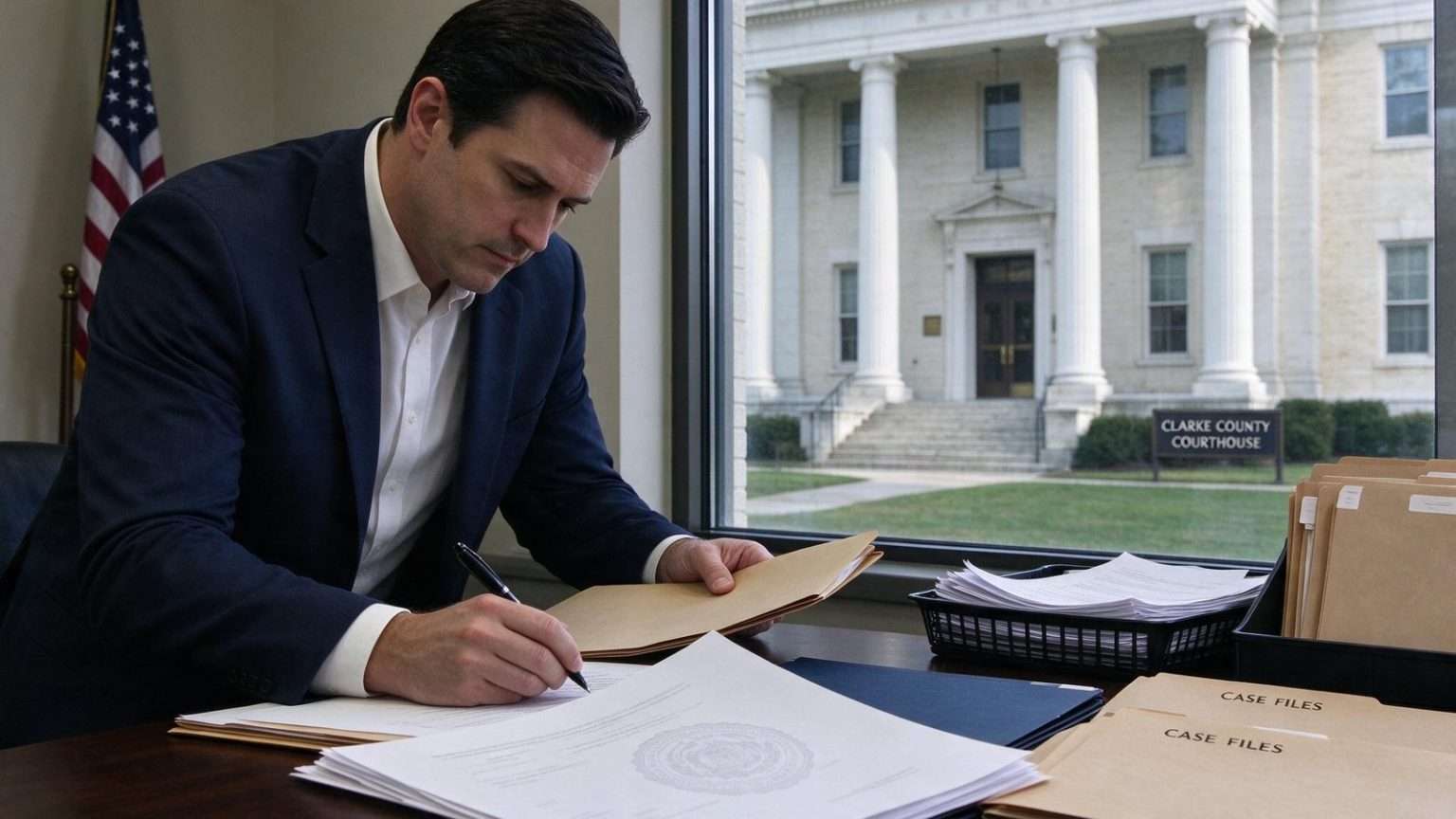
GROVE HILL, Ala. — The Clarke County grand jury has recently issued a series of criminal indictments, with most of them tied to drug offenses. The indictments, returned after the panel heard evidence presented by the district attorney’s office, name dozens of individuals across a range of felony and misdemeanor counts, and they mark the formal beginning of the court process for each person charged. For the Clarke County circuit court, the batch of new cases represents months of docket work ahead, and for the county’s residents it offers a look at the kinds of cases local law enforcement has been building.
The charges range from possession of controlled substances and marijuana to theft, assault, domestic violence and violations of the Sex Offender Registration and Notification Act (SORNA). The mix is typical of rural Alabama grand jury sessions, where drug possession charges frequently appear alongside the property crimes — thefts, stolen property receiving, fraud — that investigators often connect to drug activity. Violent charges, including several assault and domestic violence counts, round out the list.
A grand jury does not decide guilt. The panel’s job is narrower: to hear the evidence the state presents and determine whether probable cause exists to believe a crime was committed and that the accused likely committed it. When jurors find probable cause, they return an indictment — a formal accusation that moves the case into circuit court, where the accused will be arraigned, can enter a plea, and ultimately receives a trial if the case is not resolved by plea negotiation or dismissal. The standard of proof at that eventual trial — guilt beyond a reasonable doubt — is far higher than what a grand jury weighs.
Those Indicted
The following individuals were named in the indictments, with the charges listed beside each name:
Patrick Charles Adams, fraudulent use of credit/debit card
Marsha Tompson Anderson, possession/receipt of a controlled substance
Bobby Ree Armstead, assault, third degree
Kyra A’more Beck, possession/receipt of a controlled substance
James Doyle Bender, possession/receipt of a controlled substance
Ledarius Cortel Bishop, possession/receipt of a controlled substance
Kaitlyn Keanda Bowie, criminal trespassing, first degree
Latrice Lachelle Boykin, possession of marijuana, first degree
Bojarvious Jer Campbell, theft of property, third degree
Aaron Lamont Clark, receiving stolen property, first degree
Jeremy Lee Clayton, possession/receipt of a controlled substance
Brandon Jaquez Coston, possession of marijuana, first degree
Quindera Decres Crayton, possession/receipt of a controlled substance
Luther Crowell Jr., possession/receipt of a controlled substance
Edward Dale Dickinson, SORNA violation
Michael David Dilts, possession/receipt of a controlled substance
John Dalton Drinkard, firearm possession
Todd Paul Dumas, possession/receipt of a controlled substance
Syriah Ni’ana Edgar, possession of forged instrument, third degree
James Mason Edwards, assault, first degree
Miguel B. Eldridge, possession/receipt of a controlled substance
Becky Nelson Elliott, possession of marijuana, second degree
Curtis Gregory Gainer, possession/receipt of a controlled substance
Sylvester Lashon Hill, possession of marijuana, second degree
Tyrone Dewayne Hill, possession/receipt of a controlled substance
Deramus Matricas Idom, possession of marijuana, first degree
Laquarius Donta Jackson, theft of property, first degree
Christopher Shane James, domestic violence, strangulation/suffocation
Amberny Keshaun Jelks, possession/receipt of a controlled substance
Jermal Rashad Johnson, possession of marijuana, first degree
Jacob Michael Larrimore, possession/receipt of a controlled substance
Tia Shanta McClain, possession/receipt of a controlled substance
Katie Nicole McHaney, possession of controlled substance
Leslie Cooper McHaney, possession of controlled substance
Jerry McMillian Jr., possession/receipt of a controlled substance
Alexis Moniq McReynolds, domestic violence, second degree
Gabriel Lashaw Mitchell, use/possession of drug paraphernalia
Marcella Mitchell, possession of marijuana, first degree
Samuel Shane Moore, theft of property, third degree
Antonio Maurice Nettles, possession/receipt of a controlled substance
Sabashin Urne Nicholson, attempting to elude
Jerome Norwood, SORNA violation
James Cain Phillips, domestic violence, strangulation/suffocation
Joshua Jevon Pickett, possession of marijuana, second degree
Ron Christopher Portis, theft of property, first degree
Scout Powell, assault, second degree
Joe Anthony Price, organized retail theft
Edgar Dwight Rodgers, possession/receipt of a controlled substance
Shirley Ann Salter, theft of property, first degree
Kristen Jerr Saulsberry, possession of marijuana, first degree
Azaria Trelita Scott, possession of marijuana, second degree
Celestine Nico Shambley, identity theft and theft of property, third degree
Corderic Dedarrius Sims, possession/receipt of a controlled substance
Wesley Tramai Slaughter, possession of marijuana, first degree
Kevon Ahmaud Smith, possession of marijuana, first degree
Kristian Stepha Watkins, SORNA violation
Labaron Dewayne Watkins, possession/receipt of a controlled substance
Bryson Lavon Williams, attempting to elude
Orlando Brian Williams, criminal trespass, second degree
What the Charges Mean
The drug counts that dominate the list are sorted under Alabama law into degrees that reflect the circumstances of the offense. Possession of marijuana in the second degree is the misdemeanor charge typically filed for small amounts intended for personal use, while first-degree marijuana possession is a felony generally tied to larger quantities or aggravating circumstances. Possession or receipt of a controlled substance — the most common count on this list — covers substances regulated under Alabama’s controlled substances laws, and it is charged as a felony regardless of the quantity involved.
The three SORNA violations on the list fall under Alabama’s Sex Offender Registration and Notification Act, the state’s framework requiring convicted offenders to register with law enforcement, update their information when they move, and comply with residency and reporting requirements. A violation charge does not allege a new offense against a person; it alleges failure to meet the registration obligations that apply years after an original conviction. Those cases turn on records — addresses, reporting dates, verification appointments — rather than on disputed events.
The property and fraud charges — thefts in the first and third degree, receiving stolen property, fraudulent use of a credit or debit card, identity theft, and organized retail theft — form the second-largest cluster on the list. Alabama’s theft statutes grade offenses primarily by the value of the property involved, with first-degree theft covering the highest amounts and third-degree the lowest. Organized retail theft, a comparatively recent addition to the state’s criminal code, targets coordinated shoplifting and resale operations rather than a single incident.
The violent charges include two counts of domestic violence involving strangulation or suffocation, a felony offense Alabama lawmakers elevated in severity because of the demonstrated link between strangulation in domestic incidents and later lethal violence. First- and second-degree assault counts and a second-degree domestic violence charge round out the group. Attempting to elude, charged against two defendants, covers fleeing or attempting to flee from a law enforcement officer.
What Happens Next
An indictment is a formal accusation and is not a finding of guilt. Those named are presumed innocent unless and until proven guilty in court. That presumption is not a formality; it is the operative rule that governs every stage of the proceedings that follow, from arraignment through trial, and it places the burden of proof entirely on the state. Defendants named in grand jury indictments retain every defense available to any accused person, and many cases that begin with an indictment end without a conviction.
For those indicted, the next step is generally an arraignment in Clarke County circuit court, where each defendant will appear before a judge, receive formal notice of the charges, and enter a plea. Judges will also address bond conditions at that stage, and defense attorneys — retained or appointed for those who qualify — will begin reviewing the evidence the state intends to present. Some cases will be resolved through plea agreements, others will be dismissed as the evidence develops, and the remainder will head toward trial on the circuit court’s docket.
The volume of drug-related indictments reflects a pattern rural prosecutors and sheriffs’ offices have described for years: in small counties, drug enforcement generates a large share of the criminal docket, and the charges that surround it — theft, fraud, trespassing, eluding — often arise from the same investigations. A traffic stop can become a possession case; a burglary report can lead to stolen property and drug charges at once. Grand jury sessions, held periodically in each county, bundle those investigations into the formal charges that move them forward.
Grove Hill, the Clarke County seat, hosts the county’s courthouse and its circuit court operations, and residents with business before the court will see these cases moving through the system in the months ahead. The district attorney’s office, which presented the evidence to the grand jury, will carry the cases from here. Those who believe they may be affected by a pending case — as victims, witnesses or family members — can contact the circuit clerk’s office for docket information as the arraignments are scheduled.
Clarke County’s grand jury will convene again, as it does on its regular cycle, and the list above will be joined by others as investigations continue. For now, the indictments document the county’s recent law enforcement activity in one place: dozens of names, a heavy concentration of drug charges, and a reminder printed on every case file that an accusation — however formal — is where the process begins, not where it ends.


