FOLEY, Alabama — Shoppers looking for fresh, local flavor along the Gulf Coast can find it every Saturday at the Coastal Alabama Farmers and Fishermens Market (CAFFM), a nationally recognized market that runs year-round in Foley. The market operates weekly from 9 a.m. to 2 p.m., including upcoming market days on Aug. 22 and Aug. 29, giving residents and visitors a regular chance to stock up on produce, seafood and handmade goods.
The steady Saturday schedule has made the market one of the most reliable stops in south Baldwin County for anyone who wants to buy directly from the people who grow and catch the region’s food. Its Foley location sits within easy reach of Gulf Shores, Orange Beach, Elberta, Summerdale, Robertsdale and the rest of the lower county, and it regularly draws a mix of full-time residents, winter visitors and vacationers heading to or from the beaches.
What Shoppers Can Find
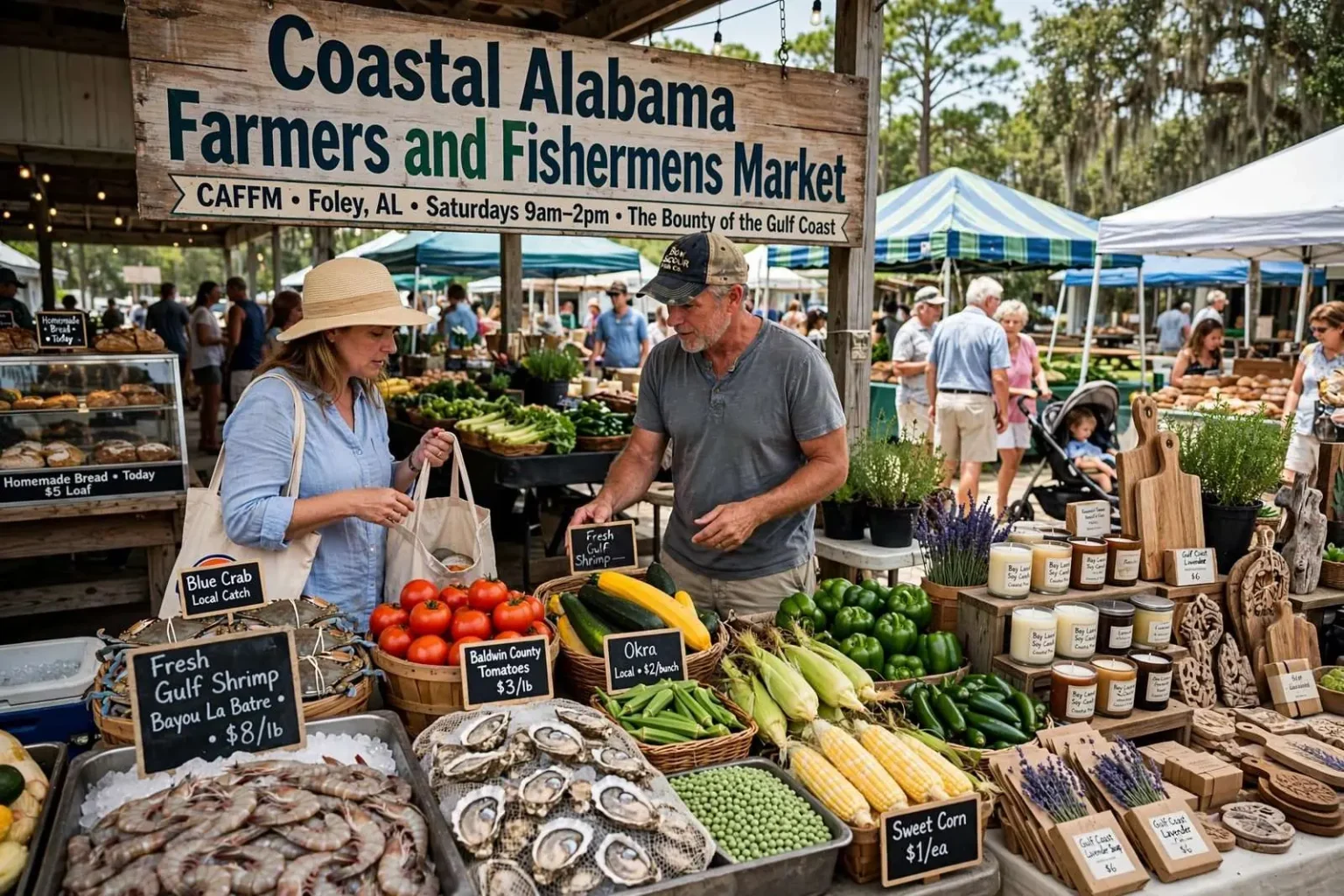
The market is billed as a place to experience “the bounty of the Gulf Coast,” with vendors offering just-picked produce, fresh-caught seafood and baked goods straight from the oven. Because the market runs every Saturday throughout the year, organizers say shoppers can count on finding in-season flavors no matter when they visit.
The selection shifts with the seasons, which is part of the appeal for regulars. Late summer tables tend to be heavy with tomatoes, okra, squash, peppers, peas and sweet corn grown across Baldwin County’s fertile farmland, one of the most productive agricultural regions in the state. As the calendar turns toward fall and winter, the mix gives way to greens, root vegetables and citrus, keeping the market’s offerings in step with what local fields and waters can actually supply.
Seafood is a defining part of the market’s identity. Vendors bring in Gulf shrimp, oysters, blue crab and fin fish from the waters that have sustained coastal Alabama’s fishing communities for generations, giving shoppers a direct link to working waterfronts like Bayou La Batre, Bon Secour and the small fish houses along Mobile Bay. For many families, a Saturday trip to the market is simply how they buy their seafood for the week.
Beyond food, the market also features artisan vendors selling handcrafted items, making it a popular stop for shoppers hunting for a unique gift or a memento of a Gulf Coast trip. Organizers describe the offerings as having “something for everyone,” from kitchen staples to one-of-a-kind keepsakes.
The handmade goods add a second dimension to the experience. Woodwork, candles, soaps, jewelry and other crafts sit alongside the food stalls, and the variety is broad enough that many shoppers treat the market as much as a browsing destination as a grocery run. Local makers, who often have few other outlets in a small-town retail landscape, use the weekly gathering to reach customers face to face.
The open-air setting also turns a shopping trip into something of a community event. Regulars greet vendors by name, swap recipes and news of the week, and linger long after their purchases are made, a rhythm that has become as much a part of the market as the goods on the tables.
A Year-Round Gulf Coast Tradition
Unlike seasonal markets that operate only part of the year, the Coastal Alabama Farmers and Fishermens Market keeps its Saturday schedule going 52 weeks a year, giving local farmers, fishermen and artisans a consistent outlet to sell directly to the community. That steady presence has helped the market earn national recognition as a destination market along the Alabama Gulf Coast.
The year-round model matters as much to the vendors as it does to the shoppers. Farmers who plan their planting schedules around a guaranteed weekly outlet can commit to crops they might otherwise avoid, and fishing families who bring in catches on unpredictable schedules know they will have a place to sell them on Saturday morning, whatever the season brings.
Consistency also builds trust. When shoppers see the same faces week after week, they learn which vendor grows the best tomatoes, who hauls in the freshest shrimp and whose bread sells out before noon. That kind of repeat relationship is difficult to duplicate in a grocery store aisle, and it is the reason many loyal customers rearrange their weekends around market hours.
The market’s emphasis on local sourcing, from produce grown nearby to seafood pulled straight from Gulf waters, reflects a broader push among coastal Alabama communities to connect residents directly with the people who grow and catch their food. Interest in locally produced food has grown across the region in recent years, and established markets like this one have given that interest a permanent home rather than a seasonal novelty.
A Boost for Local Growers and Watermen
Baldwin County has long been one of Alabama’s agricultural powerhouses, with rich soil and a mild coastal climate that support a wide range of crops. Farms across the county raise vegetables, berries, pecans and nursery stock, and the county’s mix of farmland, forests and shoreline has helped it grow into one of the fastest-growing areas of the state. Markets like the one in Foley give those growers a way to capture more of the value of what they produce by selling retail instead of wholesale.
The benefit flows to the region’s fishing families as well. Commercial fishing remains an important part of the economy and the culture of coastal Alabama, from the shrimp fleets of Bayou La Batre to the docks around Bon Secour, but rising fuel and operating costs have squeezed margins for decades. Direct sales at a busy Saturday market can make a meaningful difference for smaller operations working to stay on the water.
Artisans round out the vendor mix, and for many of them the market is a primary sales channel rather than a sideline. Selling directly at the market lets craftsmen and craftswomen price their work fairly, tell the story behind it and build a customer base that follows them from one season to the next.
For the community as a whole, the dollars spent at the market tend to stay close to home. Money paid to a local grower, fisherman or maker is more likely to be spent again at other Foley businesses, from hardware stores to restaurants, multiplying the effect of each Saturday’s sales across the local economy.
Plan Your Visit
The Coastal Alabama Farmers and Fishermens Market is located at 781 Farmers Market Lane in Foley, just off the main traffic routes that connect the city to the beach communities. Market hours run from 9 a.m. to 2 p.m. every Saturday, with upcoming dates including Aug. 22 and Aug. 29, and the schedule continues without interruption through the fall and winter months.
Shoppers who want the widest selection typically arrive early, when produce tables are fully stocked and seafood is freshest off the boats. Later in the day, the atmosphere is more relaxed and some vendors discount what remains, so the best time to visit depends on whether a shopper values selection or bargains. Either way, the market is largely a walk-and-browse experience, so comfortable shoes and a reusable bag are practical additions to any trip.
Foley itself has grown into one of the busiest destinations in south Baldwin County, anchored by attractions such as the city’s heritage park and museum district, a well-known outlet shopping center and a calendar of community events that draws visitors from across the region. The market fits naturally into that lineup, and many families build a Saturday around it, combining a market run with lunch in town or a trip down Highway 59 to the Gulf.
For visitors staying in Gulf Shores or Orange Beach, the market offers something the resort strips cannot: a direct taste of the working landscape behind the tourist economy. A bag of Baldwin County vegetables or a cooler of Gulf shrimp carries home a story about the farms and fishing boats of the Alabama coast that no souvenir shop can match.
A Window on the Region’s Traditions
For visitors to the Foley area, a Saturday stop at the market offers a way to sample the region’s agricultural and seafood traditions in one place. The county’s farming roots stretch back to the settlers who drained and tilled its land more than a century ago, and its fishing heritage runs just as deep, from the early multi-generation fish houses to the shrimp boats that still work the Gulf today. Both traditions remain living economies, not museum pieces, and the market is where residents can see that most clearly.
The market also serves as an informal gathering place for the small towns of south Baldwin County. Neighbors from Summerdale, Elberta, Silverhill and Magnolia Springs cross paths there on Saturday mornings, exchanging news in a way that once happened at the feed store or the courthouse square. In a fast-growing county where new subdivisions arrive every year, that continuity carries real value.
As the Gulf Coast continues to grow, markets like the one in Foley face the challenge of holding onto their character while serving an expanding population. Organizers have so far kept the focus simple: local growers, local fishermen, local artisans and a weekly gathering that anyone can join. For now, the formula continues to work, and each Saturday the market delivers what it has promised all along — the bounty of the Gulf Coast, sold by the people who produced it.