
Cold Weather Brings Busiest Season for Mobile Firefighters — and a Spike in Heating-Related Fires
Mobile Fire-Rescue warns of heating-related fire risks as cold weather arrives. Space heaters, fireplaces, and furnaces need proper safety checks before.
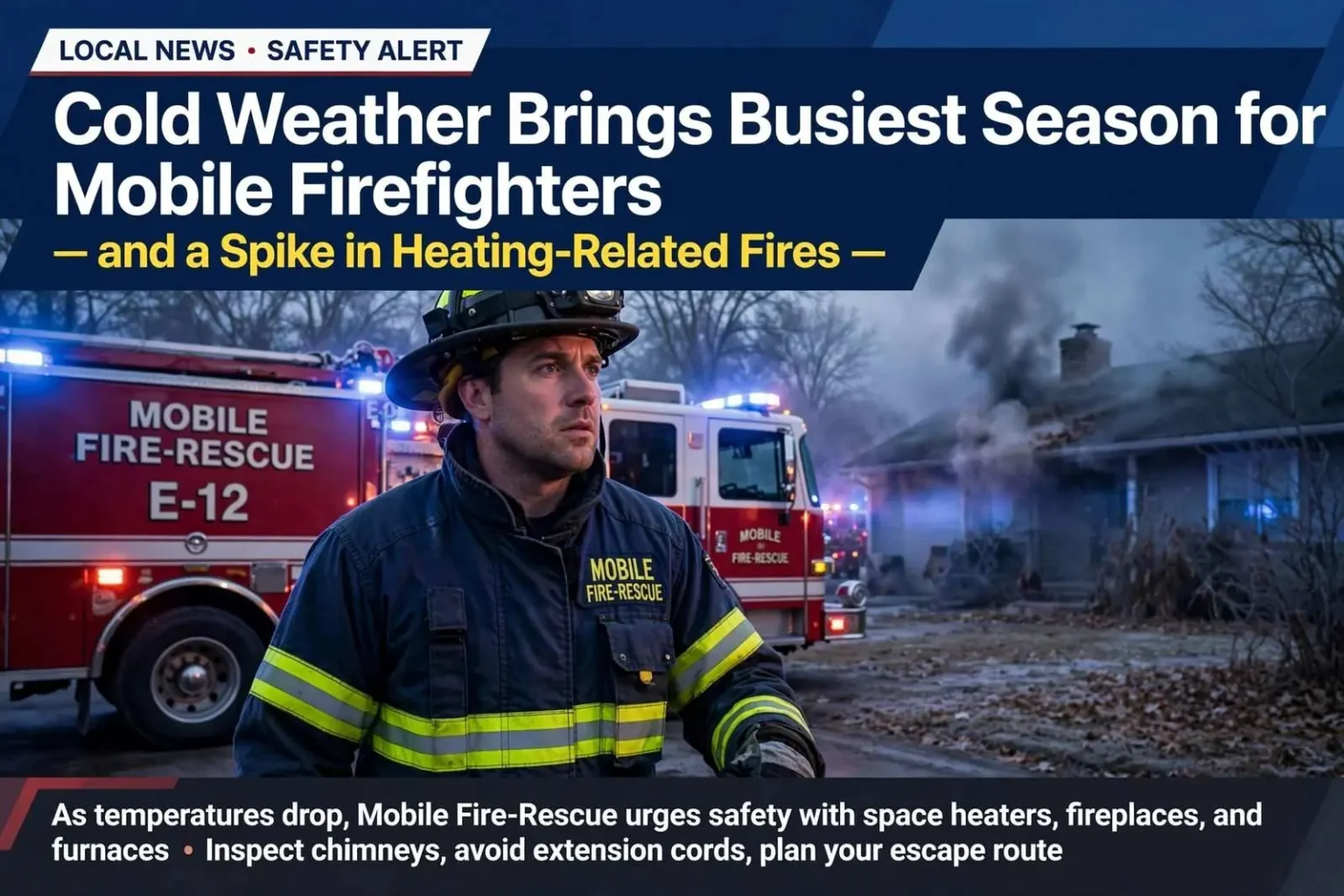
As temperatures drop across the region, Mobile Fire-Rescue is entering what is historically its busiest time of year — and officials are urging residents to take basic precautions before firing up space heaters, fireplaces, and furnaces for the first time in months.
A 2017 fire in Wilmer serves as a textbook cautionary tale: a man used an extension cord to power a space heater, overloading the cord and sparking a blaze that destroyed everything he owned.
“Power given out by a space heater can’t be handled by an extension cord so it gets overrun and the electrical wiring just can’t handle it,” said Steven Millhouse with Mobile Fire-Rescue.
This past weekend, crews responded to a call after a fireplace flooded a house with smoke. Millhouse said chimneys that haven’t been used in a year can accumulate leaves, debris, and creosote that create dangerous conditions when a fire is lit.
“Make sure you have it professionally inspected, swept, and cleaned before you go ahead and light it, because throughout the year there’s been debris, leaves, and who knows what else fall into the chimney,” Millhouse said.
Furnaces kicking on for the first time in a season can also send dust into homes that gets mistaken for smoke. “There’s going to be a little bit of dust coming in — recognize the difference between dust and smoke. If it’s dust, just be aware of that as well,” Millhouse said.
Beyond heating safety, Millhouse emphasized the importance of having a fire escape plan: “Exactly what to do, where to go, where the exits are in your home, where your meeting place is so everyone is safe and out of the home.”
Mobile Fire-Rescue recommends the following as temperatures fall:
- Don’t power space heaters with extension cords, which can overload and spark a fire.
- Have chimneys professionally inspected, swept and cleaned before lighting the first fire of the season.
- Learn to tell the difference between dust from a furnace kicking on and actual smoke.
- Make a fire escape plan that includes where the exits are and where everyone should meet outside.
Officials say awareness and preparation are the best tools to prevent the emergency calls that spike every year when the cold sets in.
Why Heating Season Matters
According to the National Fire Protection Association, heating equipment is one of the leading causes of home fires in the United States, second only to cooking, and space heaters are involved in most home heating fire deaths. The NFPA advises plugging space heaters directly into a wall outlet, keeping anything that can burn at least three feet away from them, and having chimneys inspected once a year.


