

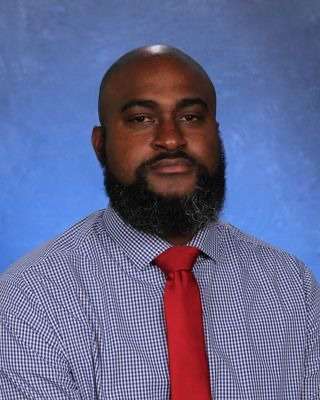
MIAMI GARDENS, Fla. — Courtney Bloom holds the title of Dean of Faculty at Monsignor Edward Pace High School, a prominent Catholic institution under the Archdiocese of Miami. In that role, he oversees the school’s teaching staff, a position that requires professionalism and a commitment to student well-being. But an investigation into Bloom’s past has uncovered allegations from his time as a seventh-grade social studies teacher at Phillips Preparatory Middle School in Mobile, Alabama, where multiple former students say he engaged in a pattern of abusive, humiliating, and bullying behavior that left them feeling targeted and traumatized.

The allegations, detailed by former students who spoke on condition of anonymity, describe a teacher who used his authority to single out and shame children in front of their peers. One former student recalled an incident in which Bloom, frustrated by a student’s questions, walked over to the child, handed him the whiteboard marker, and told him, “If you thought you could teach it better, here’s the marker, and teach it yourself.” The student, who was simply seeking clarification, was left standing in front of the class, humiliated and speechless. Multiple students report that Bloom was the ringleader of a bullying campaign in the classroom, creating an environment of fear and degradation.
These allegations date back to Bloom’s tenure at the Mobile magnet school. They raise serious questions about how he was able to leave that position and ascend to a leadership role at a Catholic high school in South Florida, where he now oversees faculty who are supposed to protect students. The Archdiocese of Miami, which operates Monsignor Edward Pace High School, has not responded to repeated requests for comment regarding Bloom’s employment history or the allegations against him. Bloom also did not respond to requests for comment.
How This Story Was Reported
In reporting this story, this reporter spoke with a former student quoted in this article and with his parents. This reporter also reviewed multiple transcripts, including the student’s school records, and a copy of the Phillips Preparatory Middle School yearbook for the year the student attended. The former students who spoke to South Alabama News are known to this publication and requested anonymity.
A Pattern of Humiliation
According to former students, Bloom’s behavior at Phillips Preparatory was not an isolated incident but a consistent pattern. He allegedly singled out students he deemed slow or annoying, using sarcasm, public shaming, and exclusion as tools of control. “He would call on you and then mock your answer,” one former student said. “If you got something wrong, he’d make a face or say something like, ‘Wow, that’s impressive,’ in a way that made everyone laugh at you.” The student added that Bloom “had favorites and he had targets. If you were a target, you dreaded going to his class.”
Another student recalled that Bloom would frequently tell students they were hopeless or wasting his time. On one occasion, he allegedly told a student who was struggling with an assignment to “just give up now, because you’re never going to get it.” The student, who was 12 years old at the time, said the comment made her cry. “I felt like I was stupid,” she said. “I didn’t want to go to school anymore. I didn’t want to raise my hand. I just wanted to disappear.”
The whiteboard marker incident, described by multiple students, became a defining moment for the class. “It was like he was saying, ‘You think you’re so smart? Fine, you do it,’” one student explained. “But the kid wasn’t trying to be smart. He was just asking a question. That’s what we were supposed to do.” The student said the child stood at the front of the room for several minutes while Bloom sat at his desk, refusing to help. “He was just standing there, holding the marker, looking like he wanted to cry. And Bloom just let him stand there. It was cruel.”
The Heritage Paper
Former students also described another incident that they say left a lasting emotional scar on a classmate and exposed Bloom’s willingness to weaponize deeply personal subjects in front of an audience.
According to multiple former students, Bloom assigned a classroom writing project about ethnicity and heritage. The subject was sensitive under any circumstances, but especially so in Mobile, a city with deep racial divides and a history of segregated schools, neighborhoods, and social circles. Students were asked to write about their backgrounds, their families, and how they understood their own racial and cultural identities.
One student in the class was mixed race and biracial, with South Asian heritage. He wrote a personal paper about himself, his family, and the complicated experience of navigating multiple identities in a community where race was often treated as a rigid binary. The paper was deeply private. It included details about his racial history and his family that he had never shared publicly. Former classmates say he wrote it with the understanding that it would be turned in to the teacher, not performed for an audience.
That understanding was shattered when Bloom allegedly announced that he would read the papers aloud in front of the entire class. Students say the room went silent. The mixed-race student was visibly mortified. He had no choice but to sit at his desk while Bloom read his personal, deeply private, and upsetting racial history aloud. In a city with deep racial divides, the moment was not merely embarrassing. It was exposing in a way that former students say felt almost violent.
“He turned my identity into a spectacle,” the former student said. “I felt like I was being dissected in front of everyone. I didn’t write that paper to be read out loud. I wrote it because I had to. And Bloom didn’t ask. He didn’t care. He just read it.”
Other students corroborated the account, saying they remembered the incident because of how uncomfortable the entire class became. “You could feel how awful it was,” one former classmate said. “Nobody was laughing. Nobody knew where to look. But Bloom just kept reading. It was like he enjoyed having that power over someone.”
The incident, former students say, was consistent with Bloom’s broader pattern of using the classroom as a stage for humiliation. “He didn’t just teach,” one former student said. “He performed. And sometimes the performance was making a kid feel small. Sometimes it was making a kid’s private life into a lesson for everyone else.”
From Mobile to Miami
Bloom’s educational background includes studies at Spring Hill College in Mobile, Alabama, where he was also a member of the track and field team. After his time at Phillips Preparatory, he relocated to South Florida, where he eventually secured a position at Monsignor Edward Pace High School. The school’s website lists him as Dean of Faculty, placing him in a key administrative role alongside the school’s principal and president. In this capacity, Bloom is responsible for managing faculty concerns, overseeing academic standards, and ensuring that the school’s teaching staff adheres to the mission and tenets of the Catholic Archdiocese of Miami.

A job posting for a mathematics teacher at the school instructs applicants to send their resumes directly to Bloom, further confirming his role as a gatekeeper for faculty hiring. The posting emphasizes the need for a professional demeanor and a genuine passion for the well-being of students.
The Archdiocese of Miami’s policy on creating and maintaining a safe environment for children and vulnerable adults requires all employees to undergo background screening and adhere to strict codes of conduct. However, it remains unclear whether the Archdiocese was aware of the allegations from Bloom’s time in Alabama when he was hired, or whether any investigation was conducted into his previous employment. The Archdiocese did not respond to questions about whether Bloom disclosed the allegations during the hiring process or whether any complaints have been filed against him since he joined Monsignor Pace.
The Silence of the Archdiocese
The Archdiocese of Miami has previously faced public scrutiny over its handling of misconduct allegations, though no allegations against Bloom have been substantiated in court. Now, with Bloom, the Archdiocese faces questions about whether it properly vets the educators it places in positions of authority over children.
Former students from Phillips Preparatory expressed disbelief that Bloom had risen to such a position. “It makes me sick to think that he’s now in charge of other teachers,” one former student said. “He shouldn’t be around kids at all. He shouldn’t be in a school. He should be nowhere near a classroom.” Another former student said she still suffers from anxiety related to Bloom’s class. “I’m 25 years old and I still remember how he made me feel. I can’t imagine what he’s doing to kids now.”
A Culture of Fear
The allegations against Bloom are not isolated to a single year or a single group of students. Former students from multiple graduating classes at Phillips Preparatory described similar experiences. Several said they believe his behavior was tolerated or ignored by school administrators for years. “Everyone knew about Bloom,” one former student said. “If you got him for seventh-grade social studies, you knew you were in for a bad year. We would warn the kids coming up. We’d say, ‘Watch out for Bloom. Don’t ask questions. Don’t draw attention to yourself.’”

The Mobile County Public School System, which oversees Phillips Preparatory, has a detailed bullying and harassment policy that explicitly states that employees whose behavior is alleged to be in violation of the policy will be subject to the investigation procedure, which may result in discipline, up to and including discharge. However, it is unclear whether any formal complaints were ever filed against Bloom, or whether the school system took any disciplinary action. A spokesperson for Mobile County Public Schools did not respond to requests for comment.
The Cost of Silence
For the students who spoke out, the memories of Bloom’s classroom remain vivid and painful. “He made us feel small,” one former student said. “He made us feel like we didn’t matter. And the worst part was that no one stopped him. The other teachers knew. The principal knew. But nothing ever happened.” That student, now an adult, said she decided to speak out because she fears that Bloom is repeating the same behavior at Monsignor Pace. “If he’s doing this to high schoolers now, it’s even worse,” she said. “They’re older, but they’re still kids. They still deserve to be protected.”
The allegations raise serious questions about the Archdiocese of Miami’s vetting process for educators. While the Archdiocese requires background checks and adherence to safe environment policies, those measures may not capture patterns of emotional abuse or bullying that do not result in criminal charges. Former students say that Bloom’s behavior was well-known at Phillips Preparatory, yet he was able to leave the school and secure a leadership position elsewhere. “It’s like he just moved on and left all of us behind to deal with the damage,” one former student said. “And now he’s in charge of other teachers. It’s not fair.”
We have attempted to reach out to Courtney Bloom for comment. The Archdiocese of Miami’s Office of Catholic Schools also did not respond to multiple requests for comment.
Opinion: A Reckoning Deferred
The following section is the opinion of South Alabama News.
As Dean of Faculty at Monsignor Edward Pace High School, Courtney Bloom is responsible for ensuring that the school’s teachers provide a safe and supportive learning environment for all students. In our view, the allegations from his past suggest that he is unsuited for that role, and the Archdiocese of Miami, which has pledged to protect children and vulnerable adults, should answer for why a man accused of bullying and humiliating middle school students was allowed to rise through the ranks of Catholic education.
Until the Archdiocese answers these questions, the students of Monsignor Edward Pace High School—and the faculty Bloom oversees—deserve to know whether the man in charge of their education is the same man who, according to former students, years ago handed a child a marker and told him to teach the class himself, and read a mixed-race student’s private racial history aloud in a classroom where no one could escape.
For the former students of Phillips Preparatory, the pain of those moments has never fully faded. “I still have dreams about that classroom,” one of them said. “I still hear his voice. And I still can’t believe that he got away with it.” Whether the Archdiocese of Miami will hold him accountable, or whether Courtney Bloom will continue to rise, remains an open and deeply troubling question.
Editor’s note: The allegations in this article are attributed to former students of Phillips Preparatory Middle School, whose identities are known to South Alabama News and who spoke on condition of anonymity. This reporter also interviewed a former student and his parents and reviewed transcripts, student records and a class yearbook. The section labeled “Opinion” reflects the views of South Alabama News. Courtney Bloom and the Archdiocese of Miami did not respond to requests for comment. No allegations have been proven in court.