Former Headland Officer Gets Probation in Domestic Violence Plea; Manslaughter Charge Over Pregnancy Loss Dismissed
Former Headland police officer Robert Maddox Jr. received five years of probation after pleading guilty to domestic violence, and a manslaughter charge tied to his wife's 2022 miscarriage was dismissed.
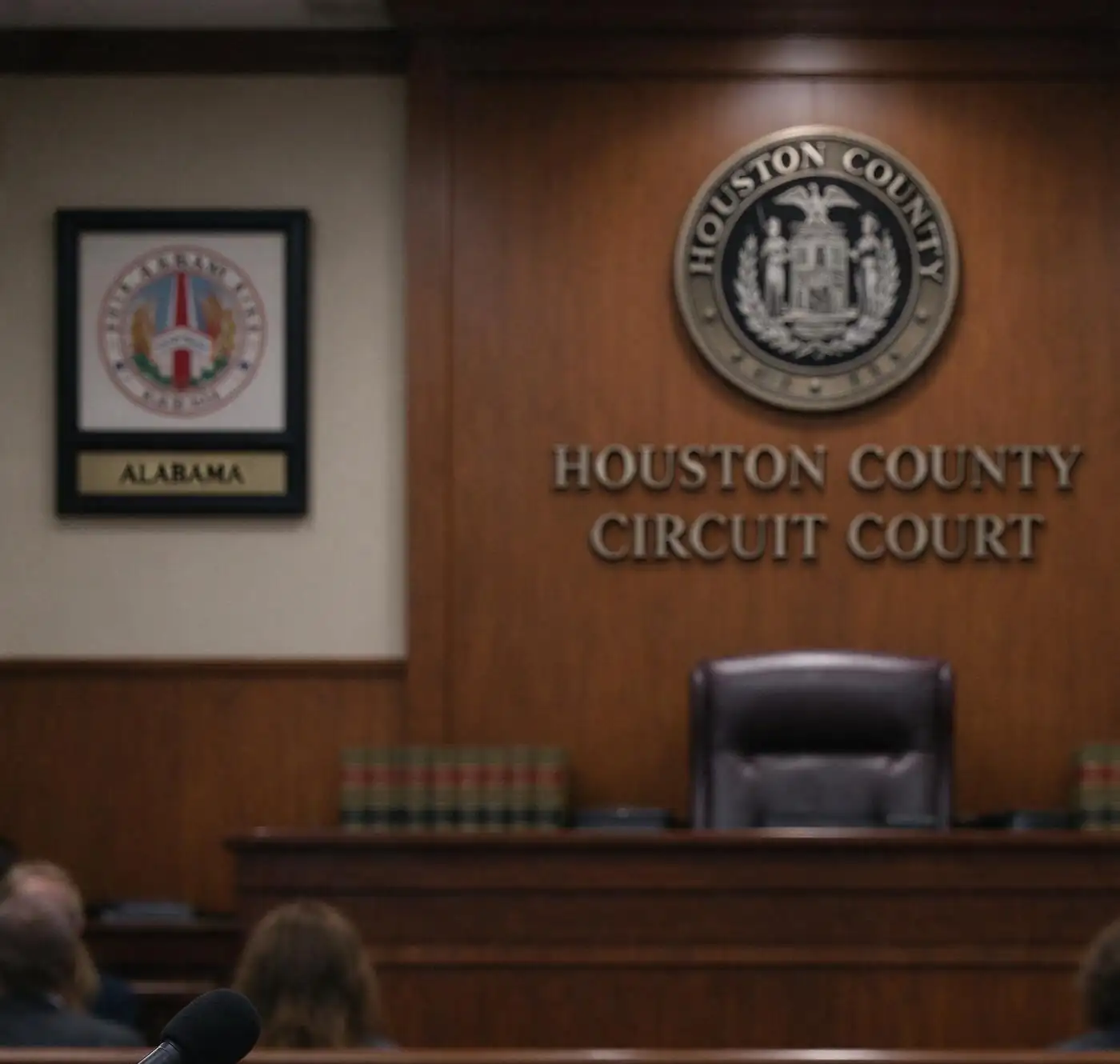
DOTHAN, Ala. — A former Headland police officer who was once charged with murder after his wife lost a pregnancy has been sentenced to probation after pleading guilty to domestic violence, with a related manslaughter charge dismissed as part of a plea agreement in Houston County Circuit Court.
Robert Maddox Jr. was sentenced on May 18, 2026, to five years of probation. The judge also ordered him to pay a fine of about $3,000, which he may pay at $50 a month, and to complete anger management classes through the court referral office. The plea ended a case that had been pending for roughly four years.
How the Case Began
The case dates to Feb. 15, 2022. At the time, Maddox had been working as an officer with the Headland Police Department for about four months, and he and his wife were living in a rented apartment in nearby Dothan with their two young children. That night, his wife, who was about three months pregnant, suffered a miscarriage and was taken to a hospital.
Roughly six weeks later, she reported to authorities that Maddox had assaulted her both before and after the hospital visit. She sought help from an organization that works to prevent domestic abuse, which put her in touch with police and helped her obtain a protective order from a Houston County judge. In her petition, she said the abuse took place in front of the couple’s children.
Dothan police investigated. A fellow Headland officer gave investigators a sworn statement saying Maddox had told him, in the weeks after the miscarriage, that he had hit his wife in the abdomen, choked her and shoved her down.
From Murder to Manslaughter
Maddox was arrested and initially charged with murder. Under Alabama’s homicide laws, an unborn child at any stage of development is treated as a person, which allows prosecutors to bring homicide charges when a fetus dies as a result of a crime.
Roughly five weeks after the arrest, he posted bond and was released, and he remained free for the rest of the case. The Headland Police Department let him go.
A few months after the arrest, a Houston County grand jury declined to indict Maddox for murder. Instead, it returned an indictment for manslaughter, alleging that he recklessly caused the death of the fetus by striking his wife’s abdomen with his fist. Manslaughter is a Class B felony in Alabama, carrying a maximum of 20 years in prison.
Bond conditions
While the case was pending, Maddox asked the court to ease his bond conditions. He sought removal of his ankle monitor so he could travel more easily to work in Florida. A judge refused to take off the monitor but did allow him to travel to north Florida for his job.
The Plea Agreement
Almost four years after the arrest, Maddox’s attorney and prosecutors reached a deal. Under its terms, Maddox would enter a guilty plea to domestic violence, and prosecutors would recommend that the manslaughter charge be dismissed.
The district attorney’s office has said it could not have proven manslaughter at trial because no evidence tied Maddox’s actions to the loss of the pregnancy and no expert could establish a causal connection. Prosecutors also questioned the previous administration’s decision to seek the manslaughter indictment in the first place. The current district attorney took office in January 2023, after the case had been filed.
Maddox has denied the allegations. In written responses, he said the account of what happened was not true and that his wife had no bruises or marks when she was at the hospital.
The Sentencing Hearing
At the May 18 hearing, the judge dismissed the manslaughter count and summarized the domestic violence allegation: that during an argument, Maddox was accused of throwing his wife down and choking her, and that the state alleged it happened in front of the couple’s children.
The judge noted that committing the offense in the presence of children could have triggered a minimum of six months behind bars. Because Maddox was a first-time offender, the judge said, that minimum did not apply. He then imposed the probation term, the fine and the anger management requirement.
Maddox’s wife attended the hearing.
Alabama Law on Harm to a Pregnancy
In 2006, Alabama lawmakers passed a measure commonly known as Brody’s Law, which amended the state’s homicide statutes so that the definition of a person includes an unborn child in utero at any stage of development. That change made it possible to charge someone with murder, manslaughter or other homicide offenses when a criminal act causes the death of a fetus.
The same year, Alabama adopted a chemical endangerment statute making it a crime to knowingly expose a child to controlled substances or drug-making chemicals. In 2013, the Alabama Supreme Court ruled that the word child in that law includes an unborn child, and prosecutors across the state have used it to charge women who test positive for drugs during pregnancy or at delivery.
Proving cause in pregnancy-loss cases
Cases in which a defendant is accused of causing a miscarriage through violence can be difficult to prove in court. Prosecutors generally must show that the defendant’s actions directly caused the loss, which often requires medical records and expert testimony, such as from a forensic pathologist. Miscarriages in the first trimester are common even without any injury, which can make that link harder to establish.
Domestic Violence Resources
Alabama law allows victims of domestic abuse to seek protection-from-abuse orders in circuit court, and advocates at domestic violence programs across the state can help with safety planning, shelter and the court process at no cost.
- In an emergency, call 911.
- The National Domestic Violence Hotline is available 24 hours a day at 1-800-799-7233, or by texting START to 88788.
- The Alabama Coalition Against Domestic Violence maintains a statewide crisis line at 1-800-650-6522.