D-SNAP Food Assistance for Hurricane Sally Survivors May Be on the Way
Alabama DHR is requesting D-SNAP disaster food assistance for Hurricane Sally survivors on the Gulf Coast, with an online application option planned.
Households recovering from Hurricane Sally could soon get extra help putting food on the table. Alabama officials are working to bring D-SNAP — the Disaster Supplemental Nutrition Assistance Program — to communities along the Gulf Coast, opening a federal food-assistance channel for survivors whose losses fall outside the normal rules of the state’s regular benefits system.
D-SNAP is an extension of the regular food stamp program designed for disaster survivors whose needs fall outside normal SNAP rules. The distinction matters for thousands of coastal households: standard SNAP eligibility turns on income and household composition, while a disaster supplement is built for families who were not on food assistance before the storm but suddenly face refrigerators full of spoiled food, kitchens that no longer function, and paychecks interrupted by closed workplaces.
Eligibility standards differ from standard benefits, taking into account disaster-related expenses such as home repairs, temporary shelter, and lost income. A household that spent its savings on a hotel room after the roof failed, or that missed weeks of work because an employer’s business flooded, can qualify for help that ordinary SNAP rules would never consider. The program has been activated after previous hurricanes affecting the region, and it typically takes about two weeks or more after approval before benefits begin flowing — a lag that officials weigh when deciding how quickly to move the request forward.
Alabama Awaits Federal Approval
The Alabama Department of Human Resources confirmed it is partnering with the USDA Food and Nutrition Service to submit the request as Sally recovery continues. The federal agency administers the disaster program on top of the state-run SNAP system, meaning that every D-SNAP activation requires a formal request from the state, a federal review of the storm’s documented impact, and an approval that sets the eligible counties and benefit period.
Because of the COVID-19 pandemic, the state is asking that the application process include an online option rather than relying solely on in-person sign-ups. The request addresses one of the most painful lessons of previous disaster benefits: the traditional model funnels thousands of applicants into lines at limited application sites, forcing families still coping with storm damage to stand together for hours — exactly the kind of crowding public health officials spent 2020 trying to prevent.
The department said implementation normally begins 14 to 21 days after a disaster and voiced hope that an approval would arrive within days. Daniel Sparkman, speaking for ADHR, said the request was being modified to add the online application option due to the pandemic. The modification adds a layer of federal review — the online alternative must be built into the approved operating plan — but state officials judged the delay worthwhile given the health risks of a purely in-person process.
Who the Program Serves
D-SNAP’s target population is broader than many residents realize. It reaches renters whose apartments flooded, workers whose hours vanished along with their workplaces, and families who had never needed public assistance before a hurricane dismantled their monthly budget in an afternoon. For coastal Alabama, where fishing, tourism, and service jobs dominate the economy, a single storm can erase income for weeks even for households whose homes survived intact.
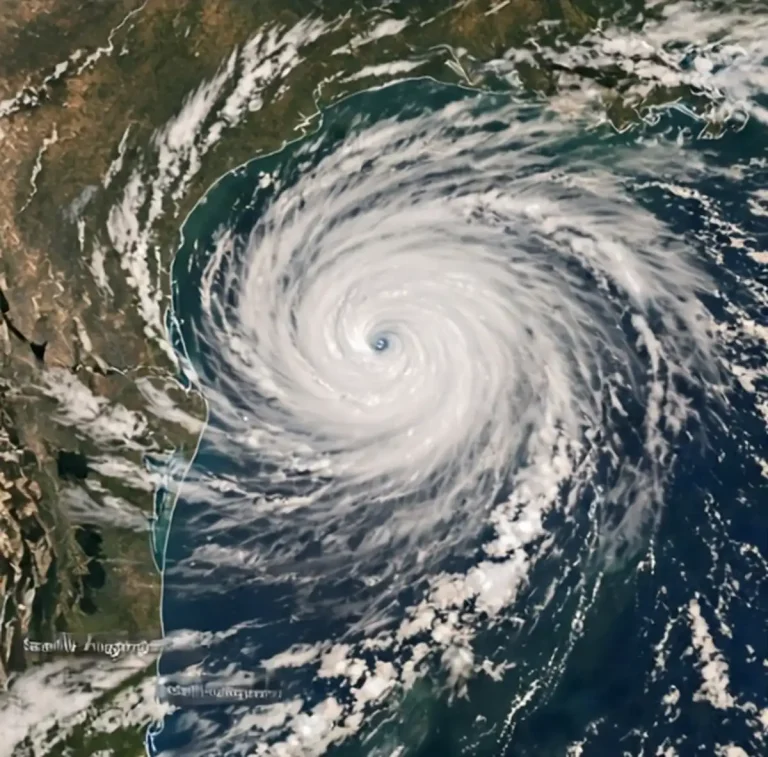
Hurricane Sally struck the Gulf Coast as a slow-moving Category 2 storm, making landfall near Gulf Shores and stalling long enough to drop historic rainfall across the region. The flooding that followed damaged thousands of homes and businesses from Baldwin County into Mobile County, and the power outages lasted long enough in many neighborhoods to destroy every refrigerated and frozen item in the household food supply. Those combined losses — spoiled groceries, shuttered workplaces, damaged kitchens — are precisely the circumstances D-SNAP was designed to address.
The slow pace of Sally’s movement compounded the damage in ways that fast-moving hurricanes do not. Hours of sustained tropical-force winds peeled roofs and downed trees across the coastal counties, while rainfall measured in feet rather than inches pushed creeks and rivers over their banks well inland of the immediate coastline. Recovery planners noted early that the storm’s aftermath would stretch across months, which is why state officials pursued every available federal assistance channel, food aid among them.
Help Available Now
In the meantime, current SNAP recipients can request replacement benefits through their local county office. Federal rules allow households already receiving SNAP to replace food destroyed in a disaster such as a power outage or flood, and county offices across the affected region were preparing for a wave of replacement requests from residents who lost entire freezers of food during the extended outages.
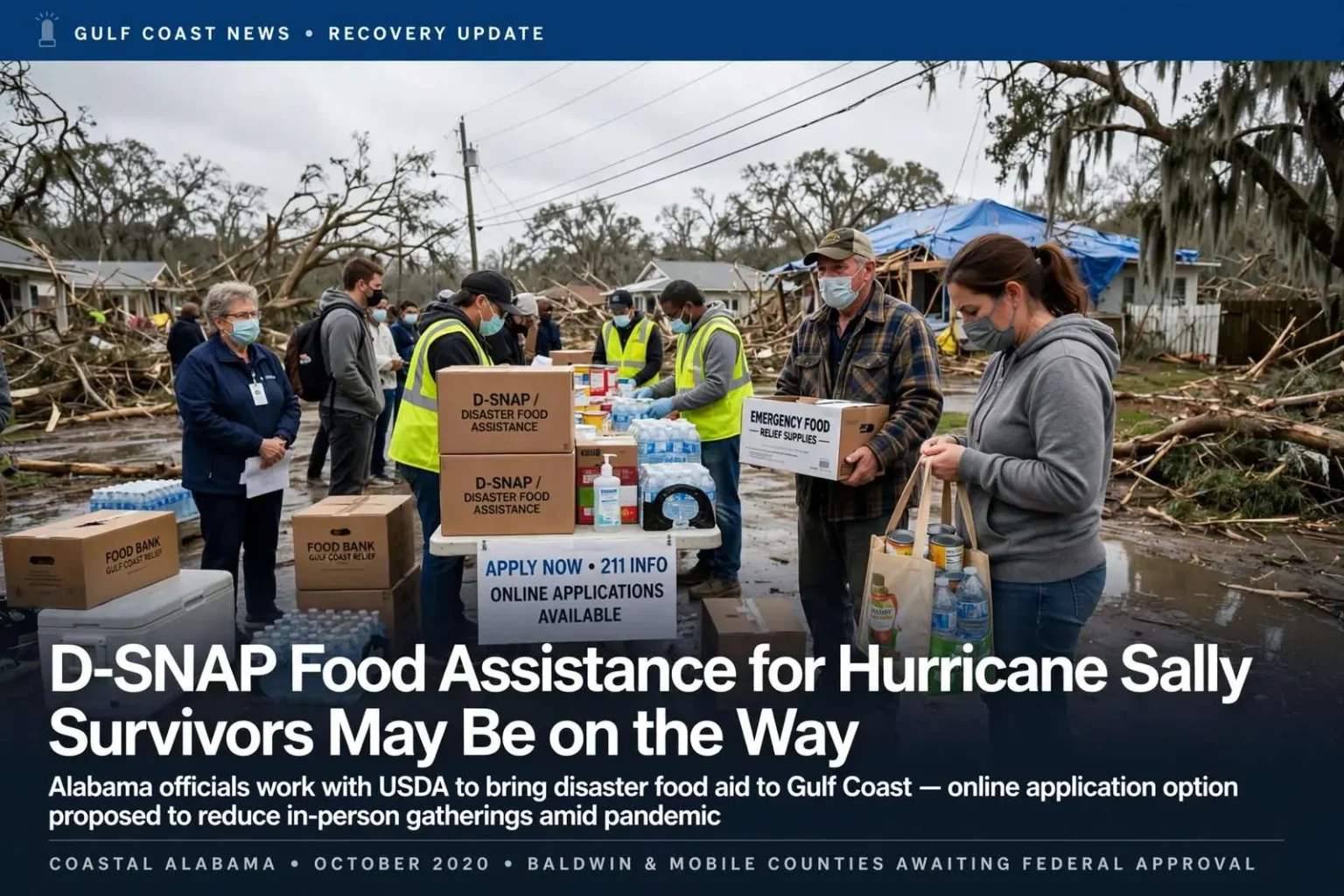
Anyone needing immediate food assistance is urged to call 211 or visit one of the many Gulf Coast distribution points offering groceries and hot meals. The 211 line connects residents to the regional network of food banks, churches, and nonprofit distribution sites that mobilized after the storm, and the distribution points operated in the days and weeks following landfall as the community’s front-line response while government programs moved through their approval processes.
The volunteer network filled the gap that always exists between a hurricane and the arrival of formal assistance. Feeding operations sprang up in church parking lots and community centers across the coastal counties, staffed by residents handing out box lunches, bottled water, and bags of groceries to neighbors — including many families who never imagined standing in a distribution line.
What Approval Would Mean
If the federal request is approved, the D-SNAP application window would open in the affected counties for a defined period, and residents would apply — online, if the state’s modification is accepted, or in person at designated sites. Approved households receive benefits on the same electronic benefit cards used for regular SNAP, usable at grocery stores and qualifying retailers, with amounts calibrated to household size and disaster circumstances.
The two-week lag between approval and benefits is a structural reality of the program, which is why state officials emphasized their hope for quick federal action. Every day of delay extends the period during which recovering families absorb food costs on already-damaged budgets. Officials urged residents to monitor announcements from ADHR for the application window’s opening, the list of eligible counties, and the documentation — typically proof of identity and residence in the disaster area — that applicants should prepare in advance.
For the Gulf Coast households still rebuilding after Sally, D-SNAP represents one piece of a wider recovery framework that includes federal disaster assistance for housing and repairs, insurance claims, and nonprofit relief. Food assistance cannot repair a roof, but it can free a family’s remaining cash for the repairs — and in a recovery measured in months, that margin matters.
How D-SNAP Fits the Federal Recovery Stack
D-SNAP operates alongside the other federal disaster programs rather than replacing them. Household repair grants, low-interest disaster loans, and unemployment assistance for storm-displaced workers each address separate losses, and food benefits address the most immediate one. Families navigating recovery typically move through all of these channels in parallel, and state officials encourage applicants to treat food assistance as one application among several rather than a substitute for the rest.
The program’s activation after previous hurricanes affecting the region gave Alabama officials a working template. Gulf Coast states have activated D-SNAP repeatedly over the past two decades following major landfalls, and the accumulated federal guidance — on eligible disaster expenses, application site operations, and benefit timelines — means states can move quickly once an approval lands. The pandemic-era modification to include an online option is the newest layer, and its adoption here could shape how future Gulf Coast disasters are handled.
The request for an online application path also reflects how much of the state’s benefits infrastructure had already shifted toward digital access. With county offices operating under pandemic restrictions and staffing strained by the same storm recovery their clients were living through, a web-based application offered the only realistic way to reach thousands of households quickly without recreating the dense in-person lines of past activations.
Regional Need Across the Coast
Need along the Gulf Coast varied widely by neighborhood after Sally. Communities near the landfall zone in Baldwin County absorbed the heaviest wind damage, while inland flooding hit neighborhoods miles from the shore that residents of coastal Alabama sometimes assume are safe from hurricane impacts. The breadth of the damage — spanning both counties and every type of housing — is what pushed officials toward a disaster food program with broad eligibility rather than relying on narrow hardship funds.
Local governments and nonprofit organizations spent the weeks after the storm cataloging exactly those needs, and their assessments fed the state’s federal requests. The damage documentation that supports a D-SNAP request — displaced households, extended power outages, business closures — came from the same county-level surveys that supported requests for other federal aid, giving the food-assistance request a well-evidenced foundation.
For residents waiting on the approval, the practical advice from officials remained consistent: current SNAP households should contact their county office about replacement benefits immediately, all households needing food now should call 211 or reach a distribution point, and anyone who may qualify for D-SNAP should gather the documents proving identity and address so an application can be filed the day the window opens. When approval arrives, the program’s benefits will flow to households whose pandemic year and hurricane season arrived together — a compound burden that coastal Alabama families did not choose and cannot navigate alone.