Rip Current Danger Persists as Gulf Waters Remain Closed Across Baldwin and Mobile County Beaches
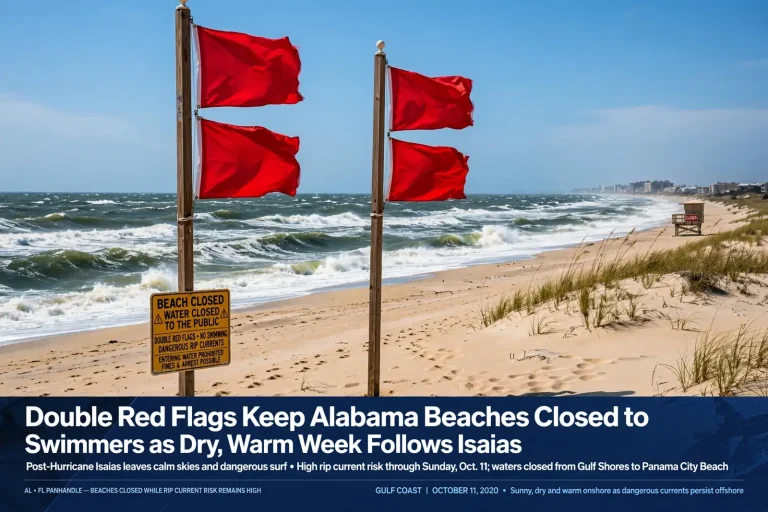
<p>Double red flags remain posted at Orange Beach, Gulf Shores, Fort Morgan and Dauphin Island as Tropical Storm Bertha keeps the Gulf churned up, with officials warning that rip currents remain one of the northern Gulf Coast's most dangerous, persistent hazards.</p>
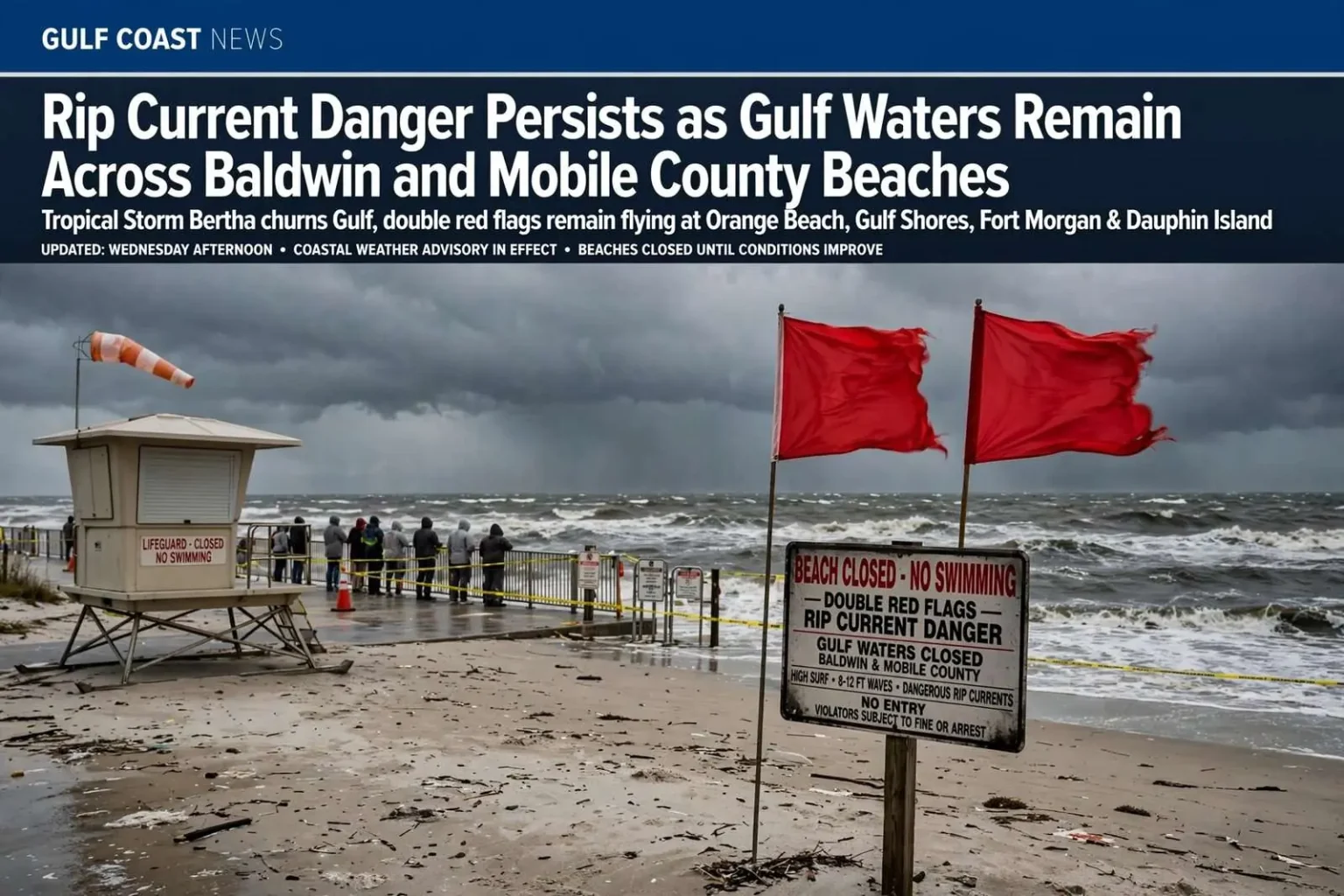
Gulf waters along Baldwin and Mobile County beaches remained closed to swimmers as Tropical Storm Bertha continued to churn the northern Gulf of Mexico this week, with double red flags still flying at Orange Beach, Gulf Shores, Fort Morgan and Dauphin Island. Officials in the affected cities said the closures would stay in place until surf and current conditions ease enough to reopen the water safely, and beachgoers who ignore the flags could face a fine or arrest.
A weather buoy south of Orange Beach recorded waves topping 12 feet at the height of the storm, with surf building to around eight feet along Baldwin County’s beaches. The rough water sidelined much of the deep-sea charter fleet at Perdido Pass, normally busy with fishing trips this time of year, as captains and anglers waited to see whether scheduled outings would still go out. By Wednesday afternoon, some boats had ventured back out on the water inside the pass and fishing activity picked back up there, even though swimmers remained barred from the open Gulf.
Dangerous rip currents were expected along Mobile and Baldwin County beaches through the week, according to a coastal weather advisory covering the area’s Gulf-facing shorelines. Officials warned that the currents can sweep even strong swimmers away from shore and into deeper water, and beachgoers are urged to swim only near a lifeguard while the advisory remains in effect.
Understanding the Danger of Rip Currents
Beach safety officials stressed that rip currents remain the most persistent hazard on the northern Gulf Coast, storm or no storm. Unlike an approaching tropical system, rip currents can form even on a calm, sunny day, which makes them especially dangerous for tourists who may not recognize the warning signs. The narrow, fast-moving channels of water can pull away from the shoreline through the breaker zone at speeds of up to eight feet per second, quickly carrying even experienced swimmers well past the point where they can touch bottom. Lifesaving officials say rip currents are responsible for the large majority of rescues performed by surf beach lifeguards each year and remain one of the leading weather-related causes of death along the Gulf Coast.
Anyone caught in a rip current is advised to stay calm and float rather than fight the pull of the water, since swimming directly against the current can quickly exhaust even strong swimmers. If possible, swimmers should swim parallel to the shoreline until they are out of the current’s pull before turning back toward the beach. Anyone unable to escape a rip current should face the shore and wave or call for help rather than continuing to struggle against the water. Officials also caution beachgoers never to attempt a rescue on their own; going in after someone caught in a current often results in the would-be rescuer being pulled under as well. Instead, bystanders should alert a lifeguard or call 911 and let trained personnel respond.
Beach Closures and Enforcement
At Orange Beach and Gulf Shores, city officials closed the water to the public outright as Bertha’s outer bands moved through, warning that anyone who went in anyway could face arrest or a fine. Surf built to a choppy 5 to 6 feet with a strong current running west along the shore, with the stretch of coast between Dauphin Island and Destin remaining under a moderate rip current risk into the weekend. Gulf Shores Beach Safety officials said the closures were not taken lightly, noting that waves breaking as high as 8 to 11 feet at the height of the storm made both swimming and simply wading along the shoreline life-threatening. A closure covers the entire width of the beach, not just the deeper water, since a strong current can pull a person off their feet even in the shallows.
Even with the water off-limits, the shoreline itself still drew a crowd. At Cotton Bayou Public Beach, visitors gathered along the sand to watch the churning surf and take photos, with little concern that anyone would try to sneak into the water under the double red flags. Several beachgoers said the rough conditions, while not the calm day they had hoped for, were still worth seeing up close.
Storm Impacts Beyond the Shoreline
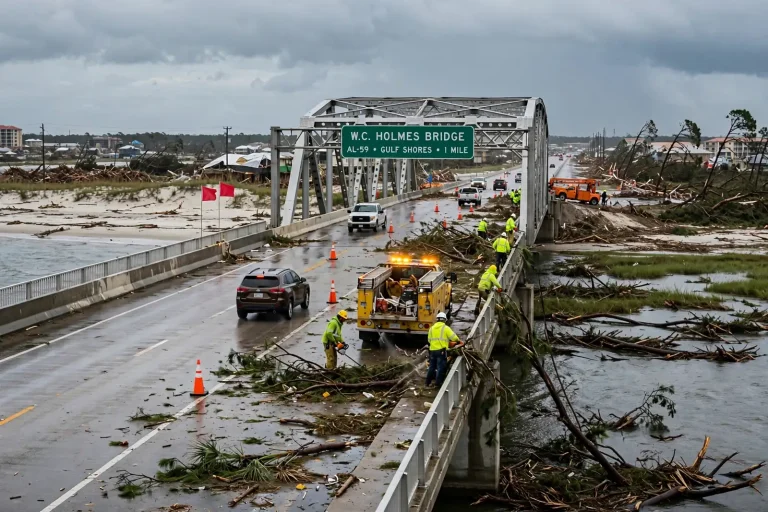
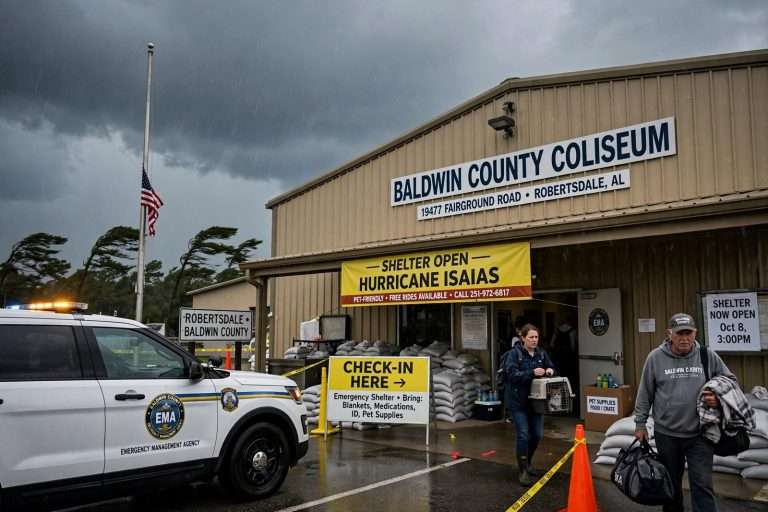
Farther east, Gulf State Park closed its fishing pier as a precaution as Bertha’s outer bands stirred the surf, even though the bulk of the storm stayed well offshore. Baldwin County Emergency Management officials continued monitoring conditions throughout the week, noting that while rainfall was limited locally, strong wind and rough surf alone were enough to warrant caution along piers, jetties and other waterside structures up and down the coast.
Local officials routinely issue rip current advisories during periods of elevated surf and shifting Gulf conditions, and residents and visitors planning beach trips are encouraged to check local conditions and posted flag warnings before entering the water. Until the double red flags come down, officials are urging everyone to stay out of the Gulf and to keep a close eye on official updates before heading back into the surf.