Mardi Gras and Senior Bowl Crowds Boosted Downtown Mobile in 2008
A 2008 WKRG report described a tourism and hospitality boost in downtown Mobile as Mardi Gras coincided with the Senior Bowl.
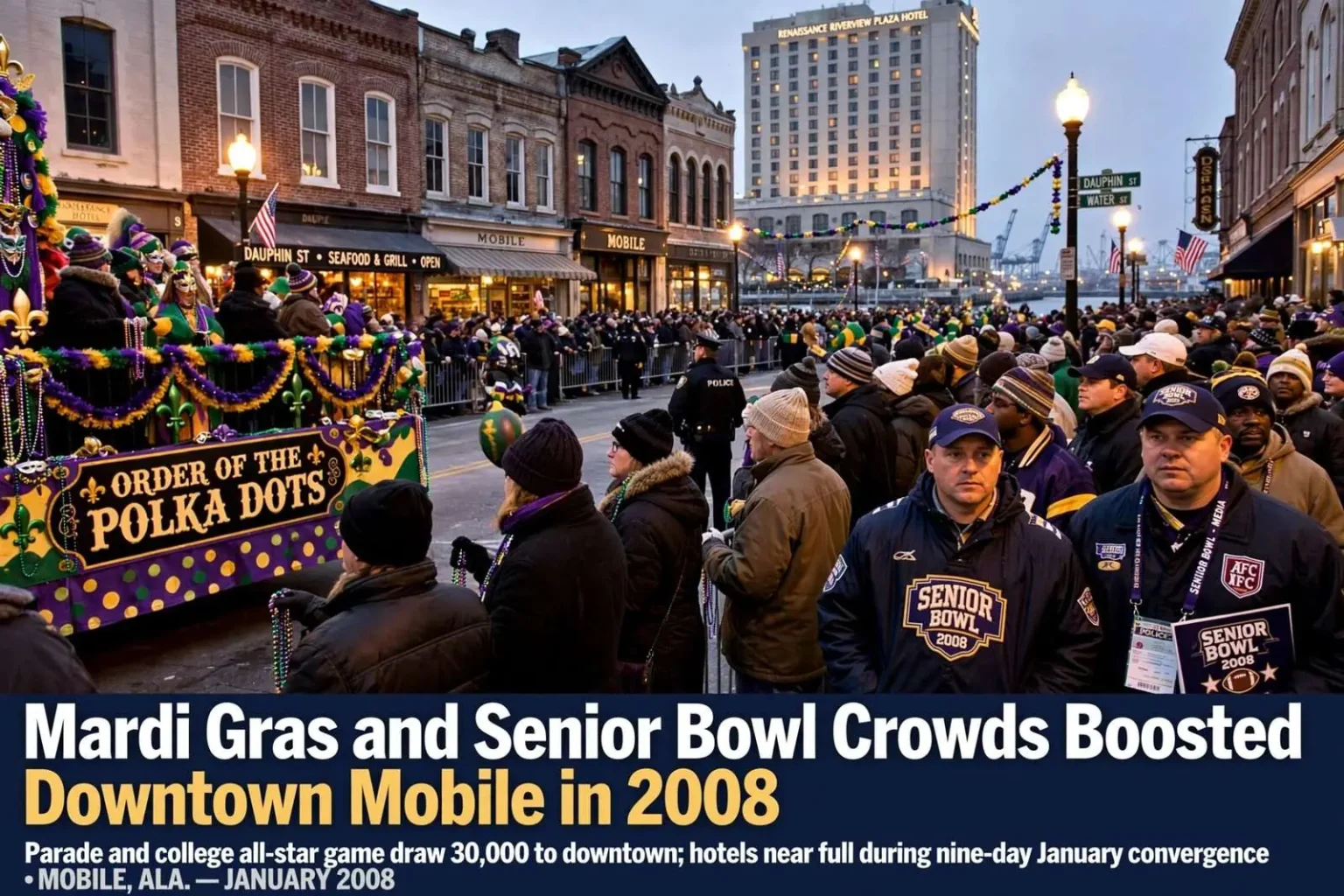
MOBILE, Ala. — Downtown Mobile businesses and hotels anticipated a major boost in January 2008 as Mardi Gras festivities coincided with the Senior Bowl, according to a local station. The overlap of the city’s two signature early-year draws — three centuries of Carnival tradition and the nation’s premier collegiate all-star game — packed restaurants, hotels and parade routes within the same several blocks of downtown, producing one of the busiest stretches of the winter season for the central business district.
Mobile police estimated that nearly 30,000 people attended the Order of the Polka Dots parade despite cold weather. The turnout demonstrated a point that Carnival organizers in Mobile have long made: that crowd sizes for the city’s parades hold up even when temperatures dip, because the schedule is fixed and generations of families plan their Mardi Gras season around it. The Order of the Polka Dots, one of Mobile’s established mystic societies, rolls as part of a parade calendar that fills downtown streets on consecutive nights through the Carnival season.
The Mobile Bay Convention and Visitors Bureau said January tourism numbers were higher than the previous year. For the bureau, which markets Mobile and its beaches to leisure travelers, convention planners and sports fans across the region, the January combination of Mardi Gras and Senior Bowl week served as a showcase for the city’s ability to host large events in a compact, walkable downtown. Hotels filled not just for a single night but across consecutive weekends, extending the economic benefit beyond what either event would produce alone.
Hotels and downtown merchants feel the rush
The Renaissance Riverview Plaza Hotel said it was nearly full for a nine-day stretch. The tower hotel, which anchors the riverfront along Water Street and overlooks the Mobile River and the skyline’s convention corridor, serves as one of the city’s largest lodging properties and a bellwether for downtown tourism. A nine-day near-sellout during the Mardi Gras and Senior Bowl convergence illustrated how far in advance visitors book when two major events align, and how a full downtown hotel ripples outward to restaurants, bars, parking decks and shops within walking distance.
Downtown business owners prepared for the crowds by extending hours, adding staff and stocking up for the surge that the dual events promised. Shops along Dauphin Street and the surrounding blocks, restaurants in the historic district and vendors positioned along parade routes all see a disproportionate share of their annual business during the Carnival weeks. For establishments near the Mobile Civic Center and the parade routes, the Senior Bowl crowds added a midweek surge on top of the weekend parade attendance, compressing what would normally be two separate busy periods into one continuous run.
Why the overlap mattered
Mardi Gras in Mobile predates the more famous New Orleans celebration, with roots reaching back to the city’s French colonial founding in 1702, and the modern season builds through weeks of parades, balls and society events capped by Fat Tuesday. The Senior Bowl, by contrast, is a single week of practices, workouts, media events and the game itself, but it brings hundreds of NFL coaches, scouts and executives to town alongside thousands of fans. When the two calendars collided in January 2008, downtown absorbed a crowd mix that ranged from masked revelers to talent evaluators in team jackets, all competing for the same restaurant tables and parking spaces.
The economic logic of such an overlap is straightforward. Tourism spending in Mobile concentrates in lodging, food service, entertainment and retail, and each of those sectors benefits when occupancy runs high for consecutive days. A near-full hotel for nine days means housekeeping and front-desk overtime, restaurant reservations, and taxi and rideshare demand that would not exist in a typical January. City sales tax collections and lodging taxes rise accordingly, funding services that residents use throughout the year.
The broader Mobile economy
The 2008 season came during a period when Mobile was working to broaden its downtown economy beyond the port and heavy industry that historically dominated it. The convention center on the riverfront, the restored historic districts and the growing roster of mystic societies all fed a strategy of drawing visitors to the city center. Events like the Senior Bowl, which had called Mobile home since 1951, were central to that pitch: they filled hotel rooms in the depths of winter, when Gulf Coast tourism otherwise slows, and they broadcast the city’s name to a national television audience.
For local officials and business owners, the lesson of January 2008 was the value of a full downtown calendar. A cold-weather parade that still drew tens of thousands, a hotel that stayed near capacity for more than a week and visitors who spent across the downtown core all pointed in the same direction — that Mobile’s combination of Carnival tradition and major sporting events could anchor a winter economy that once had none.
How Mobile’s Mardi Gras machinery works
The parade that drew the 30,000-person estimate is one piece of a vast seasonal operation. Mobile’s mystic societies — private social organizations that stage parades and masked balls — build floats months in advance, contract marching bands, and coordinate with the city on routes, police details and street closures. The Order of the Polka Dots is among the societies whose parades thread through the downtown core, and each parade night requires coordination among the society, the Mobile Police Department, public works crews and downtown merchants. Cold weather adds complications, from keeping float riders warm to managing crowds that arrive bundled in coats rather than Carnival colors, but the 2008 estimate showed that attendance held anyway.
That resilience is partly generational. Mardi Gras in Mobile is a family tradition as much as a tourism product, with bleacher seats, reserved sidewalk space and parade-day gatherings passed down through households. Visitors from across the Gulf Coast — from New Orleans to Pensacola and inland to Jackson and Atlanta — plan whole weekends around the parade schedule, booking rooms and restaurants well ahead. When a national event like the Senior Bowl lands in the middle of that season, the two audiences merge rather than compete.
The Senior Bowl’s place in the football calendar
The Senior Bowl occupies a unique niche in American sports. Played each year since 1951 and hosted in Mobile throughout its history, the game brings the nation’s top college seniors to the Gulf Coast for a week of practices in front of every NFL team’s coaching staff and scouting department. For the players, it is a job interview; for the professional teams, it is the most concentrated evaluation opportunity of the offseason. For Mobile, it means an influx of football staff, media and fans during a week when the city’s convention and hospitality infrastructure is already primed by Carnival.
The game’s economic footprint extends well beyond the stadium. Teams book hotel blocks for entire weeks, practice facilities and media operations rent space, and the Associated Press and network broadcasts carry the city’s name into living rooms during the run-up to the NFL draft. Local restaurants, steakhouses and downtown bars absorb a clientele that is in town on expense accounts, a spending pattern distinct from the family-focused parade crowds but every bit as valuable to downtown businesses.
Measuring the boost
Convention and visitors bureaus measure seasons like January 2008 through several lenses: hotel occupancy and average daily rates, attraction admissions, sales tax receipts and surveys of visitor origin. The bureau’s statement that January tourism numbers ran ahead of the previous year put a formal marker on what downtown businesses could feel anecdotally — fuller dining rooms, longer parade crowds and busier sidewalks. Hotel operators like the Renaissance Riverview Plaza serve as the most direct indicator, since a nearly full property for nine straight days represents rooms that would otherwise sit empty in a shoulder season.
The convergence also carried lessons for future scheduling. Cities that host multiple signature events in close succession must manage street cleaning, police staffing, parking availability and public transportation to keep both audiences moving. Mobile’s parade routes and the Senior Bowl’s venues sit close enough together that the same downtown blocks serve both, which concentrates the benefit but also strains parking and traffic flow on the busiest nights.
A historical snapshot
More than a decade and a half later, the January 2008 overlap stands as a case study in how Mobile’s tourism economy works at its best. The city’s Mardi Gras tradition — older than any other in the United States — provides a dependable, multigenerational audience, while events like the Senior Bowl add national attention and a professional-class visitor base. When the calendars align, downtown Mobile functions as a single integrated venue, and the businesses that line Dauphin Street, Water Street and the parade corridors capture spending that neither event alone would generate. This article records a historical 2008 report on that season’s tourism and economic activity, not a current schedule or forecast.