Isaias Debris: Last Chance for State Road Pickup in Escambia, Conecuh Counties Begins Nov. 30
ALDOT's contractor makes its final Hurricane Isaias debris run along state roads in Escambia and Conecuh counties starting Nov. 30. Here is what will be collected and where to put it.
ESCAMBIA COUNTY, Ala. — Residents of Escambia and Conecuh counties have a few more weeks to get their remaining Hurricane Isaias debris to the roadside. The Alabama Department of Transportation said its contractor, Crowder Gulf, will start the last round of storm debris collection along state-maintained roads in both counties starting Monday, Nov. 30, 2026.
Because this is the last scheduled pass, ALDOT is urging homeowners, renters and business owners to move any eligible material to the proper spot before collection begins.
The short version
- What: Final Hurricane Isaias debris collection pass
- Where: State-maintained roads in Escambia and Conecuh counties
- Starts: Monday, Nov. 30, 2026
- Who does the work: Crowder Gulf, under contract with ALDOT
- Local roads: Cities and counties coordinate pickup on the streets and roads they maintain
- Not accepted: Household garbage and debris outside the collection area
Which roads this covers
ALDOT’s contractor handles only roads that the state maintains, such as U.S. highways and numbered state routes. Debris sitting along county roads and city streets falls to local governments, which are arranging their own collection on the routes they are responsible for.
That split matters for residents trying to figure out whether a pile in front of their home will be picked up on Nov. 30. Anyone who lives on a county road or a city street should check with their city hall or county commission office for the local schedule, which may differ from the state’s.
ALDOT said it is coordinating with cities and county governments in the area on the cleanup.
What crews will haul away
Two broad categories of storm debris are eligible for this pass.
Vegetation
- Tree branches and limbs
- Logs
- Plants and shrubs
- Leaves, which should be left loose rather than bagged
Building materials
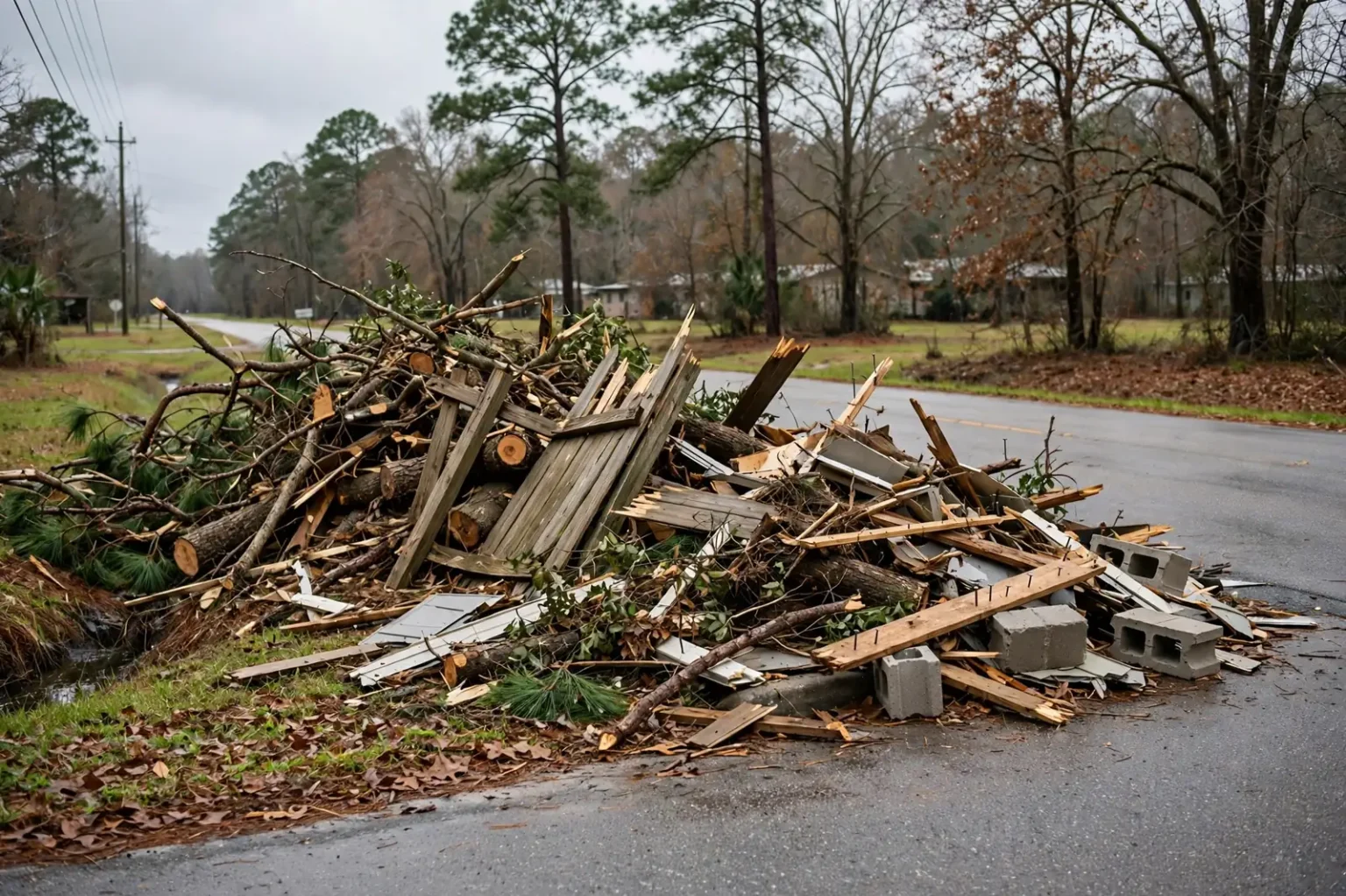
Construction and demolition debris from storm-damaged structures is also accepted, including:
- Lumber
- Siding
- Fencing
- Concrete blocks
- Other parts of a building’s exterior
What gets left behind
Regular household trash and garbage will not be picked up as part of the storm cleanup. Material left beyond the approved collection area will also stay put, no matter what kind it is.
Setting out debris the right way
Where a pile sits can determine whether crews are allowed to take it. ALDOT laid out several placement rules:
- Use the curbside, but keep it clear. Piles belong at the curb, without spilling into the travel lanes or covering storm drains.
- Mind the sidewalk. On properties with a sidewalk, debris must go on the street side of it. Material stacked between the sidewalk and a house or business will not be collected.
- Nothing out front? If a lot has no sidewalk, ditch or power line along the road, set debris at the edge of the property, before reaching the curb.
- Give structures space. Do not prop or pile debris against fire hydrants, power poles, meters, trees or other fixtures near the road.
Keeping piles away from utilities and drains is about more than tidiness. Debris resting against a pole or meter can make it harder for crews to grab it safely with heavy equipment, and material pushed into a storm drain can block the flow of rainwater and cause localized flooding during the next heavy storm.
Residents may also notice contractors taking pictures of piles before loading them. ALDOT said those photos help document that the material qualifies for reimbursement from the Federal Emergency Management Agency.
How FEMA reimbursement fits in
The cleanup is being carried out under FEMA’s process for repaying qualifying debris removal expenses. Under FEMA’s Public Assistance program, state and local governments can seek repayment for a share of the cost of removing disaster debris, but only for work that meets federal eligibility rules.
That is why the rules on what counts as storm debris and where it must be placed are applied strictly. Material has to be tied to the disaster, collected from public rights-of-way and properly documented. Ordinary trash, debris that was not caused by the storm, or piles set in places crews are not authorized to enter can jeopardize reimbursement, so contractors are instructed to leave them.
Whether and how much federal money ultimately flows to Alabama for Isaias cleanup depends on federal disaster decisions. Gov. Kay Ivey asked the president on Oct. 23 for a major disaster declaration covering 23 Alabama counties, a list that includes both Escambia and Conecuh.
A long cleanup after Isaias
Hurricane Isaias came ashore near Destin, Florida, on the evening of Oct. 9 as a Category 2 storm and pushed north into south Alabama. Escambia and Conecuh were among the hardest-hit counties in ALDOT’s Southwest Region, with downed trees, damaged homes and widespread power outages.
State contractors started the first round of debris pickup along affected state and federal routes in Conecuh, Escambia, Monroe and Wilcox counties on Oct. 19. ALDOT previously scheduled the final pass in Monroe and Wilcox counties to begin Nov. 16. The Nov. 30 start date now sets the closing round for the remaining two counties.
Escambia County includes Brewton, the county seat, along with East Brewton, Atmore and Flomaton. Conecuh County’s seat is Evergreen. Communities across both counties have spent weeks clearing yards, repairing roofs and dragging fallen timber to the roadside since the storm.
What residents should do before Nov. 30
- Walk the property and gather any remaining storm-related branches, logs or building materials.
- Separate vegetation from construction debris into distinct piles.
- Do not bag leaves; leave them loose.
- Place piles at the curb, on the street side of any sidewalk, without blocking the road or drains.
- Keep debris clear of hydrants, meters, poles and trees.
- Put household garbage out on its normal schedule, separate from storm debris.
- If you live on a county road or city street, contact local officials about their collection plans.
Safety while cleaning up
Moving heavy storm debris can be dangerous. Emergency management officials commonly advise wearing sturdy gloves, boots and eye protection, using chainsaws only with proper training and protective gear, and watching for nails, broken glass and sharp metal in construction debris. Anyone who comes across a downed power line should stay well away from it and report it to the utility rather than trying to move it.
Lifting heavy logs or sections of building material alone can also cause injuries, so it is best to get help or wait for equipment when a piece is too large to handle safely. Residents should also stay alert for snakes, insects and other wildlife that can shelter in debris piles.
Next steps
The Nov. 30 pass is intended to wrap up ALDOT’s storm debris work along state routes in Escambia and Conecuh counties. Residents with questions about whether their road is maintained by the state, the county or a city can contact their local government offices for guidance.
South AL News will continue to follow Hurricane Isaias recovery efforts in Escambia and Conecuh counties and across southwest Alabama.