


Two former students and two parents describe a year of alleged isolation, humiliation and exclusion targeting the only South Asian child in a third-grade classroom at Kate Shepard Elementary School during the 2000–2001 school year
MOBILE, Ala. — For nearly 26 years, a former Kate Shepard Elementary School student has carried memories of a third-grade year he describes in one word: torture.

He says he was the only child of South Asian descent at the school. He was a transfer student, a top-performing test taker and, by his account, the sole target of his teacher, Ebony McDowell. According to him, McDowell spent the first half of the 2000–2001 school year isolating him, humiliating him in front of classmates, and working to exclude him from field trips, rewards and honors he had earned.
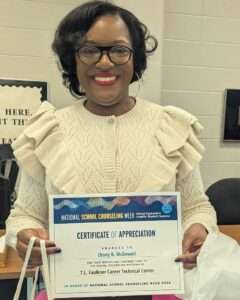
McDowell is now a counselor in the Mobile County Public School System, serving students at Vigor High School and Faulkner Career Technical School.
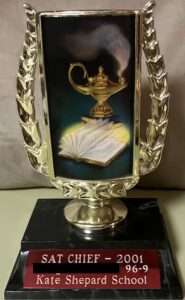
South Alabama News spent several weeks investigating these allegations. The former student’s account was independently confirmed by both of his parents and by a second former student who was in the same classroom. This publication also reviewed education records and physical artifacts that corroborate key parts of the story, including an academic trophy that bears the student’s name, the school’s name and his test score.
McDowell has not been charged with any crime. The allegations described in this article have not been adjudicated in any court or administrative proceeding.
A Transfer Made for Belonging
The former student, now an adult, asked that his name be withheld. He said the story begins with a decision his parents made for his well-being.
He had been attending another elementary school in the Mobile area. His family arranged a transfer to Kate Shepard Elementary because they believed it was better integrated and would place him among other Asian students. According to the family, roughly 30 percent of the student body at the time was of East Asian descent, and the rest of the school was largely Black and white.
To their knowledge, he was the only student of South Asian descent enrolled at the school.
“We moved him there so he would feel like he belonged,” one parent told South Alabama News. “Instead, he was singled out almost from the start.”
The family says McDowell repeatedly threatened to have their son’s transfer revoked. That threat, they say, caused constant stress in their household, even though a classroom teacher had no authority over it. Transfer decisions were made by the school district and the Board of School Commissioners, not individual teachers.
“She used the transfer as a weapon,” the former student said. “As an eight-year-old, I didn’t know she couldn’t actually do it. I just knew I might be sent away.”
According to the student and his parents, McDowell also regularly told him to go home and tell his parents that “this was a school and not a daycare.” The family says the remark was delivered to a child as a message meant for his parents, and they understood it as a pointed insult.
The Desk at the Front of the Room
One of the earliest incidents the former student describes involved the placement of his desk.
He says students’ desks were arranged in standard rows. McDowell allegedly pulled his desk out of the rows and set it alone at the front of the classroom, facing away from his peers. That placement, he said, put him on display.
“Everyone could stare at me,” he said. “She could make me the joke of the class, and she did.”
At other times, he says, McDowell turned his desk to face a corner. From there he could not see his classmates or the chalkboard where lessons were written. The second former student interviewed for this article said they remember the desk being separated from the others.
When the family complained, the school principal held parent-teacher conferences. According to the student and both parents, McDowell denied the allegations in those meetings. She reportedly explained the desk placement by saying the boy could not get along with other students.
The family describes a sharp difference in McDowell’s manner depending on who was watching.
“In front of the principal, she was pleasant, calm and professional,” one parent said. “In the classroom, when it was just her and the children, our son described a completely different person.”
Corporal Punishment and Parents Who Pushed Back
In 2000, corporal punishment was legal in Alabama public schools, and paddling was still used in many districts. Alabama is among the states that have never banned the practice by statute.
According to the former students, McDowell paddled children in her class. The former student says he was never paddled himself. He credits that to his parents, whom he describes as very strong advocates who intervened often and warned school officials they were prepared to take legal action if their son was physically disciplined.
That intervention, the family says, shaped how the alleged mistreatment happened. With physical punishment off the table, they believe it moved into forms that were harder to prove: psychological pressure, social isolation and exclusion carried out out of sight.
“The paddle was never used on him,” a parent said. “But what happened behind that classroom door was, in some ways, worse, because it was designed not to leave a mark anyone could see.”
School Supplies Turned Against Him
Like many schools, Kate Shepard issued a supply list each year. According to the family, it included paper, pencils, markers, crayons, tissues, paper towels and even toilet paper for classroom use.
The former student’s parents said they bought every item on the list, choosing brand-name, top-quality products. As many parents of young children do, they wrote his name on individual items such as pencils and markers so they would not be lost.
According to the student, McDowell collected every child’s supplies and sorted them by category into communal piles. Children who brought nothing, or who brought lower-cost items, drew from the same piles as everyone else. The family says a communal system alone might have been defensible. What they object to is what allegedly followed.
The former student says McDowell appeared displeased that his name was on his supplies. He alleges she encouraged other students to use items labeled with his name, and that classmates soon understood what she wanted.
He recalls one moment clearly. A classmate picked up a pencil with his name on it and snapped it in half over his knee.
“He did it to please her,” the former student said. “That’s how it felt. The other kids figured out the game she was playing, and some of them joined in.”
“Pennies for Pasta”
During the school year, Kate Shepard took part in Pennies for Pasta, a long-running school fundraising program run by Olive Garden in partnership with the Leukemia & Lymphoma Society. Students collected spare change and small donations for the society’s work. Olive Garden rewarded top classes with a pasta party.
The former student said he threw himself into the campaign. He saved leftover lunch money and collected loose change from around his home, and he estimates he gave more than $50 on his own, a large sum for a third grader.
According to his account, a class that raised more than $250 earned a party with spaghetti and breadsticks for every student. His class passed that mark, and he believes his own donations were a large part of why.
When Olive Garden representatives arrived with food, the former student says, McDowell told them he should not be served. He does not know what reason, if any, she gave.
He says the representatives refused. They told her every student would be offered a plate of spaghetti and breadsticks, and that any child who didn’t want it could decline.
“People from outside the school saw what was happening and wouldn’t go along with it,” he said. “That stayed with me. Strangers were kinder to me than my own teacher.”
The Limousine Ride
In another fundraiser, students received catalogs of merchandise to sell to family, friends and neighbors, with proceeds going to the school. The family recalls that the items were priced well above what they would cost in stores. Many buyers purchased them mainly to support the school and the children.

The former student describes himself as a natural salesman at that age. He says he sold several hundred dollars’ worth of merchandise, going to relatives, family friends and even strangers.
The school offered top sellers a rented limousine ride. He believes the threshold was about $500 in sales, though he cannot recall the exact figure. He says he passed it, and that the principal and the catalog company confirmed he had qualified.
According to the family, McDowell then tried to block him from receiving the reward. They say she lobbied the principal, the limousine company and the catalog company, arguing that he would be disruptive to the other students on the ride.
His parents objected formally. They say they won, and their son rode in the limousine with the other top sellers.
“For a third grader, a limo ride was the most exciting thing in the world,” he said. “I earned it. And I remember knowing that my teacher had tried to take it away.”
The Awards Ceremony He Was Never Told About
The allegation the family finds most painful involves an honor that is documented in physical form today.
In the 2000–2001 school year, Alabama public-school students took the Stanford Achievement Test, a standardized exam commonly called the “Stanford 9” or, by some families, the “SAT.” The former student says he was consistently at the top of his class, and that his results that year were the best in his class, at or near the top of his grade, and among the highest in the entire school.
Kate Shepard held an awards ceremony for high scorers. Every qualifying student received a trophy. The family believes students scoring above roughly 95 percent were eligible.
The ceremony was held after school hours on a stage in the cafeteria. The family says other qualifying students and their parents were invited.
According to the former student and his parents, neither he nor they were ever told about it.
The next day, the principal handed him his trophy. That, he says, was how he learned an entire ceremony had taken place without him, and that he had been left out despite qualifying.
“The principal gave me the trophy, and I realized everyone else had walked across a stage with their families watching,” he said. “I didn’t even know it existed.”
The family alleges McDowell deliberately withheld notice of the ceremony.
His parents still have the trophy. South Alabama News examined it. It bears the student’s name, the name of Kate Shepard Elementary School and a score of 96.9 percent.
The Field Trip Kept Secret
Several people interviewed described an incident involving a third-grade field trip.
According to the former student, he asked to use the restroom one day. As soon as he left the room, he says, McDowell opened her desk drawer and took out permission slips for an upcoming grade-wide field trip. The second former student corroborated that the slips were handed out while he was gone.
According to both former students, McDowell passed out the slips and told the class to hide them from him and not tell him a trip was planned. The slips allegedly had a seven-day deadline for a parent’s signature and a small fee.
When he came back, nothing suggested anything had happened. Over the following week, he says, classmates kept the secret.
He learned of the trip on the day the slips were due, as other students turned them in with their fees. He says he panicked and asked McDowell for a permission slip. She allegedly refused, saying the deadline was that day.
This was before children carried cell phones. He says he asked to use the telephone in the front office to call his parents so one of them could come sign the form. McDowell allegedly refused that request too, saying he had missed the deadline.
On the day of the trip, the rest of the third grade boarded buses. The former student says he was walked to a fourth-grade classroom, handed a stack of worksheets, and left to work among older children he didn’t know until his class returned.
“I sat in a room full of strangers, older kids, doing busywork, while my whole grade was on a trip I was never allowed to know about,” he said. “That’s when I understood it wasn’t an accident. It was planned.”
The Solar System Project
The final incident the former student described involved a class assignment on the solar system.
He says he spent weeks on it. He and his parents visited several arts-and-crafts stores to buy Styrofoam spheres in different sizes. He painted and labeled each planet and says he took care to size them in proportion to one another.
“It was my pride and joy,” he said. “My parents spent real money going from store to store to help me get it right.”
When projects were presented, he says his was one of the most elaborate in the room. According to his account, McDowell gave it the lowest grade in the class. Classmates who turned in a poster, or a sheet of paper with planets drawn in pencil, allegedly scored higher.
“I didn’t understand,” he said. “I did everything right, and I was the one who got punished. Looking back, I believe it was just one more way to tell me I didn’t matter.”
Relief From an Unlikely Source
The family says the alleged mistreatment lasted roughly half the school year.
McDowell was pregnant during the 2000–2001 school year and went on maternity leave partway through. South Alabama News reviewed records showing that she had a child born during that school year. That timing matches the former student’s account.
Rose Caffey, the mother of former NBA player and Mobile native Jason Caffey, took over the class as the long-term substitute for the rest of the year, according to the family.
The former student describes the change as immediate.
“When Mrs. Caffey came, it was like the lights came back on,” he said. “She treated me like any other kid. I got to just be a student again.” This reporter was able to verify the pregnancy. Public records show that McDowell has a daughter named ARYN BRADLE MCDOWELL, born during the exact time the victim student alleged.
Corroboration and Methodology
South Alabama News does not publish allegations of this nature lightly.
The former student’s account was confirmed in separate interviews with both of his parents, who described the principal conferences, their complaints and their direct involvement in several of the disputes. A second former student, who was in the same classroom during the 2000–2001 school year, independently corroborated parts of the account, including the separated desk and the concealed field-trip permission slips.
This publication also reviewed education records and physical artifacts, including the Stanford Achievement Test trophy described above, and records confirming the birth of McDowell’s child during the school year, which is consistent with the timeline the family gave.
The events described took place more than 25 years ago. Memories fade, and some details, such as exact dollar amounts and deadlines, are approximate by the sources’ own account. Where a source was unsure of a specific detail, this article says so.
Response From McDowell and the School System
South Alabama News contacted Ebony McDowell and the Mobile County Public School System for comment on the allegations in this article, providing a summary of the claims and a deadline to respond. As of publication, neither McDowell nor the school system had provided a response. This article will be updated if a response is received.
Why This Matters Now
The former student says he came forward for one reason: McDowell now works as a counselor, a role built on trust, confidentiality and the emotional well-being of young people.
“A counselor is supposed to be the person a kid goes to when they’re struggling,” he said. “I’m not asking anyone to take my word for everything. I’m asking the school system to look at this seriously, because I know what it’s like to be a child with nowhere to turn.”
His parents say they hope the story encourages other former students, from Kate Shepard or elsewhere, to share their own experiences, good or bad.
“We fought for our son every single day that year,” one parent said. “Not every child has parents who can do that. That’s what keeps us up at night.”
Anyone with information about the events described in this article, including former students, parents or staff of Kate Shepard Elementary School during the 2000–2001 school year, is encouraged to contact South Alabama News. Sources may request confidentiality.