

The U.S. Department of Energy’s Oak Ridge National Laboratory, one of the nation’s premier federal research institutions, employs a scientist with a past that would raise eyebrows in any government security review: a history of political sabotage, voter manipulation, and associations with campaign operatives accused of engaging in dark tactics on behalf of establishment Republican candidates in Alabama.
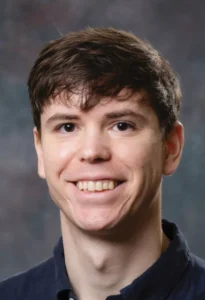
Dr. Kenton Blane Fillingim, now an R&D staff member in ORNL’s Disruptive Manufacturing Systems Development Group, has built an impressive résumé. He holds a Ph.D. in Mechanical Engineering from Georgia Tech, studies human factors in advanced manufacturing, and has published extensively on directed energy deposition and hybrid manufacturing systems. His ORNL bio highlights his research on “heuristics and biases in human decision-making” — an ironic specialty given what multiple sources describe as his previous career making decisions that exploited those very cognitive weaknesses in the service of political campaigns.
What neither ORNL’s public profile nor federal employment records appear to reflect is Fillingim’s history as a campaign operative in Mobile, Alabama, where he worked for two high-profile Republican campaigns: Sandy Stimpson’s successful 2013 mayoral bid and Bradley Byrne’s 2013 congressional campaign. During that time, according to interviews with campaign volunteers and payroll records, Fillingim engaged in activities that went well beyond the normal rough-and-tumble of local politics.
‘We Caught Him in the Act’
Kevin Spriggs, a Daphne businessman who served as the Dean Young campaign’s sign coordinator during the 2013 Republican primary for Alabama’s First Congressional District, told this reporter that he personally witnessed Fillingim destroying campaign signs in West Mobile.
“We caught him in the act,” Spriggs said. “It was late at night. He was out there tearing up our signs.”
Spriggs, who according to Federal Election Commission records donated $1,500 to the Young campaign and provided $753.54 in in-kind sign construction services, said the incident was part of a broader pattern of sign destruction that plagued the Young campaign throughout the runoff against Bradley Byrne.
The 2013 AL-01 race was a bitter, nationally watched contest between Byrne, the establishment-backed former state senator, and Young, a Tea Party favorite. The race drew comparisons to a civil war within the Republican Party, with the U.S. Chamber of Commerce pouring resources into Byrne’s campaign while conservative groups lined up behind Young.
Byrne won the runoff with 52.5 percent of the vote, but the campaign was marked by accusations of dirty tricks on both sides. Young refused to endorse Byrne afterward, citing what he called misleading attack ads.
The Payroll Trail
Federal Election Commission records show that Fillingim was not a volunteer. He was on the payroll of Candace Cooksey, a veteran Alabama political consultant who worked on both the Stimpson mayoral campaign and the Byrne congressional campaign.
FEC expenditure records show that Byrne for Congress paid Cooksey $24,800 during the 2013-2014 cycle for “fundraising consulting”. Cooksey later went on to work for the Mathis campaign after the Byrne special election concluded.
The exact amount Fillingim received is not specified in publicly available FEC documents, but his status as a paid operative working under Cooksey places him squarely within the professional apparatus of the Byrne campaign — not on its fringes.
Fried Chicken and ‘Faygo’: The Stimpson Vote Effort
Before the Byrne campaign, Fillingim worked on Sandy Stimpson’s 2013 campaign for Mayor of Mobile. Stimpson, a Republican, defeated incumbent Sam Jones in what was widely seen as a racially polarized election.
According to multiple sources with knowledge of the campaign’s ground operations, Fillingim participated in an effort to distribute fried chicken and “Faygo” — a popular local soft drink — to predominantly Black neighborhoods in Mobile. The stated purpose, according to these sources, was to provide free food and drinks to residents in exchange for their votes.
The tactic, while not unheard of in Southern politics, raises serious questions under federal and state laws prohibiting the exchange of anything of value for votes. Whether the effort was coordinated with the Stimpson campaign’s official get-out-the-vote operation or conducted by overzealous operatives remains unclear, but the sources describe it as an organized effort involving multiple campaign workers.
When reached for comment, a spokesperson for Sandy Stimpson, now in his third term as Mobile’s mayor, declined to address the specific allegations, calling them “ancient history from a campaign more than a decade ago.”
The Photo
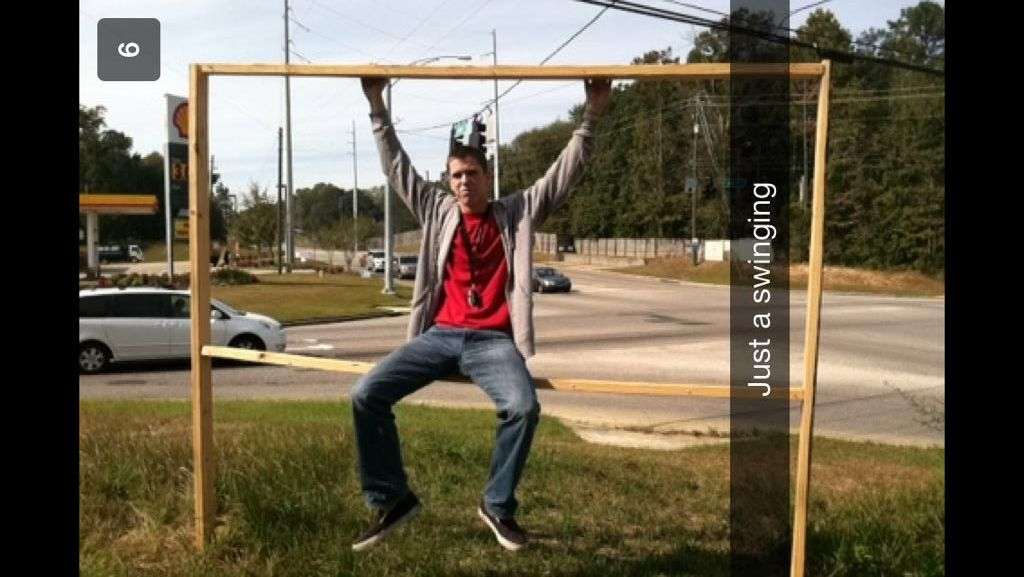
Spriggs also described a photograph taken during the sign-destruction incident. The image, according to Spriggs, shows Fillingim sitting inside a destroyed Dean Young campaign sign. The photo was reportedly circulated among Young campaign volunteers as evidence of what they believed was coordinated sabotage by the Byrne operation.
This reporter was unable to independently verify the authenticity of the photograph. Spriggs said he saw it at the time but does not have a copy, but this reporter was able to obtain a copy from a source.
A Federal Lab with No Apparent Vetting
What is perhaps most striking about Fillingim’s current position at Oak Ridge National Laboratory is the apparent absence of any background investigation that would have uncovered his political past.
ORNL, operated by UT-Battelle for the Department of Energy, is subject to federal personnel security requirements. Employees in certain positions must undergo background checks, though the depth of those checks varies by role and access level. As an R&D staff member working at the Manufacturing Demonstration Facility, Fillingim’s position may not require a security clearance, but federal employment guidelines typically include a review of an applicant’s history for any conduct that could pose a risk to the government or expose the employee to compromise.
The irony is not lost on Spriggs.
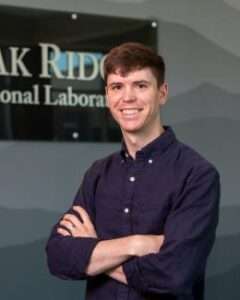
“This guy was out there tearing up campaign signs in the middle of the night, and now he’s a federal scientist?” Spriggs said. “That doesn’t sit right with me.”
Requests for comment from Fillingim through ORNL’s media relations office went unanswered. An ORNL spokesperson would not confirm whether the laboratory conducts background checks on all employees or whether Fillingim’s political activities were ever reviewed.
The Pattern and the Question
The allegations against Fillingim — sign destruction, participation in vote-buying schemes — describe a pattern of behavior that, if accurate, would be disqualifying for many public trust positions. That he now works at a facility conducting sensitive research for the Department of Energy raises uncomfortable questions about how thoroughly federal institutions vet the people they hire.
For Kevin Spriggs, the answer is simple: they don’t.
“Nobody asked the questions,” he said. “If they had, they would have found out.”