Shomari Figures sets affordability-first agenda as Democrats prepare to take control of the House
Reelected in a redrawn, Republican-leaning district, U.S. Rep. Shomari Figures says House Democrats should put cost-of-living relief ahead of impeachment and is seeking a seat on the Appropriations Committee.
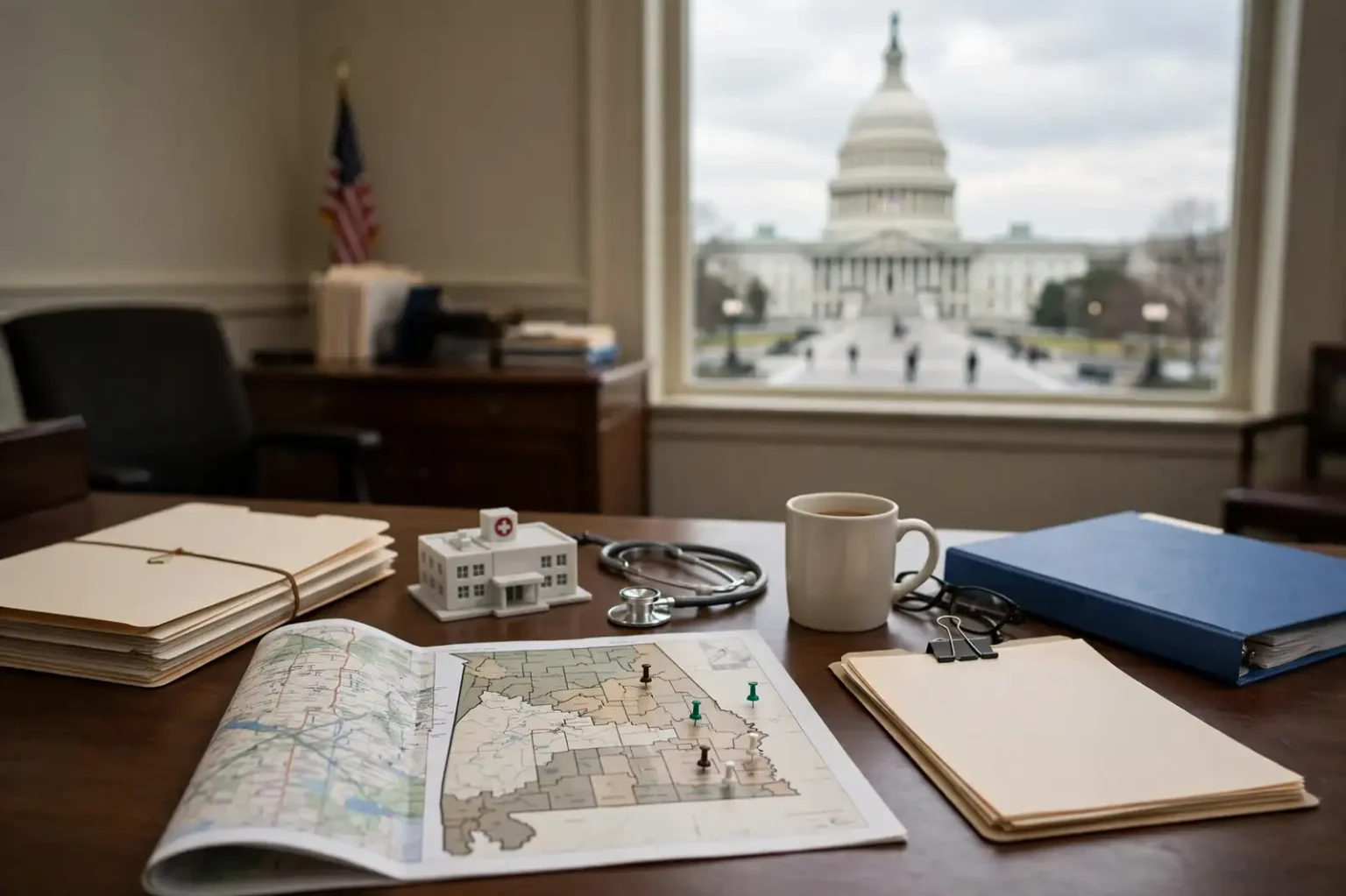
WASHINGTON — U.S. Rep. Shomari Figures, fresh off reelection in Alabama’s newly redrawn 2nd Congressional District, says Democrats should make lowering the cost of living their top priority when they take over the House majority next year, rather than opening the new Congress with a drive to impeach President Donald Trump. The Alabama Democrat is also seeking a seat on the powerful Appropriations Committee as he prepares for a second term.
Figures laid out his outlook in an interview in his Capitol Hill office on Wednesday, as more than a hundred House members prepare to either leave Congress or arrive as newcomers. He is not among those packing up.
Priorities for the New Majority
With Democrats winning control of both the House and the Senate, the party faces an internal debate over how to balance oversight of the Trump administration against legislation aimed at household costs. Figures said affordability should come first next year.
He said the most serious wrongdoing by the administration should be exposed, investigated and dealt with, and that people should face accountability where it is warranted. But he said Democrats cannot walk into the majority with impeachment as their focus from the first day. He pointed out that the president has already been impeached twice and said that approach did not turn out well for Democrats.
A realistic approach to health care
Health care is another area where Democrats are eager to act. Some progressives have raised the idea of Medicare for All, which would create one government-run insurance program covering everyone, while moderates generally favor smaller, step-by-step changes.
Figures said Democrats need to be realistic about what can be accomplished with Trump still in the White House. He described several steps he believes are achievable:
- Hospital funding: Directing more federal money to hospitals, both in rural areas and elsewhere, to shore up their finances.
- Medicaid expansion incentives: Renewing incentives that encourage states to expand Medicaid. He noted that Alabama has never expanded the program.
- Affordable Care Act subsidies: Restoring the enhanced premium subsidies under the Affordable Care Act that expired last year.
He said those kinds of changes are more achievable than some of the party’s larger ambitions.
Background: Medicaid expansion and ACA subsidies
Under the Affordable Care Act, states may expand Medicaid eligibility to cover more low-income adults, with the federal government paying most of the cost for that expanded group. Alabama is among the states that have not adopted expansion, a decision that has been the subject of long-running debate in Montgomery, particularly as rural hospitals across the state have faced financial strain.
The enhanced premium subsidies Figures referenced increased the financial help available to people who buy health insurance through the ACA marketplaces. Their expiration raised the amount many enrollees pay for coverage, which has made their renewal a recurring issue in Congress.
How He Won in a Tougher District
Figures’ second term comes after a race in a district that was redrawn to favor Republicans. He defeated Republican state Rep. Rhett Marques by eight percentage points in the new 2nd District, which Trump carried by 14 points in the 2024 presidential election.
The reshaped district runs from the Wiregrass region of southeast Alabama to Montgomery. Every county in it shifted toward Democrats this year compared with the 2024 presidential results. Figures also won rural Barbour County by four points, flipping a county Trump carried by 15.
The congressman attributed his victory to several forces coming together: voter backlash against redistricting, economic conditions and frustration with the Trump administration. He said voters had grown tired of what he described as dishonesty, theatrics and a departure from basic standards of decency and integrity.
Alabama’s shifting congressional map
Alabama’s 2nd District has been at the center of legal and political fights over representation in recent years. In 2023, the U.S. Supreme Court ruled in Allen v. Milligan that the state’s earlier congressional map likely violated the Voting Rights Act, and a federal court later imposed a new map that created a second district in which Black voters had a realistic opportunity to elect a candidate of their choice. Figures first won the seat under that map in 2024. The district was redrawn again before this year’s election, producing the more Republican-leaning lines he faced in his reelection race.
Voting Rights After Redistricting
With redistricting reshaping Alabama’s congressional lines along with maps in other states, Figures said it is essential for lawmakers to make progress on voting rights, even if the main purpose for now is to lay groundwork for the period after Trump leaves office.
He conceded that sweeping measures such as the John Lewis Voting Rights Advancement Act, which would strengthen voter protections by increasing federal review of election changes, are unlikely to win Trump’s signature. The bill is led by Rep. Terri Sewell, a Democrat from Birmingham. Figures said the legislation would probably need to be revised in light of the Supreme Court’s decision in Louisiana v. Callais.
He said there may be ways to enact certain pieces of voting rights protection, while recognizing that getting this president to sign such a measure into law is unlikely.
What the voting rights bill would do
The John Lewis Voting Rights Advancement Act, named for the late Georgia congressman and civil rights leader, is intended to restore a stronger federal role in reviewing changes to voting rules. That review process, known as preclearance, was effectively sidelined after the Supreme Court’s 2013 decision in Shelby County v. Holder, a case that originated in Alabama. Supporters of the legislation have sought to create a new formula for determining which jurisdictions would be subject to federal review.
Committee Goals for a Second Term
Looking ahead to his committee assignments, Figures is pursuing a spot on the House Appropriations Committee. He noted that the Alabama members currently serving as appropriators are all Republicans and would be in the minority if they stay on the panel next year.
In his view, adding a Democrat to the committee, which gives members a direct role in steering federal funding to their home states, would help all of Alabama. He said the state will need to count on its Democratic members to help secure appropriations and that both he and Sewell are prepared to take on that role.
Figures also wants to remain on the Agriculture Committee or move to another panel with influence over the farm economy, such as Energy and Commerce. He also holds a seat on Transportation and Infrastructure, where he was the sole member of Alabama’s delegation during the 119th Congress.
Why committee seats matter
Committees are where most of the detailed work of Congress takes place. The Appropriations Committee writes the annual spending bills that fund federal agencies and programs, giving its members significant influence over where federal dollars go. The Agriculture Committee handles farm policy, including the periodic farm bill that covers commodity programs, conservation and nutrition assistance, which is important in a district with a large rural footprint. Energy and Commerce has one of the broadest jurisdictions in the House, including health care, energy and consumer protection. Transportation and Infrastructure oversees highways, transit, aviation, waterways and ports, issues that matter to communities across Alabama.
The party in the majority typically holds more seats on each committee and controls the chairmanships, which is why a shift in House control can change how much influence individual members have.
Backing Jeffries for Speaker
House Minority Leader Hakeem Jeffries is seeking the speakership and faces possible defections from some incoming Democrats who want change in the party’s leadership. Figures is firmly in Jeffries’ corner, and Jeffries is still expected to prevail and lead the House next year.
Jeffries supported Figures as soon as Alabama’s map changed and stood by him throughout the reelection campaign, including making a trip to Alabama as his final campaign stop before Election Day.
Figures credited Jeffries with steering House Democrats through what he described as one of the most turbulent two-year periods under any recent president, a point he said people across the political spectrum could agree on. He also pointed to Jeffries’ record-setting fundraising for the party and said the Democratic leader put the party in position to win the largest House majority either party has held this century, which he called an impressive accomplishment.
Both men belong to the Congressional Black Caucus. If Jeffries wins the internal leadership election next week, he is positioned to become the first Black speaker of the House in the nation’s history in January.
What Comes Next
The new Congress will convene in January, when the House will formally elect its speaker and members will take the oath of office. Before then, House Democrats will hold their internal leadership vote, and both parties will work through the process of assigning members to committees. Committee assignments for Democrats are generally recommended by the party’s steering panel and then ratified by the full caucus.
For Alabama, the outcome of those decisions will help determine how much influence Alabama’s Democratic members have as the majority sets its agenda on health care, the cost of living, voting rights and federal spending.