Aspiring Journalists and Broadcasters Explore Media Jobs at South Alabama Communication Career Day
Television, radio, print, online and podcast professionals visited the University of South Alabama on Thursday to help students explore media careers, with seniors getting one-on-one time in a breakout session.
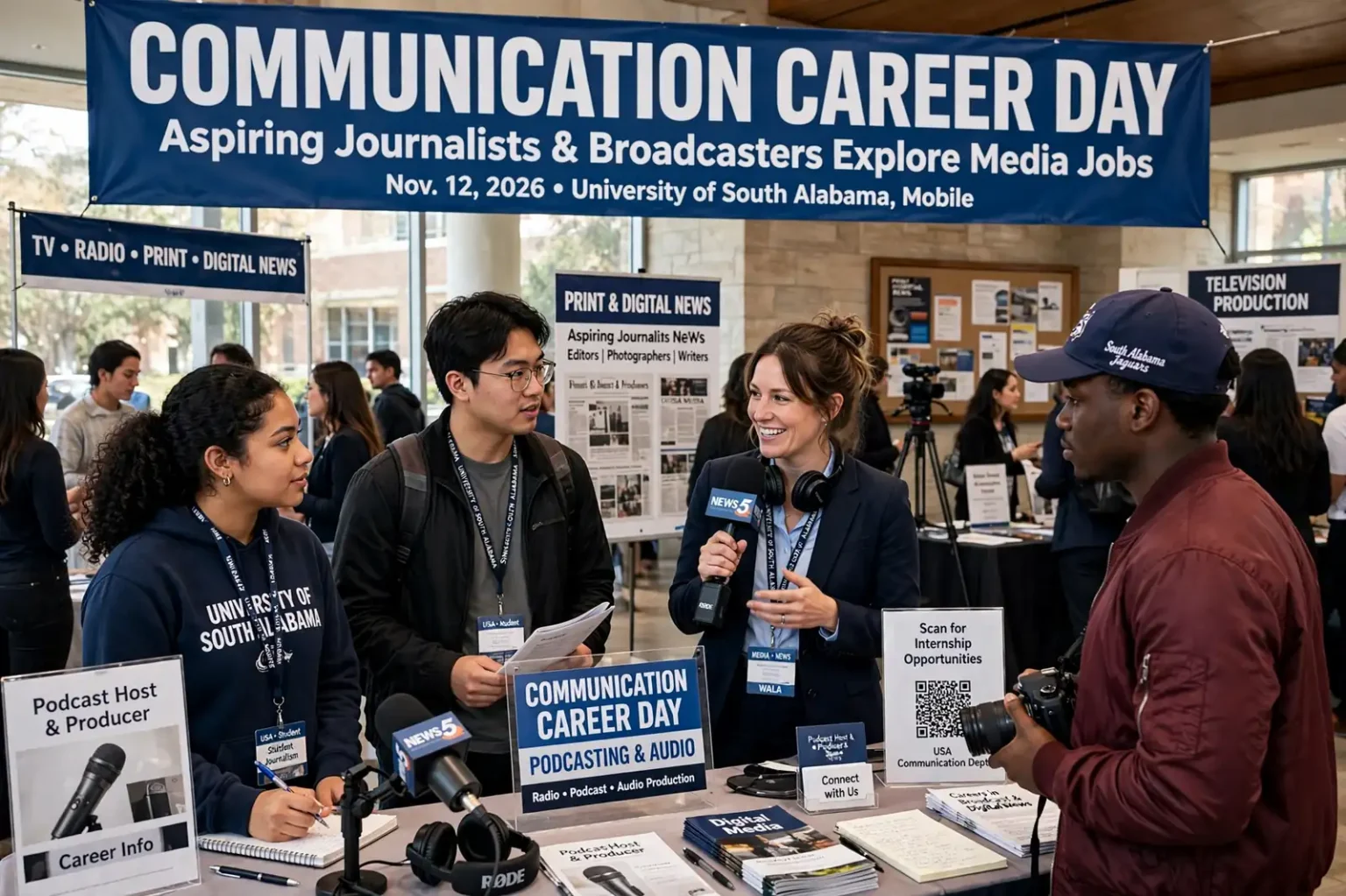
MOBILE, Ala. — Students hoping to build careers in journalism and media got a close-up look at the industry Thursday morning during Communication Career Day at the University of South Alabama. Working professionals from television, radio, print and digital news, along with people who produce podcasts, came to campus to talk with students about the jobs available after graduation and what it takes to land one.
The gathering gave students at different stages of their college careers a chance to ask direct questions, compare career tracks and start building connections with people already working in the field.
Event at a Glance
- What: Communication Career Day
- Where: University of South Alabama, Mobile
- When: Thursday morning, Nov. 12, 2026
- Who attended: Media professionals representing television, radio, print and online news, plus podcasting
- Special feature: A breakout session where seniors could meet individually with visiting professionals
Students Searching for a Path
For many of the students in attendance, the day was about discovery. One sophomore studying journalism explained that the goal was to learn about the range of options in the field and the skills employers expect. That student said broadcasting was the main interest, with radio and podcasting also on the list of possibilities.
That kind of open-ended exploration is common among underclassmen in communication programs. The field has expanded well beyond the traditional newsroom, and students often arrive on campus knowing they enjoy writing, speaking or storytelling without yet knowing which platform suits them best. Events like this one let them hear firsthand how professionals in different corners of the industry spend their days.
Faculty See Value in Finding Fit, and Ruling Things Out
A journalism faculty member at the university said the career day is designed to help students explore. He noted that figuring out which jobs a student does not want can be just as valuable as finding the one they do, and he described that process of trial and discovery as a normal part of the college experience.
He also pointed out that having professionals from so many areas in one place creates chances for unexpected discoveries. A student who arrives focused on one medium, he said, might talk with someone from radio or podcasting and realize that path is a better match, or a student planning on print work might come away excited about broadcasting after a single conversation.
One-on-One Time for Seniors
Seniors, who are closest to entering the job market, had an additional opportunity. A breakout session paired graduating students with visiting professionals so they could ask questions individually. That format allows soon-to-be graduates to discuss résumés, demo reels, writing samples, job searches and interview preparation in a more personal setting than a large group discussion.
For students who will be applying for jobs within months, direct contact with working journalists and producers can be especially useful. Hiring managers often value candidates who have shown initiative by networking, and an in-person conversation can make an application more memorable.
A Changing Media Landscape
The range of professionals at the event reflects how much the media industry has changed in recent decades. Television and radio remain major sources of local news and entertainment, and newspapers continue to produce reporting in both print and digital form. At the same time, online publications have multiplied, and podcasting has grown into a significant medium for news, interviews, storytelling and niche topics.
Many media organizations now publish across several platforms at once. A single story might appear as a broadcast segment, a written article, a social media video and an audio episode. As a result, employers increasingly look for graduates who can work comfortably in more than one format.
Many Roles Behind the Scenes and On Air
Students sometimes picture media careers only as the reporter or anchor seen on screen, but most organizations depend on a much wider team. Some of the roles that communication graduates commonly pursue include:
- Reporters and correspondents, who gather information, conduct interviews and tell stories in writing, on air or both
- Producers, who plan newscasts, shows and segments and coordinate the people and material that go into them
- Photographers and videographers, who capture the images and footage that bring stories to life
- Editors, who sharpen copy, check facts and shape the final product for print, web or broadcast
- Radio hosts and announcers, who connect with listeners through live and recorded programming
- Podcast hosts and producers, who develop shows, book guests, record and edit episodes and build audiences
- Digital and social media specialists, who adapt content for websites, apps and social platforms
Exposure to professionals in several of these positions on the same day can help students figure out whether they prefer working in front of an audience, behind a camera or at an editing desk.
Skills Employers Commonly Seek
While every newsroom and production company has its own needs, communication and journalism graduates entering today’s job market are frequently expected to bring a mix of abilities, such as:
- Clear, accurate writing: The ability to write quickly and cleanly on deadline remains a foundation across nearly every media job.
- Reporting and research: Gathering information, verifying facts and cultivating sources are core journalism skills.
- Multimedia production: Shooting and editing video, recording and editing audio, and producing graphics are common job requirements.
- On-air presence: For broadcast and podcast roles, comfort speaking on camera or into a microphone is important.
- Digital and social media fluency: Understanding how audiences find and share content online helps stories reach more people.
- Ethics and media law: Knowledge of fairness, accuracy, privacy and defamation standards protects both journalists and their audiences.
- Teamwork and adaptability: Media work often involves tight deadlines, changing assignments and collaboration with editors, producers and photographers.
Making the Most of a Career Event
Career counselors generally recommend that students approach events like this one with some preparation. Common advice includes:
- Researching the types of organizations and roles likely to be represented ahead of time
- Preparing a short introduction that covers year in school, interests and relevant experience
- Bringing a résumé and, when appropriate, links to work samples or a portfolio
- Asking specific questions about daily responsibilities, entry-level openings and internships
- Following up afterward with a brief thank-you note to the professionals they met
Underclassmen are often encouraged to treat career days as research rather than job hunts. Learning about a field early can help them choose courses, campus media activities and internships that build toward a specific goal.
The Role of Internships and Campus Media
In communication fields, hands-on experience is frequently as important as classroom knowledge. Students commonly gain that experience through internships with media organizations, student-run publications and broadcast outlets, and class projects that mirror real-world assignments. A strong portfolio of published articles, aired segments or produced audio can set an applicant apart.
Conversations at events such as Communication Career Day can also lead to those opportunities. Professionals who meet motivated students may mention internship openings, job shadowing possibilities or upcoming positions in their organizations.
About the University of South Alabama
The University of South Alabama is a public university in Mobile that opened in 1963. Its Department of Communication prepares students for careers in fields including journalism, broadcasting, public relations and related areas of media and communication. Events that connect students with working professionals are one way the university helps students link academic study with real career options.
Mobile and the surrounding Gulf Coast region are home to a variety of media organizations, which gives local students access to professionals in their own community. For many students, the connections made on campus can be the first step toward an internship, a first job or a clearer sense of direction.
Looking Ahead
For the sophomores who came to explore and the seniors who came to network, Thursday’s event offered a snapshot of an industry that continues to evolve. Whether students ultimately land in a newsroom, a radio studio, a television station or behind a podcast microphone, the conversations they had on campus may help shape the decisions they make in the semesters ahead.