Fairhope Teen Kendall Grimes, 14, Cleared Storm-Blocked Roads by Headlight as Isaias Hit
Kendall Grimes, 14, spent the night Hurricane Isaias struck clearing fallen limbs and trees from roads between Fairhope and Point Clear, worried that blocked streets could stop an ambulance. His father says he has always been a selfless kid.
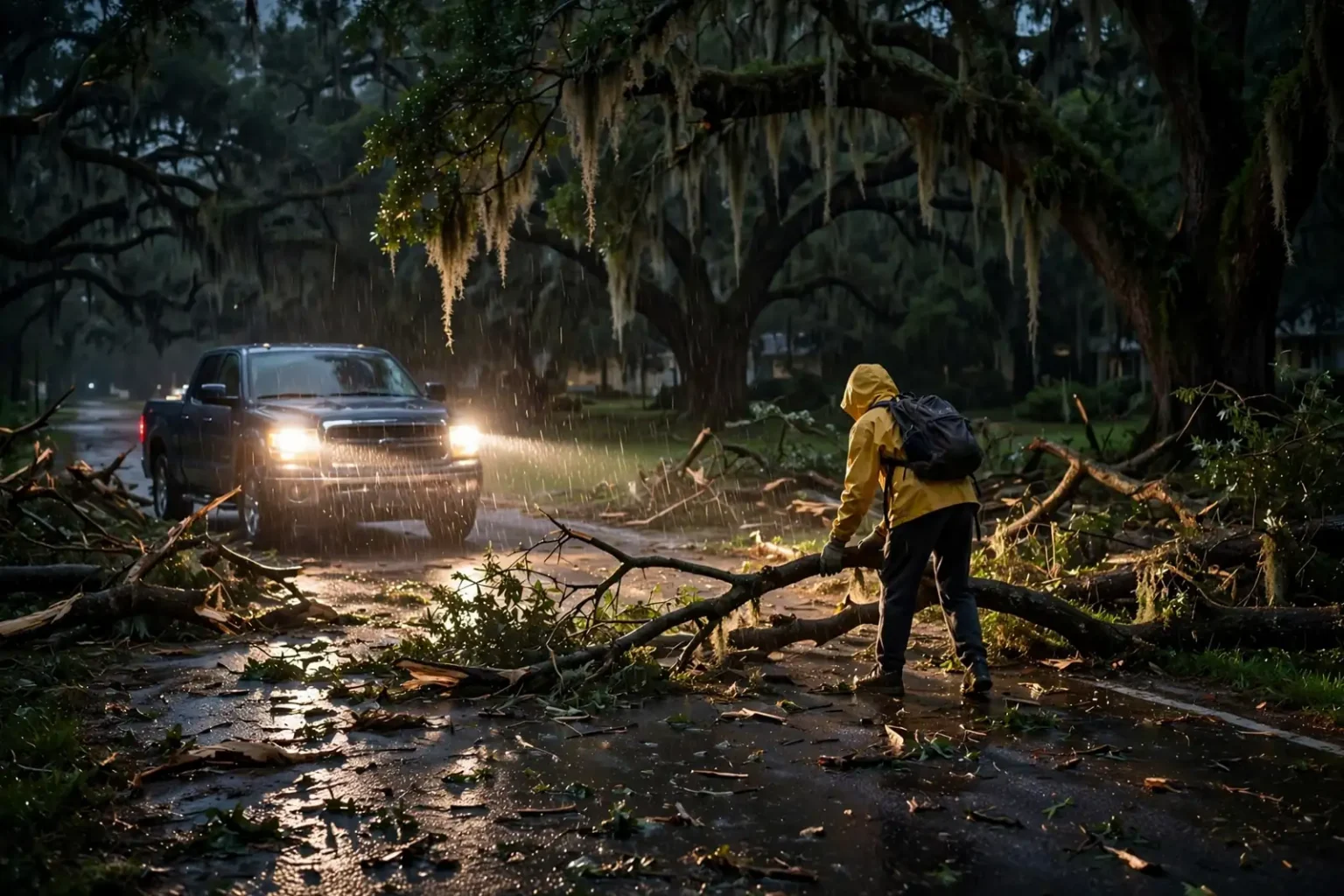
FAIRHOPE, Ala. — Most 14-year-olds would have spent the night Hurricane Isaias hit indoors, waiting out the wind. Kendall Grimes went out to work. That same night, the Fairhope teen was already on the road, using flashlights and the headlights of a pickup truck to find fallen limbs and trees and cut them out of the way.
He kept at it for hours, clearing debris along a stretch running from Fairhope near Thomas Hospital down to the Point Clear area, and his father, Allen Grimes, said that even after all that, Kendall still was not ready to go home.
Working in the dark
With streets littered with debris and no daylight to work by, the cleanup was done by whatever light Kendall and those with him could bring.
“We brought flashlights, and we used the headlights of our truck to really see it,” Grimes said. “Just a bunch of limbs and trees and leaves on the roads. We came across some huge ones, so we had to go chainsaw out and cut those.”
Hurricane Isaias made landfall near Destin, Florida, on the night of Friday, Oct. 9, as a Category 2 hurricane. Baldwin County sat on the storm’s west side, where gusty winds brought down trees and power lines across the Eastern Shore and south Baldwin. At the peak, more than 300,000 Alabama utility customers lost power, and tree damage was among the most widespread problems from Mobile to the Florida line.
Fallen trees are not just a nuisance after a storm. In the dark, a limb lying across a road can be nearly invisible until a driver is right on top of it, and blocked streets can slow down police, firefighters and ambulances trying to reach people who need help.
Thinking about the ambulance
That was exactly what was on Kendall’s mind.
“I thought about how if there’s someone needing help, the ambulance couldn’t go around,” he said. “If my sister were to go out in the storm, she wouldn’t be able to see the branches and might have had an accident if she crashed into it.”
The route he worked runs through some of the Eastern Shore’s most tree-lined neighborhoods. Fairhope and Point Clear are known for their towering live oaks and moss-draped canopies along Mobile Bay, which give the area much of its character but also leave roads vulnerable when hurricane-force gusts arrive. Thomas Hospital, the Fairhope hospital near where Kendall’s cleanup began, is the kind of place emergency vehicles need clear access to during and after a storm.
‘You can’t be more proud of a kid’
Allen Grimes said people have been reaching out to thank him for the way his son has been raised, but he said the credit really belongs to Kendall.
“As a father, you can’t be more proud of a kid,” Allen Grimes said. “Everybody is telling me, ‘Thank you for raising him that way. And I know that’s a part of it, but he’s always been that way, willing to help others, never asks for money, doesn’t do things for pay, has always just been a selfless kid.”
The elder Grimes said doing the right thing matters even when nobody is watching.
“No matter whether somebody is looking or not, whatever you do does have a reaction, and it affects others. And when you do good deeds, it does come back one way or another,” he said.
Summing up his feelings about watching his son grow up, he added: “I’m just proud of my boy, my best friend. Love him to death.”
A message for other teens
Kendall said he hopes people take one lesson from his story: nobody is too young to make a difference in their community.
“It kinda felt good to do it,” he said. “You should really help around more and just stop sitting in the house watching your phone.”
Stories like his have been repeated in neighborhoods across Mobile and Baldwin counties since the storm, as residents grabbed chainsaws, rakes and trash bags to help neighbors before city and county crews could reach every street. Church groups, civic clubs and volunteer disaster teams have also been clearing yards and driveways, especially for older residents who cannot do the heavy work themselves.
Staying safe while helping after a storm
Emergency managers welcome neighbors helping neighbors, but they also urge caution. Chainsaw injuries and electrocutions are among the most common hazards in the days after a hurricane. Anyone pitching in should keep a few basics in mind:
- Avoid power lines. Assume any downed line is energized, and never cut a tree or limb that is touching or tangled in a line. Report it to the utility instead.
- Use the right gear. Chainsaw users should wear eye and ear protection, gloves, sturdy boots and, ideally, chainsaw chaps, and only experienced adults should run a saw.
- Watch for tension. Trees and limbs that are bent or pinned can spring back violently when cut.
- Be visible. Working on a roadway at night is risky. Use lights, reflective clothing and a spotter to watch for traffic.
- Pace yourself. Heat and humidity after a storm can lead to exhaustion. Drink water and take breaks.
Residents who need help clearing debris can call 2-1-1 to be connected with local recovery resources, and city and county public works departments post curbside debris pickup guidelines as cleanup continues.