Florida Panhandle Family Trio The Currys Bring Americana Sound to Callaghan’s
The Currys, an Americana trio of two brothers and a cousin from the Florida Panhandle, bring their folk-rock sound to Callaghan's Irish Social Club in Mobile on Saturday, Jan. 12.
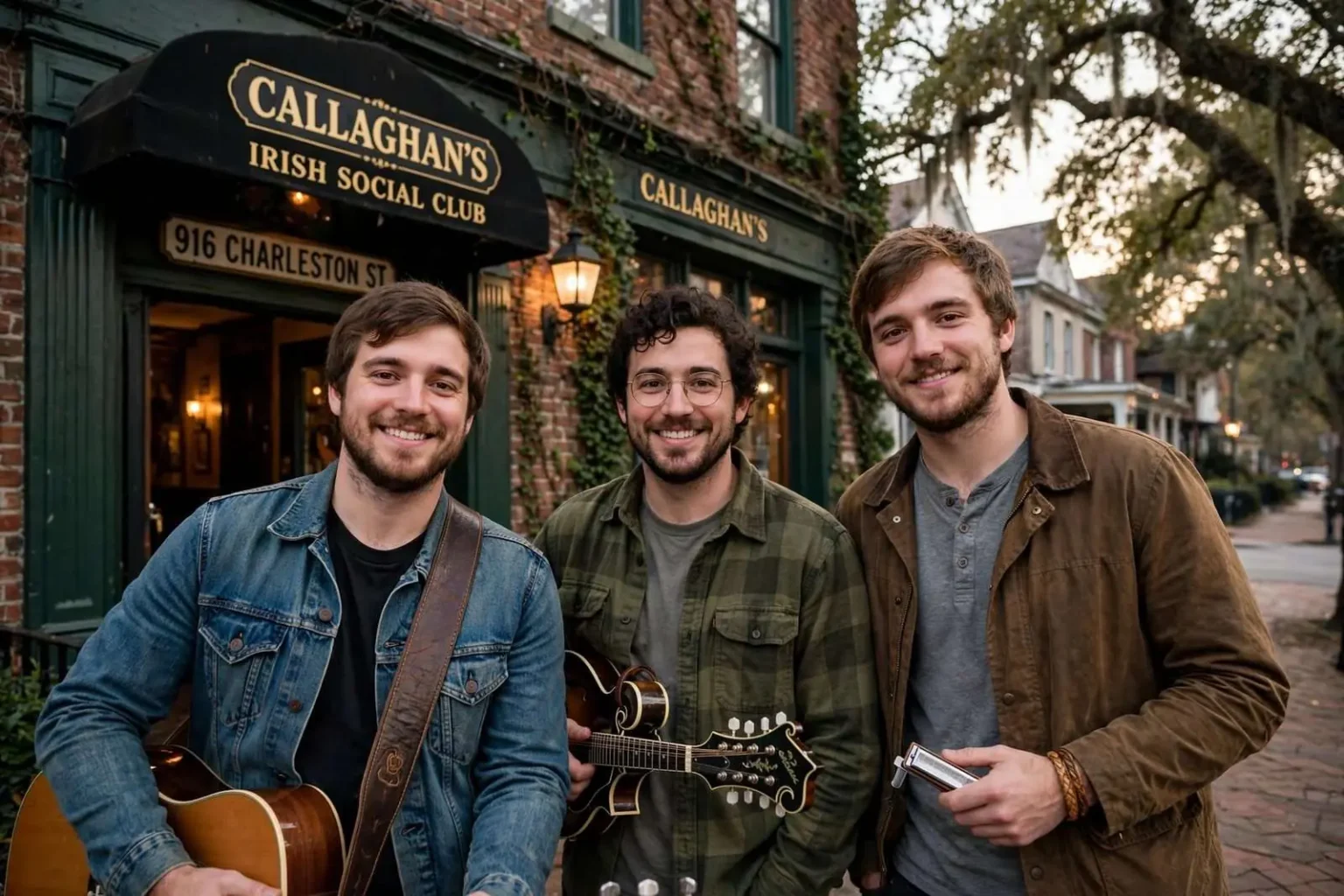
A band built on blood ties and years of shared musical growing pains is set to take the stage at Callaghan’s Irish Social Club in Mobile’s Oakleigh Garden District on Saturday, Jan. 12, at 7:30 p.m. The Currys, an Americana trio out of the Florida Panhandle, will bring a blend of folk, rock and roots music to the venue at 916 Charleston St., with tickets priced at $8 at the door. For a room the size of Callaghan’s, the chance to hear a nationally touring act at that price is part of what has kept the club a fixture of Mobile’s live music calendar.
The group is made up of brothers Jimmy and Tommy Curry along with their cousin Galen, a lineup that gives the band its name and, more importantly, its sound. Family bands occupy a particular place in American roots music, and the Currys fit the tradition: the blend of voices that comes from a shared kitchen table and shared early influences is difficult to manufacture in a band of strangers. The three grew up playing music together as teenagers, and that early bond has grown into a tightly woven Americana rock style built on warm acoustic textures and layered, thoughtful harmonies that longtime fans of the genre tend to notice right away.
That history matters on stage. Siblings and cousins who have sung together since adolescence develop the kind of instinctive timing that shows up in the small moments: a held breath before a chorus, a falsetto line slipped in beneath a lead vocal, a guitar figure answered by a mandolin without a word exchanged. Audiences at close quarters, which is exactly what Callaghan’s offers, tend to hear those details more clearly than festival crowds a hundred yards from the stage.
Two Albums That Trace the Band’s Growth
Since forming, The Currys have released two full-length albums that trace the evolution of their sound. Their debut, “Follow,” leans heavily on alt-country and folk influences with hints of indie rock woven throughout, while also making room for the kind of stripped-down, emotionally direct folk ballads that have become something of a signature for the group. The record established the band’s central identity: songwriters first, with arrangements that serve the words rather than crowd over them.
The follow-up record, “West of Here,” pushed further into Americana folk and traditional country territory, showing a band comfortable expanding its range while staying rooted in acoustic songwriting. The progression between the two albums mirrors a path familiar to touring acts of their generation, moving from the eager, wide-open sound of a first record toward a more settled and confident approach that trusts the songs to carry their own weight.
Saturday’s show comes as the trio looks ahead to its third studio album, “This Side of Glass,” which the band plans to release in March. Audiences at Callaghan’s may get an early listen to some of that new material, giving the Mobile stop an added draw for fans who want a preview of where the band is headed next. Hearing unreleased songs in a small room, before they have settled into their recorded forms, has long been one of the quiet pleasures of club-level touring, and it gives regulars a stake in the band’s story that a streaming release cannot replicate.
The album title suggests the band’s continued interest in reflection and perspective, themes that have run through their catalog from the beginning. Whether the new record continues the traditional-country lean of “West of Here” or circles back toward the indie-tinged folk of the debut is the kind of question a preview audience will be the first to answer.
The Right Room for the Music
Callaghan’s Irish Social Club has built a reputation as one of Mobile’s most reliable rooms for touring folk, country and roots acts, and Saturday’s performance continues that tradition. The venue’s intimate setting has long made it a favorite among musicians who lean on close harmonies and acoustic instrumentation, since the room rewards exactly the qualities that family bands and singer-songwriters bring: dynamic range, vocal blend, and the ability to hold a crowd’s attention with a voice and a guitar rather than a wall of amplification.
The club sits in the heart of the Oakleigh Garden District, one of Mobile’s most walkable historic neighborhoods, a few blocks south of downtown amid the oak-lined streets surrounding the historic Oakleigh House. Over the years the district has become one of the city’s most dependable nightlife corridors, with restaurants and bars clustered close enough that a show at Callaghan’s can anchor an entire evening within a few blocks’ walk. For traveling acts, that built-in audience of neighborhood regulars, combined with the club’s standing booking tradition, makes the room a reliable stop between larger Southeastern cities.
Rooms like Callaghan’s fill an important niche in the touring economy of Americana music. Bands at the Currys’ level typically travel in a single vehicle, play four- or five-piece sets, and depend on venues small enough that ticket and merchandise sales meaningfully support the trip. The club’s modest door price reflects that economics; $8 brings in the casual listener while a full house makes the night worthwhile for a traveling trio. It is the same model that has sustained roots venues across the region for decades.
The venue’s kitchen and social-club atmosphere also shape the character of its shows. Audiences arrive early, eat, and settle in for the evening, which produces the attentive, conversational rooms that acoustic acts describe when they explain why they keep returning to small clubs long after they could fill larger ones. A Thursday-night regular and a first-time visitor get the same view of the stage, and the performers can see every face in the room.
The Florida Panhandle’s Music Trade Route
The Currys’ home base along the Florida Panhandle places them on a natural circuit for Gulf Coast touring. The stretch from Pensacola through the beach towns to Panama City has long produced songwriters who split the year between coastal resort gigs and club dates in cities like Mobile, New Orleans, and the Florida college towns inland. Bands from the region grow up playing for beach crowds one night and listening rooms the next, an apprenticeship that builds the versatility the Currys display across their records.
Mobile sits at the western end of that circuit, close enough for a load-in before dinner and a drive home after the encore, which is one reason Panhandle acts appear regularly on local calendars. The cultural ties run deeper than convenience: the Florida-Alabama line has always been porous for music, with country, folk, blues, and beach music crossing it in both directions for generations. A Panhandle trio playing an Irish social club in a Mobile garden district is a thoroughly Gulf Coast arrangement.
What the Audience Can Expect
Concertgoers on Saturday can expect a set drawing from all stages of the band’s catalog, which for a trio with three albums and years of touring behind it means a balanced evening of the familiar and the new. The group’s live shows lean on the vocal interplay that defines the recordings, with the three voices trading lead lines and stacking harmonies over acoustic guitar foundations. Songs from “Follow” tend to showcase the band’s folk-ballad side, while the “West of Here” material brings the traditional-country textures that have become increasingly central to their sound.
Doors at 7:30 p.m. leave room for the unhurried arrival that Callaghan’s regulars practice, and the $8 cover keeps the night within reach of anyone curious about the band. For longtime followers of the Mobile roots scene, Saturday offers a familiar pleasure: a tight family band, a small historic room, and a preview of a record still weeks from release. For everyone else, it is a low-cost introduction to one of the Panhandle’s most polished acts, playing the kind of venue that has made Mobile a dependable stop for Americana touring acts for years.
Doors at 7:30 p.m. leave room for the unhurried arrival that Callaghan’s regulars practice, and the $8 cover keeps the night within reach of anyone curious about the band. For longtime followers of the Mobile roots scene, Saturday offers a familiar pleasure: a tight family band, a small historic room, and a preview of a record still weeks from release. For everyone else, it is a low-cost introduction to one of the Panhandle’s most polished acts, playing the kind of venue that has made Mobile a dependable stop for Americana touring acts for years.
Family Harmony and the Americana Tradition
The Currys’ reliance on family voices places them inside one of the oldest traditions in American music. From gospel quartets to the brother duets of early country, the blending of related voices has been prized for as long as the music has been recorded, and for a simple reason: relatives who grow up singing together share phrasing instincts, timbre, and an ease with one another that no amount of rehearsal fully imitates. Modern Americana audiences, who have watched family and sibling acts climb from club stages to festival main stages over the past two decades, arrive at shows like Saturday’s already tuned to listen for that blend.
The trio format suits that tradition particularly well. Three voices allow for fuller chord-stack harmonies than a duet while preserving the transparency that makes close singing audible in a small room, and the arrangement leaves each member’s songwriting contributions in clear view. In the Currys’ case, the shared teenage years of playing together gave the cousins a common repertoire and a common sense of arrangement before they ever wrote a record, which is audible in the seamless way their albums move between contributors’ songs.
That background also explains the band’s endurance. Acts assembled by record labels or booking agents frequently dissolve when the personalities or the economics strain, while family bands tend to persist through the lean touring years because the partnership predates the business. The Currys’ trajectory, from Panhandle teenagers to a band planning a third album with a Gulf Coast tour route beneath it, follows the steadier arc that family groups have historically traced in roots music.
For Mobile audiences, Saturday’s date at Callaghan’s offers a chance to hear that tradition in the setting that suits it best: a room built for conversation, a neighborhood that walks to its nightlife, and three relatives from just down the coast doing what they have done together since they were teenagers. The show begins at 7:30 p.m., tickets are $8 at the door, and based on the club’s history with similar acts, arriving early remains sound advice.