Florida woman arrested after child she supervised got lost in the woods
A Cantonment, Florida woman was arrested on neglect charges after a child she was watching got lost in the woods, deputies said.
CANTONMENT, Fla. — A woman is facing neglect charges after a child she was supposed to be supervising got lost in the woods, according to an arrest report from the Escambia County Sheriff’s Office.
Collean Cozart, 31, was arrested Monday, Oct. 28, after deputies responded to the area and pieced together how the boy had wandered away and ended up miles from where anyone was watching him. The arrest followed a tense afternoon in which neighbors, deputies and a stranger’s good deed combined to bring the child home safely.
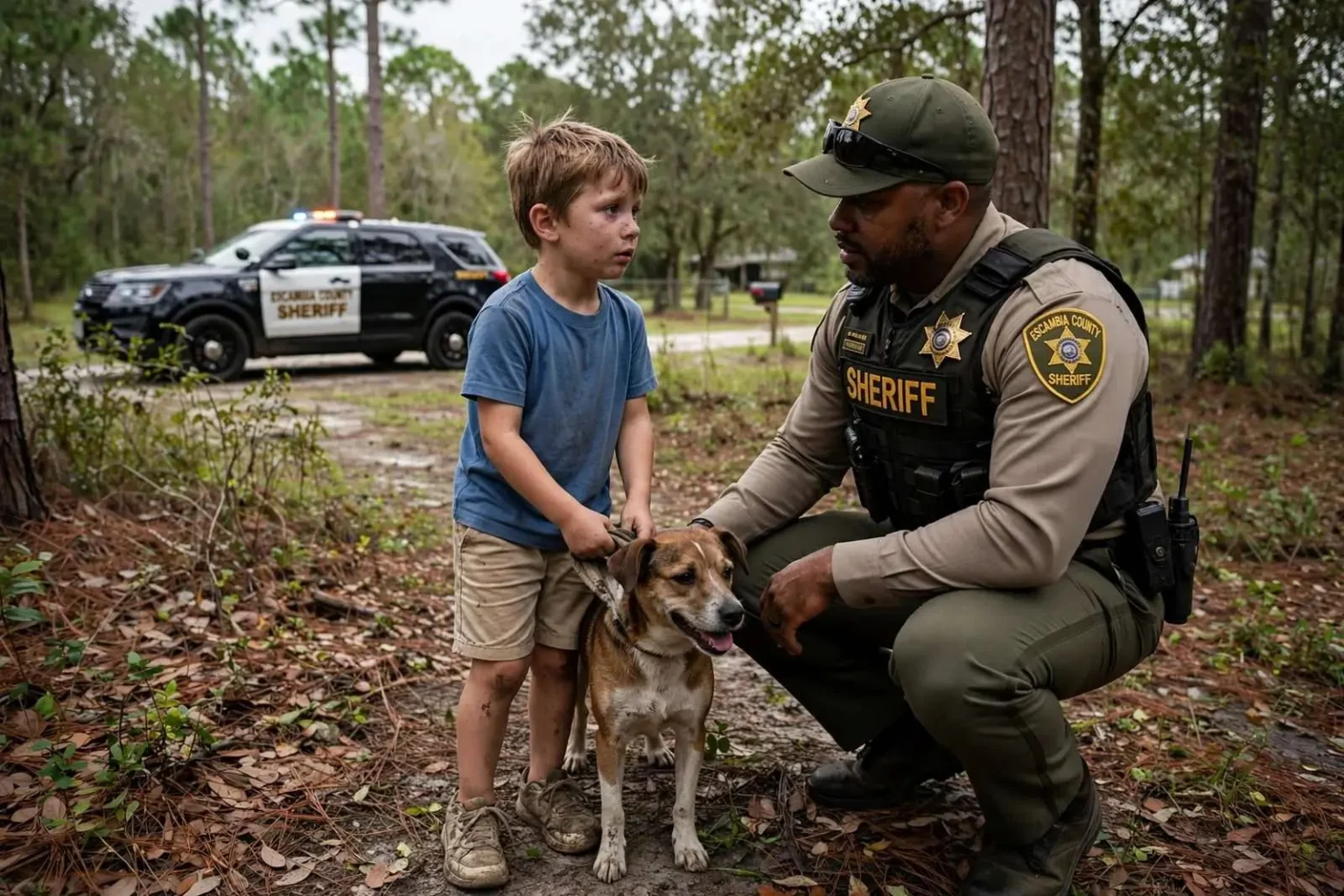
According to the arrest report, a man called 911 after the child and his dog walked out of the woods onto his property. The boy told the property owner he was lost, prompting the call to authorities and setting in motion the response that led to the neglect arrest.
The child had been out of sight long enough to make his way through wooded terrain before emerging onto private property, a scenario that underscores how quickly a momentary lapse in supervision can put a young child at serious risk in rural northwest Florida, where woods and undeveloped land sit close behind many residential lots.
Cozart told deputies she did not know the boy was gone until they arrived at the house, according to the report. That admission became central to the neglect charge, which hinges on whether the adult responsible for a child exercised reasonable supervision and care.
The case remains under investigation by the Escambia County Sheriff’s Office, which has not said whether additional charges could follow or whether the child’s family members are cooperating with investigators as the inquiry continues.
How the Afternoon Unfolded
The sequence that ended with an arrest began, as these cases often do, with an ordinary day at a residence in Cantonment, a rural community north of Pensacola in Florida’s western panhandle. At some point during the day, the boy and his dog left the property and entered the woods without the knowledge of the adult responsible for him.
Wandering children and dogs tend to travel together, and the boy’s dog likely accompanied him as he explored farther from home. Children can cover surprising distances in a short time, and wooded terrain that looks manageable from a backyard can quickly become disorienting for a child with no sense of direction back to the house.
The property owner who encountered the boy acted exactly as authorities hope residents will in such situations: he kept the child safe, learned that the boy was lost and called 911 immediately. That call allowed deputies to begin working backward, locating the child’s home and the adult responsible for his care.
When deputies reached the house, Cozart’s account that she had not known the boy was gone confirmed the gap in supervision that forms the basis of the neglect allegation. Deputies arrested her at the scene, and the child was accounted for and safe.
Neglect Charges in Florida
Under Florida law, child neglect involves a caregiver’s failure to provide a child with the supervision, care and services necessary to maintain the child’s physical and mental health, or a failure to make reasonable efforts to protect a child from abuse or neglect. The charge Cozart faces falls under the state’s child abuse statutes.
The severity of a neglect charge depends on the circumstances, including the degree of harm or risk of harm to the child. Prosecutors in the First Judicial Circuit, which covers Escambia County, weigh factors such as the child’s age, the length of time supervision lapsed and the environment the child wandered into when deciding how to proceed.
Woods, water and wildlife make rural panhandle communities like Cantonment unforgiving places for unsupervised children. Deputies in Escambia County respond to reports of missing children in the area regularly, and searches that end with a child found safe on a neighbor’s property are, by the standards of such calls, fortunate outcomes.
An arrest is not a conviction, and Cozart will have the opportunity to answer the charge in court. The arrest report, witness statements and the deputies’ account of the response will form the documentary record as the case moves through the Escambia County court system.
Cantonment and the Escambia County Sheriff’s Office
Cantonment is an unincorporated community in Escambia County, Florida, sitting north of Pensacola between Century and the city. The area blends residential neighborhoods with farms, timberland and the wide stretches of woods characteristic of the rural panhandle, which is precisely the landscape a lost child navigated in this case.
The Escambia County Sheriff’s Office serves the unincorporated areas of the county, including Cantonment, handling patrol, investigations and emergency response across one of Florida’s northwesternmost counties. The agency borders Alabama’s Escambia County, and deputies routinely coordinate with counterparts across the state line on matters that touch both jurisdictions.
Sheriff’s deputies in rural counties handle a wide range of calls, and reports of lost children rank among the most time-sensitive. Agencies use everything from ground searches to aviation and, in prolonged cases, volunteer search teams to locate missing children, though many cases resolve when a child turns up on nearby property, as happened here.
The sheriff’s office continued investigating after the arrest, a standard practice in neglect cases. Investigators will typically examine the living situation, speak with family members and evaluate whether the child should remain in the home or whether state child welfare authorities should become involved.
The Florida Department of Children and Families often works parallel to law enforcement in cases like this, assessing the child’s safety and the caregiver’s capacity to provide adequate supervision. The outcome of that assessment can range from maintaining the family unit with services in place to more formal intervention.
Lessons for Caregivers in Rural Areas
Child safety advocates note that children wander for simple reasons: curiosity, a chasing animal, a butterfly or a path that looks inviting. The presence of the family dog in this case is a common thread, as dogs often lead children into the woods on adventures that neither is equipped to navigate alone.
Experts recommend that caregivers in rural areas establish firm boundaries children can understand, teach children what to do if they become lost, and dress children in bright colors that make them easier to spot among trees. A child who stays put and calls out, experts say, is found faster than one who keeps moving.
The neighbor’s role in this case also carries a lesson. Property owners at the edge of wooded tracts should treat a child emerging from the woods alone as an emergency requiring an immediate 911 call, since the child may have traveled far from home and may have been missing for hours.
For the boy and his dog, the story ended without physical harm, a fact that investigators and family members alike can be grateful for. For the adult charged with his care, the episode led to an arrest and a court date, and for the wider Cantonment community, it served as a reminder of how much of rural Florida sits just one open door away from the woods.
What Comes Next
Cozart’s case will proceed through the Escambia County courts, beginning with a first appearance where the charge will be formally read and conditions of release considered. The sheriff’s office has not released additional details about the child’s age or how long he was gone, citing the ongoing investigation.
Updates in the case will come through the court system and the state attorney’s office, which will decide whether to take the case to trial, negotiate a resolution or decline further prosecution based on the evidence gathered. Until then, the arrest report remains the primary public account of an afternoon that could have ended far worse than it did.
Residents of Cantonment and surrounding communities will likely see the case as a close call worth talking about. The image of a boy and his dog stepping out of the tree line and onto a stranger’s property is the kind of local story that sticks, and it is already doing more than any pamphlet to remind caregivers to keep watch.
The Search Response Behind the Headlines
Though the boy was found safe on a stranger’s property rather than by a search team, the call still triggered the full machinery of a missing-child response. Deputies arriving in the area must locate the child’s home, confirm who is responsible for him, check whether anyone else is missing and begin documenting the scene while memories are fresh.
In rural Escambia County, response times are stretched by distance. Homes along the county’s northern roads can sit minutes apart, and deputies covering large patrol zones often arrive at such calls from other assignments, making the early minutes of a lost-child report a scramble of radio traffic and coordination with dispatchers.
The fact that the child was with his dog added both comfort and complexity. A dog provides warmth and companionship to a lost child, and searchers consider the animal’s likely behavior, since dogs typically stay close to their young companions rather than wandering off separately.
By the time deputies determined where the boy belonged and spoke with the adult charged with his care, the case had shifted from a search for a missing child to an investigation into how he came to be missing at all. That pivot, from rescue to inquiry, is standard procedure whenever neglect is suspected.
The arrest report that resulted documents each step: the 911 call from the property owner, the child’s statement that he was lost, the deputies’ arrival at the residence and Cozart’s statement that she had not known the boy was gone. That report will be the foundation of whatever happens in court.