Mobile’s Mariachi Moderno International Brings a Taste of Home to Gulf Coast Families
Mobile-based Mariachi Moderno International has spent six years playing celebrations and funerals across four Gulf states, giving Latin American families a connection to home.
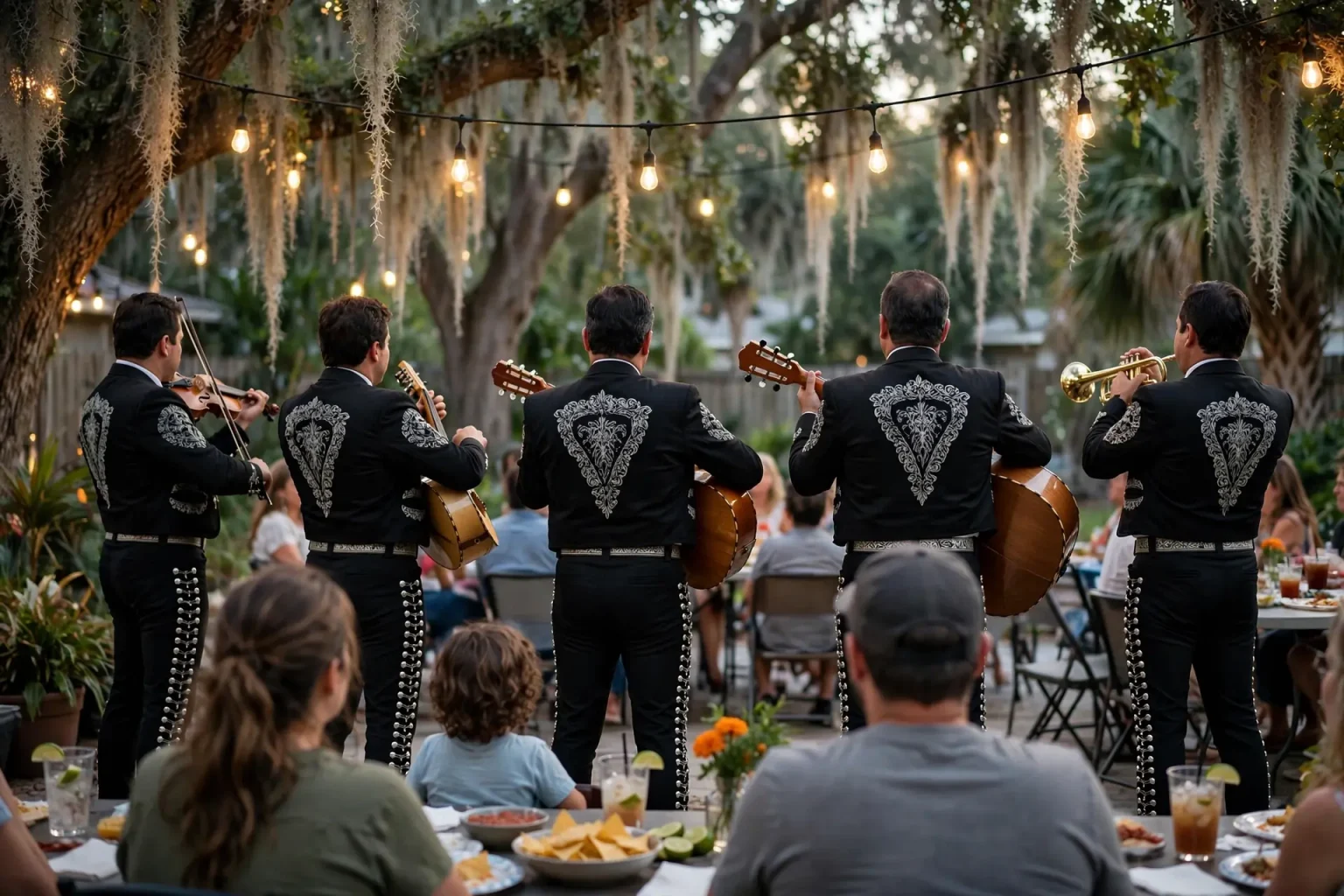
MOBILE, Ala. — When the violins, trumpet and deep-voiced guitarrón of Mariachi Moderno International strike up at a birthday party, wedding or memorial service, many listeners on the Gulf Coast hear more than a song. For families with roots in Mexico and across Latin America, the Mobile-based band offers something closer to a homecoming.
The group is led by band director and violinist Andrés Alean and includes Fausto Zinco on vihuela, Joel Hernández on guitar, Pedro Castro on guitarrón and Carlos Cristóbal on trumpet. Together they play celebrations and funerals throughout the region.
Rooted in family tradition
For many of the musicians, mariachi was part of family life long before it became a profession. Band members grew up in households where the music was already a tradition, and they bring with them experience from Plaza Garibaldi in Mexico City, the famous square long associated with mariachi musicians, along with influences from Colombian and Central American styles.
Over the past six years, the band has taken that sound on the road, performing in Mississippi, Alabama, Florida and Louisiana.
‘A piece of our homeland’
Saily Gonzales and her family are among those for whom the band’s music has come to mean something special. To her, the performances are a way to feel a little nearer to the places her family comes from.
“Music connects us to culture — our culture,” Gonzales said. “Besides being fun, it’s like a feeling we have that reminds us where we come from, and it’s so beautiful to enjoy, to know that you have the chance to have that little piece of our roots close by.”
That feeling came through clearly on June 27, when Mariachi Moderno International played her husband’s surprise birthday party in Pensacola, Fla. The band had performed at the family’s gatherings several times a year, so when her husband asked about them earlier that day, Gonzales told him the musicians would not be able to make it. When he arrived and found them waiting for him, the moment became more than a happy surprise shared with friends and family.
“Aside from being very fun, it was very special,” Gonzales said. “Because it was like bringing a piece of our homeland to our event. It was like feeling close to the place where we are so far.”
Music as a cultural ambassador
Creating that sense of home is a big part of what drives the musicians. In much the same way that consulates and cultural organizations promote the traditions of their countries, the band sees its music as a way of showing how people celebrate back in their homelands — both for those who share that heritage and for those who do not.
Alean explained the goal.
“So that people feel more comfortable, more identified with their culture,” Alean said. “So that we can show other people—who may not be from the same culture—how things are done back in their countries.”
For the bandleader, the work is also personal. He sees mariachi as a way to honor his culture and the music he loves.
“It’s about love for Mexican music, it’s about love for mariachi, the music, the Mexican culture and Latin American culture in general,” Alean said. “You know mariachi is used for everything: fiestas, weddings, funerals. Mariachi is joy, celebration—even the tequila can’t be missing.”
Passing the music to the next generation
The connection to culture carries into the musicians’ own homes. Some band members are teaching the tradition to their children, hoping the next generation will understand why the music matters.
“We do what we can so that children—our children also enjoy music and learn to play an instrument, even if they don’t want to become professional musicians,” Alean said.
Zinco’s children are learning the vihuela, the same instrument their father plays in the band, and Castro’s child has developed a love for music.
For parents of younger children, Alean said, the bigger challenge is often keeping the Spanish language and cultural customs alive at home.
“It’s sometimes difficult when children come here very young and settle in the United States. Many of them, well, they don’t really want to speak Spanish very well,” Alean said. “So that’s also a challenge that has to be overcome.”
Background: the sound of mariachi
Mariachi music developed in western Mexico, with the state of Jalisco widely regarded as its heartland, and grew into one of the most recognizable symbols of Mexican culture around the world. In 2011, UNESCO added mariachi to its list of the Intangible Cultural Heritage of Humanity, recognizing the music as a living tradition passed down through families and communities.
A typical modern mariachi ensemble combines violins, trumpets and several kinds of guitars, and each instrument in Mariachi Moderno International’s lineup plays a specific role:
- Violin: Often carries the melody and adds sweeping lines and ornaments; in many groups the violins form the core of the ensemble.
- Trumpet: Adds the bright, brassy punch that many listeners immediately associate with mariachi.
- Vihuela: A small, high-pitched guitar with a rounded back, usually with five strings, that provides a crisp, rhythmic strum.
- Guitar: Supplies harmony and fills out the rhythm section.
- Guitarrón: A large, deep-bodied acoustic bass with a rounded back that provides the low end and drives the rhythm.
Plaza Garibaldi, where some of the band members gained experience, is a public square in central Mexico City that has for generations been a gathering spot where mariachi groups play for visitors and are hired for parties and events.
A fitting time to listen
The story of Mariachi Moderno International arrives during National Hispanic Heritage Month, observed in the United States each year from Sept. 15 to Oct. 15 to recognize the histories, cultures and contributions of Americans with roots in Mexico, Central and South America, the Caribbean and Spain.
For the band members, though, the music is not tied to any one month. Whether it is a fiesta, a wedding or a funeral, their aim is the same one Gonzales described after her husband’s birthday party: to bring a little piece of home to families who are far from it.