Foley Climbs to Class 2 Commercial Building Code Grade, Among the Best in Alabama
Foley now holds a Class 2 commercial and Class 3 residential building code grade, well above Alabama averages, a result that could help some new construction qualify for insurance savings.
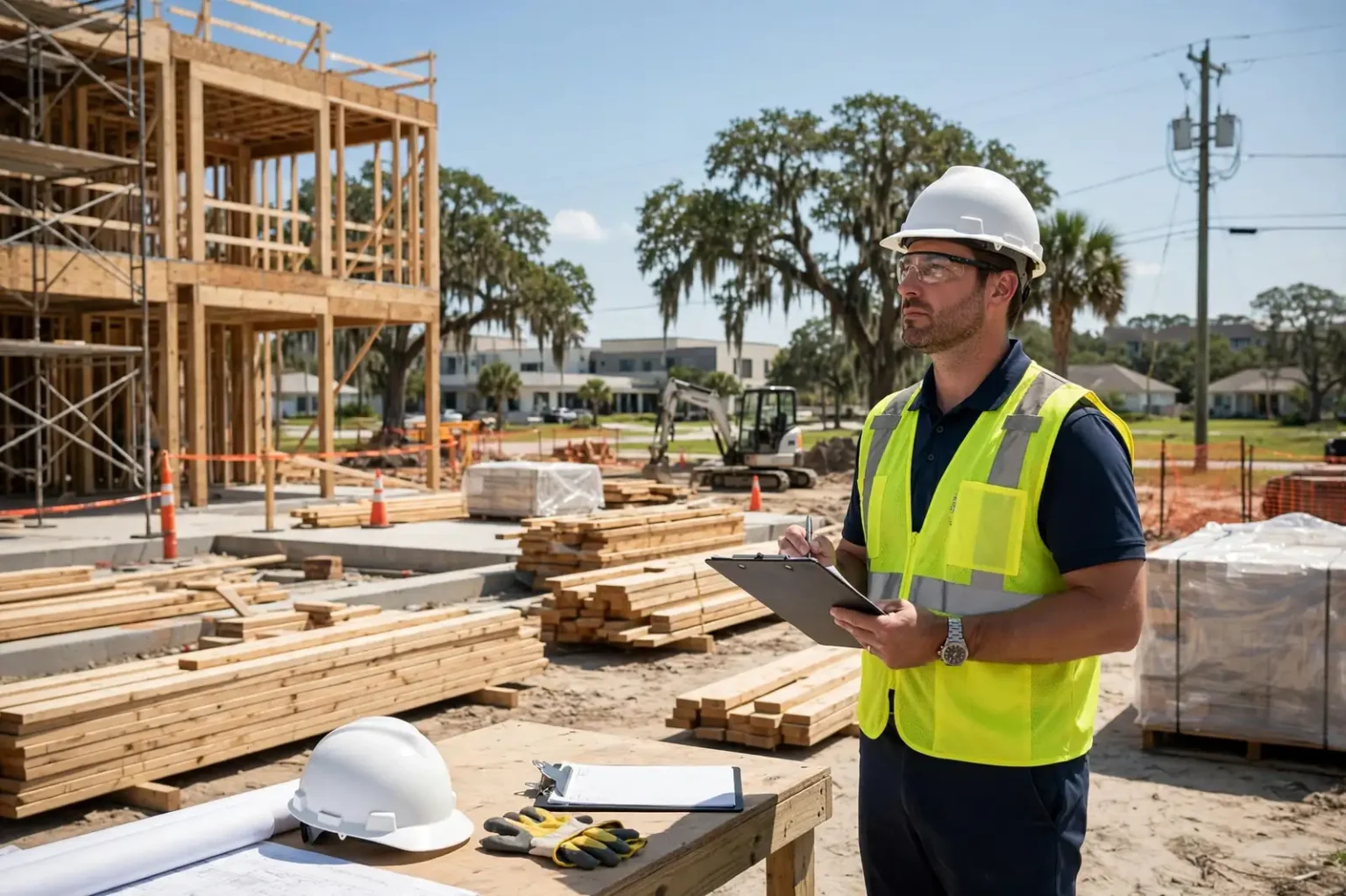
FOLEY, Ala. — New commercial buildings in Foley are now going up in a city that holds one of the strongest building code grades available anywhere in the country. Foley has moved to a Class 2 rating for commercial construction and a Class 3 rating for residential construction under the Building Code Effectiveness Grading Schedule, a jump of two classes and one class, respectively, from the Class 4 it previously held in both categories.
The improvement matters beyond bragging rights. Building code grades are one of the measures insurers may weigh when pricing property coverage, and city leaders say the stronger ratings could translate into insurance savings for eligible new construction in one of Baldwin County’s fastest-growing cities.
How Foley Compares
The grading scale runs from Class 1, the best possible score, down to Class 10. A Class 2 commercial rating places Foley one step from the top of that range.
The mayor told the City Council he is not aware of any community in Alabama with a better rating than Class 2, and he credited the professionalism of the city’s building staff for the result.
The gap between Foley and the rest of the state is wide. The city’s chief building official told council members that Alabama cities average Class 7 for commercial construction and Class 8 for residential construction. Foley’s new grades sit five classes better than that statewide commercial average and five classes better on the residential side as well.
Foley’s Ratings at a Glance
- Commercial: Class 2, up from Class 4
- Residential: Class 3, up from Class 4
- Alabama average: Class 7 commercial, Class 8 residential, according to the city’s chief building official
- Review period: May 1, 2025, through May 1, 2026
- Scale: Class 1 (best) to Class 10
What Evaluators Looked At
The Building Code Effectiveness Grading Schedule, commonly known as BCEGS, does not simply check which code a community has on the books. It examines both the codes a city adopts and how effectively it enforces them in practice.
For Foley’s latest review, evaluators used data covering May 1, 2025, through May 1, 2026. Communities are typically reassessed about every five years. The review covered a wide range of building department functions, including:
- Permitting procedures
- Plan reviews of proposed construction
- Field inspections
- Staff training, professional certifications and continuing education
- The scope of the department’s responsibilities
- Department budgets
- Public awareness efforts
- Property values in the community
The chief building official told the council that the grade reflects how well the city enforces its codes and how well trained its staff is. He described the result as a return on the investment the council has made in the department and called it a team effort.
Why Insurance Companies Pay Attention
BCEGS is administered by ISO, a long-standing provider of risk information to the property insurance industry. The program grew out of lessons from Hurricane Andrew in 1992, when investigators found that differences in how well building codes were enforced played a significant role in how much damage homes and businesses suffered. Communities are graded separately for commercial and industrial buildings and for one- and two-family homes.
A council member who owns an insurance agency explained that these classifications are among the factors insurers may take into account when setting property insurance premiums. Because the ratings reflect the standards in effect when a structure was built, they generally apply to buildings constructed after a community earns its grade, which is why the benefit is tied to eligible new construction rather than every existing property in town.
Insurers use the grades differently, and a better community rating does not guarantee a lower premium for any particular policyholder. Property owners who are building new homes or commercial buildings in Foley may want to ask their insurance agents whether and how the city’s updated classifications affect their rates.
A Signal to Newcomers and Businesses
The ratings serve another purpose as well. They give people considering a move to Foley, and businesses weighing whether to build there, an independent yardstick for judging how seriously a community adopts and enforces building standards meant to limit damage from hurricanes, high winds and other natural hazards.
Not the Same as a Fire Rating
Homeowners sometimes confuse BCEGS with a different community grade that insurers also use. The Public Protection Classification, also maintained by ISO and also scored from 1 to 10, measures a community’s fire protection, looking at factors such as the fire department, water supply and emergency communications. The building code grade, by contrast, focuses on how well structures are designed and built in the first place. A city can score well on one and not the other, and insurers may consider both.
What a Building Department Does
A municipal building department is the office that turns adopted codes into real-world results. Its staff review construction plans before work begins, issue permits, inspect foundations, framing, roofing, electrical, plumbing and mechanical work as projects progress, and issue certificates of occupancy when buildings are ready. Building officials and inspectors typically hold professional certifications and must complete continuing education to keep up with code changes, which is why training and certification count toward a community’s grade.
Building for Hurricanes
Foley sits a short drive from the Gulf of Mexico, and storm resilience has long been a priority for the city. The mayor noted that Foley has been recognized for strengthening its building standards to better withstand hurricanes.
The city has also ranked among the national leaders in the number of FORTIFIED homes. FORTIFIED is a construction and retrofit standard developed by the Insurance Institute for Business and Home Safety, a research organization supported by the insurance industry. Homes built or upgraded to the standard include features such as reinforced roofs designed to hold up better against high winds and wind-driven rain.
How FORTIFIED Works
The FORTIFIED program has several levels. The entry level focuses on the roof, which is typically the first part of a house to fail in a hurricane. Higher levels add requirements for windows, doors and the connections that tie a home’s structure together from roof to foundation. Homes must be inspected by a certified evaluator before they receive a designation.
Alabama has been one of the most active states in the country in promoting FORTIFIED construction. State law requires insurers to offer discounts on the wind portion of premiums for homes that meet the standard, and the state’s Strengthen Alabama Homes program has provided grants to help eligible homeowners retrofit their roofs. Coastal Baldwin and Mobile counties account for a large share of the FORTIFIED homes in the state.
What It Means for Property Owners
For residents and builders, the practical takeaways are straightforward:
- New construction: Homes and commercial buildings permitted under Foley’s current program may qualify for better treatment from insurers that use BCEGS grades.
- Ask your agent: Whether and how much a community rating affects a policy varies by insurer, so property owners should ask for specifics.
- Consider FORTIFIED: Separate from the city’s rating, building or retrofitting a home to the FORTIFIED standard can qualify for wind insurance discounts under Alabama law.
- Keep records: Permits, inspection reports and any FORTIFIED certificates can be useful when shopping for insurance or selling a property.
A Growing City Raising Its Standards
Foley has seen steady residential and commercial growth in recent years, which puts added demands on the staff who review plans and inspect buildings. Maintaining strong ratings depends on keeping inspectors trained and certified, keeping up with plan review and inspection workloads, and adopting updated codes as they become available.
With the next full review likely several years away, the city’s building department will need to sustain those efforts to keep its place near the top of the scale. For now, city officials say the upgraded classifications put Foley in rare company in Alabama and offer a measurable return for homeowners and businesses building in the city.