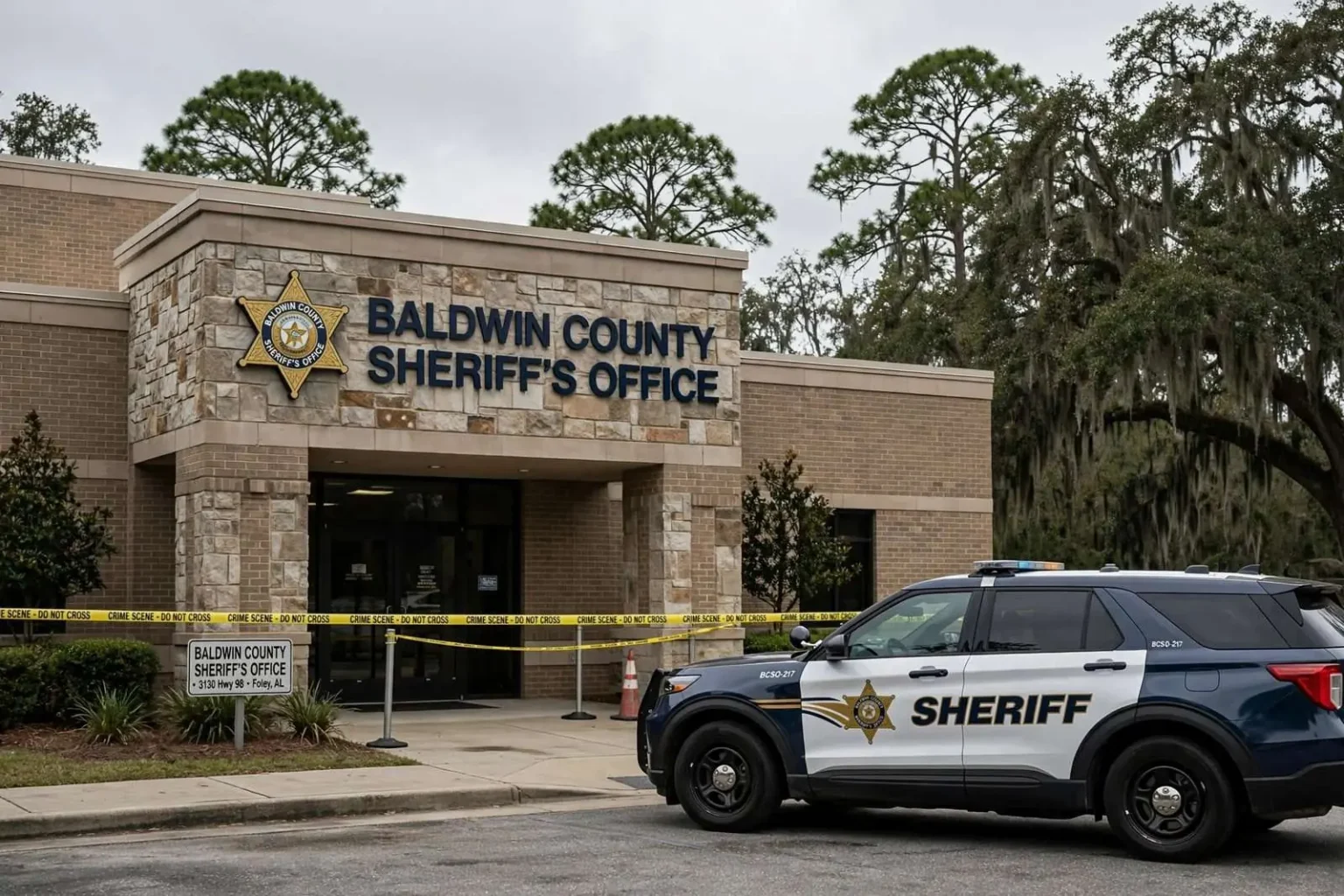
A Foley man has been charged with possessing child sexual abuse material following an Aug. 13 search of his home, according to the Baldwin County Sheriff’s Office. The sheriff’s office said 27-year-old Douglas Smith was arrested after investigators executed a search warrant at his residence in Foley, a growing city in Baldwin County’s southern half that sits along the U.S. 98 corridor between the beaches and the I-10 hub of the county seat at Bay Minette.
The arrest is the product of an investigation that began far from Baldwin County. Officials said investigators were tipped off to Smith’s alleged possession of illegal material through a report to the National Center for Missing and Exploited Children, the national clearinghouse that receives and triages reports from technology companies, internet service providers and the public about suspected exploitation of children. Those reports — which the center refers to as CyberTipline reports — are forwarded to state and local law enforcement agencies with jurisdiction over the suspect, setting off the kind of investigation that ended at a Foley residence in August.
The National Center for Missing and Exploited Children, a nonprofit established by Congress in 1984, operates the reporting system that federal law requires electronic service providers to use when they detect apparent child sexual abuse material on their platforms. Each year the center processes millions of such reports, and each one that involves an identified location gets routed to the relevant local agency — in this case, the Baldwin County Sheriff’s Office.
The Search Warrant and What It Found
“Digital devices were seized, and evidence of unlawful activity was located,” the sheriff’s office said in a statement. Investigators executed the warrant at the Foley home on Aug. 13, removing the electronic equipment believed to contain the material. Searches of this kind typically involve forensic specialists who image the devices and examine their contents in a controlled setting, a process that can take weeks or months when the volume of data is large.
Investigators said Smith was interviewed and acknowledged possessing a large quantity of files he had accumulated over a period of years. Following the search, investigators said they recovered multiple terabytes of material, which the sheriff’s office described as one of the largest digital evidence seizures in its history. The volume matters for more than shock value — each file must be cataloged, and prosecutors typically bring charges that reflect the scope of what the evidence shows.
A terabyte of data can hold a staggering number of image and video files, and sorting lawful content from unlawful material across multiple terabytes requires forensic software and trained examiners. The Baldwin County Sheriff’s Office’s description of the seizure as among the largest in its history signals both the scale of the alleged collection and the workload ahead for the investigators and prosecutors who must process it.
The Charges and What Comes Next
Baldwin County Sheriff’s Office Captain Justin Correra said Smith has been charged with several counts of possessing child pornography, and additional charges are expected as investigators continue reviewing the seized material. “I expect there to be many, many more charges once investigators go through all of the data,” Correra said. Possession of child sexual abuse material is a felony under Alabama law, with penalties that increase with the number of counts and the circumstances of the offense.
Correra also cautioned that the full makeup of the seizure was still being sorted out. “I cannot say if all of the material seized was child porn, but it was a massive amount,” he said.
The charge structure in cases like this typically grows in stages. Initial charges cover what investigators can document at the time of arrest, and as forensic review of seized devices continues, prosecutors add counts corresponding to the additional files identified. The review process serves the defense as well as the prosecution — every file counted must be verified, documented and tied to the defendant’s possession, and that work cannot be rushed without risking the case.
Sheriff’s investigators work such cases in coordination with the Baldwin County District Attorney’s Office, which will carry the prosecution. Cases built on CyberTipline referrals also involve coordination with federal partners, since the same conduct can carry federal charges under statutes enforced by the Department of Justice; decisions about which forum prosecutes typically follow discussions between local and federal prosecutors based on the evidence and the penalties available.
How These Cases Come to Light
The path from a technology company’s detection system to a Foley arrest runs through layers of reporting required by federal law. When a provider identifies apparent child sexual abuse material, it must file a report with the National Center’s CyberTipline; the center strips out unrelated personal information, preserves the report, and refers it to law enforcement based on jurisdiction. Local investigators then work to identify the subscriber, obtain search warrants and build the case — a pipeline that has made Cybertipline referrals one of the most common starting points for possession cases nationwide.
For local agencies, the referrals present a persistent workload challenge. Reports arrive continuously, and each requires investigator time, forensic capacity and coordination with prosecutors. The Baldwin County Sheriff’s Office has handled its share of such cases as the county’s population has grown, and the Aug. 13 arrest in Foley shows the pipeline functioning as designed — from a report routed to Alabama investigators to a warrant, a search and an arrest in a matter of weeks.
What the Case Means for Baldwin County
Agencies across Alabama have emphasized that online exploitation cases do not respect city limits or demographics — defendants come from rural communities, suburbs and cities alike, and the volume of material involved in modern cases has grown with storage capacity. The multi-terabyte seizure in Foley fits that pattern, as consumer hard drives now hold libraries of data that would have been technically impossible to amass a generation ago.
The sheriff’s office has not released details about how long the investigation will run before remaining charges are filed, and officials generally decline to discuss evidence beyond the statements issued at arrest. The seized devices remain in the custody of the forensic process, and the timeline for trial proceedings will follow once the District Attorney’s Office presents the case to a grand jury.
For parents and neighbors in Foley, the case is a reminder of the visibility of online exploitation crimes. Reports from the public — including tips about individuals sharing or storing illegal material — are a documented part of how these cases get made, and the National Center’s tipline accepts reports from anyone, not just regulated companies. Law enforcement officials across Baldwin County have consistently encouraged residents to report suspected exploitation rather than assume someone else already has.
Smith remained in custody following the August arrest as the investigation continued. The sheriff’s office said additional charges are expected once the forensic review of the seized material is complete, and any updates in the case will come through the Baldwin County court system as the prosecution moves forward. Smith is presumed innocent unless convicted in court.
The penalties at stake are substantial. Under Alabama law, possession of child sexual abuse material carries prison exposure that compounds with each count, and a multi-count prosecution built on thousands of files can translate into decades behind bars. Convictions also typically carry registration requirements, and judges in Alabama have shown little leniency in sentencing for possession cases involving large collections of material.
The forensic workload is where cases like this spend most of their time. Examining multiple terabytes means processing hundreds of thousands of files through identification software, manually verifying hits, and documenting each finding in a way that will survive cross-examination. Agencies that handle this work in-house can take months; agencies that share forensic resources with regional task forces can sometimes move faster. Either way, the court calendar for a case of this size is set by the lab, not the docket.
Community impact extends beyond the courtroom. Cases involving child exploitation material draw intense public attention in communities like Foley, and the sheriff’s office has generally handled releases in such cases with an eye toward accuracy — identifying the charged offenses and the evidence scale without speculating about material still under review. That restraint protects both the integrity of the prosecution and the rights of the accused as the case moves through the system.
Resources for reporting and prevention remain available to Baldwin County residents. The National Center for Missing and Exploited Children operates its CyberTipline around the clock, and its public resources include guidance for parents on monitoring children’s online activity and recognizing warning signs of grooming. Local law enforcement agencies, including the Baldwin County Sheriff’s Office, accept reports directly and coordinate with state and federal partners when a case crosses jurisdictions — as most internet-based cases do.
The Aug. 13 arrest closed one phase of the investigation and opened another. With the devices seized, the initial charges filed and the forensic review underway, the remaining work in the case will unfold on the timetable of the evidence itself. Captain Correra’s expectation of “many, many more charges” reflects what the volume of seized material implies — and Baldwin County prosecutors will have the data to support them when the time comes.