Gov. Ivey Orders Visitors and Tourists to Evacuate Alabama Beaches Ahead of Hurricane Delta
Gov. Kay Ivey ordered a mandatory visitor evacuation for Gulf Shores, Orange Beach, Dauphin Island and Fort Morgan as Delta approached.
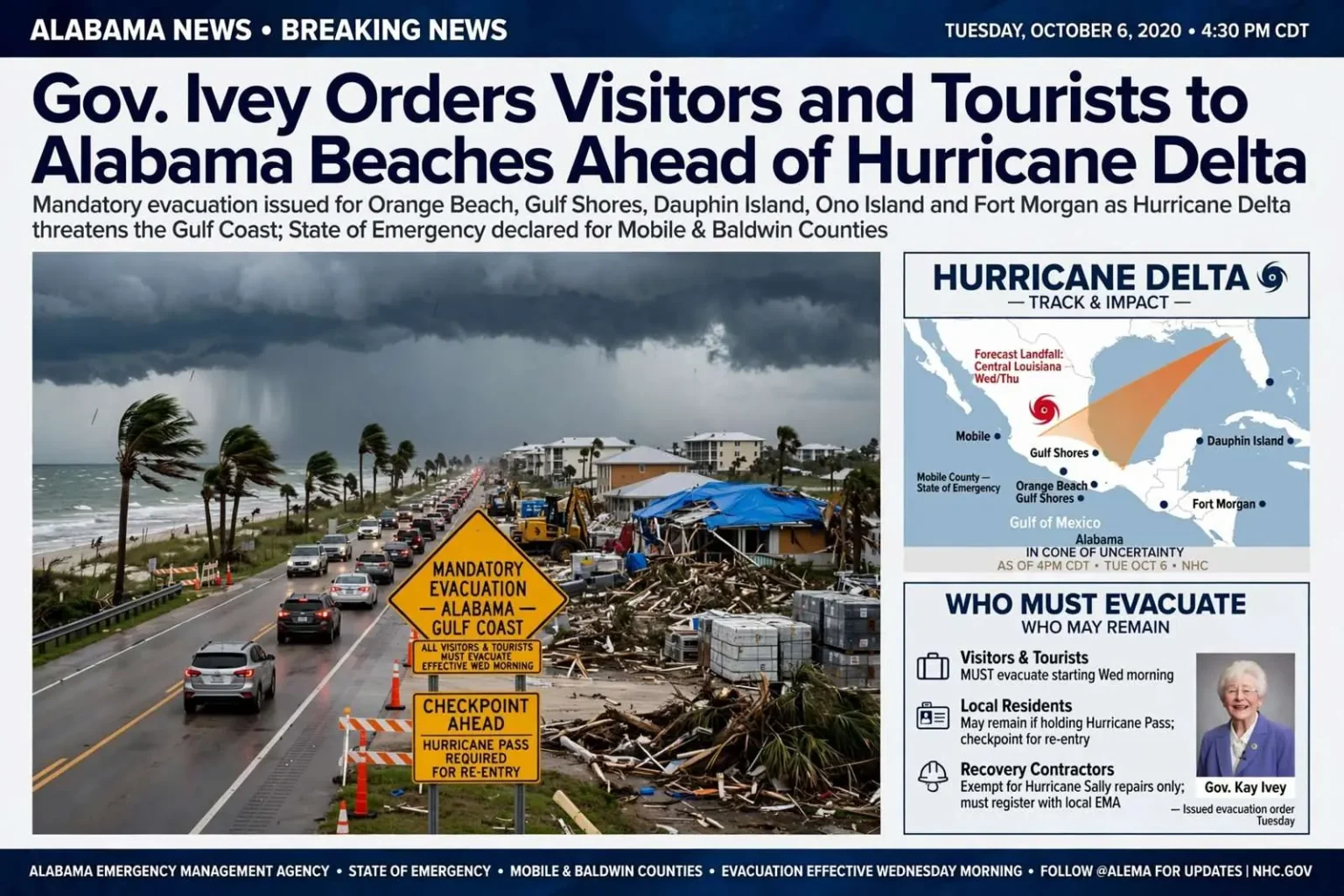
Gov. Kay Ivey issued a mandatory evacuation order for visitors and tourists along Alabama’s beach areas as Hurricane Delta churned in the Gulf of Mexico. The order covered Orange Beach, Gulf Shores, Dauphin Island and the unincorporated areas of Ono Island and Fort Morgan, pulling in nearly every barrier and beachfront community on the Alabama coast.
The governor said only local residents with a hurricane pass — or contractors working on Hurricane Sally recovery projects — should be in the beach areas starting Wednesday morning. The narrow exemption reflected an unusual moment on the coast: Baldwin and Mobile county beach towns were still saturated with recovery activity from Sally, which had struck weeks earlier, and the last thing officials wanted was for evacuation traffic to collide with construction crews and insurance adjusters already in the zone.
“Working with local leaders … it has been determined that all visitors and tourists should proceed with a mandatory evacuation of the Alabama Gulf Coast starting first thing tomorrow morning,” Ivey said. “This is for their safety and well-being, as well as for the safety and well-being of locals who are working to prepare their communities in the event Hurricane Delta tracks more easterly.”
That last clause captured the core concern. With the storm still days from landfall, the difference between a westerly track into Louisiana and an easterly jog toward the Florida Panhandle was the difference between a glancing blow and a direct hit on Alabama’s beaches. Governors rarely order coastal evacuations for storms projected to come ashore in another state, and the decision to do so signaled how much uncertainty remained in the forecast.
Ivey also declared a state of emergency for Mobile and Baldwin counties ahead of the storm. The declaration activated state emergency management machinery, allowing National Guard assets, state equipment and emergency funds to be positioned quickly if the storm turned toward Alabama, and it gave local governments legal cover for the evacuation and preparedness measures already underway.
Hurricane passes, the re-entry credentials issued to residents of Gulf Shores, Orange Beach, Dauphin Island and other coastal jurisdictions, became the controlling document for who could remain. Officials urged visitors to finish their trips, secure rentals and leave before the deadline rather than waiting to see the storm’s next move, since barrier island bridges and the single road serving Fort Morgan close to through traffic once conditions deteriorate.
Delta’s Uncertain Track
The National Hurricane Center projected Delta to make landfall in central Louisiana, but the Alabama Gulf Coast remained inside the cone of uncertainty — the margin of error that surrounds every official forecast track. Cones on Gulf storms routinely span hundreds of miles, and coastal Alabama has a long institutional memory of storms that made landfall far from the forecast point while still delivering destructive surge and wind to the state’s beaches.
That history shaped the state’s caution. Alabama’s Gulf Coast sits at the curve of the northern Gulf, where even distant landfalls can push water into Mobile Bay, Perdido Bay and the sounds behind the barrier islands. A storm centered near the Louisiana coast as a large hurricane drives surge across an enormous stretch of coastline, and communities on the eastern edge of that impact zone can see serious flooding without ever experiencing the storm’s core.
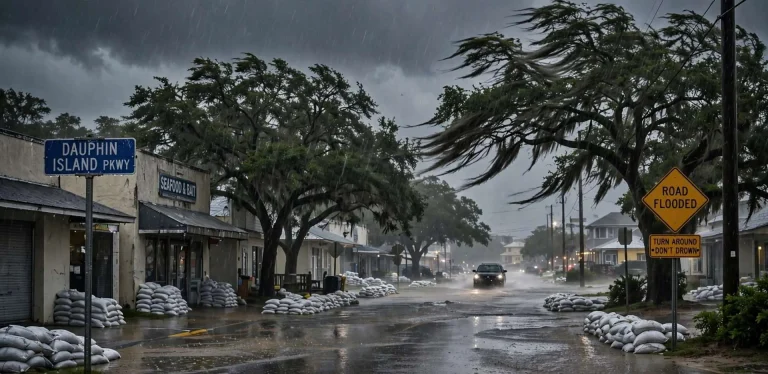
For local leaders in Orange Beach and Gulf Shores, the calculus was complicated by the calendar. Sally had come ashore in the same season, flooding neighborhoods, tearing up the Gulf State Park shoreline and leaving a recovery workload that was still visible from the beach roads. Piles of storm debris lined curbs in both cities, and a new storm threatening the same area raised the prospect of debris becoming airborne missiles and of recovery progress being undone.
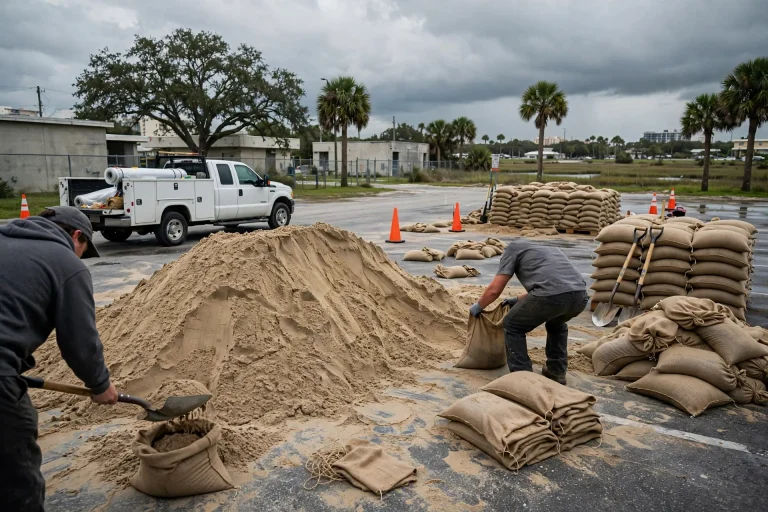
Coastal communities still recovering from Sally weeks earlier were taking no chances. Crews in the beach cities worked to secure construction sites, tie down materials and clear drainage ways in the days before the evacuation deadline, while residents who had only recently returned home after Sally faced the unwelcome routine of shuttering their houses again.
Who Had to Go, and Who Could Stay
The evacuation order drew a sharp line between two groups. Visitors and tourists — the renters, seasonal residents and travelers who fill the coast’s condominium towers and beach houses — had to leave. Local residents could stay if they chose, but re-entry after the storm would require a hurricane pass, and officials made clear that anyone remaining should be prepared to be self-sufficient through the storm’s aftermath.
Contractors working on Sally recovery were the third category, allowed to remain because their work was part of the coast’s recovery and because a mass departure of skilled tradespeople would have stalled repairs that were already in motion. Roofers, tree crews and restoration companies had flooded the area after Sally, and many were living in temporary quarters while they worked through backlogs of damaged homes.
The Geography of an Alabama Coastal Evacuation
Each community named in the order presented its own evacuation challenge. Gulf Shores and Orange Beach sit behind the sugar-white beaches of the Baldwin County coast, connected to the mainland by a handful of highways that funnel visitors onto and off the barrier in concentrated waves. Ono Island, a gated community on a barrier island at Perdido Pass, and Fort Morgan, the unincorporated peninsula west of Gulf Shores, rely on roads that become unusable before storms arrive, which is why they appear in every coastal evacuation order regardless of the storm’s projected strength.
Dauphin Island, in south Mobile County, is in some ways the most exposed of all. The town sits on a low barrier island at the mouth of Mobile Bay, connected to the mainland by a single bridge route. When an evacuation order covers the island, the window for getting everyone off is measured in hours, and officials typically close the bridge to incoming traffic well before tropical-storm-force winds arrive.
State and local emergency managers coordinate these moves through the Alabama Emergency Management Agency and county EMA offices, which stage shelters inland, coordinate with law enforcement on traffic flow and push evacuation timelines through media and alert systems. The governor’s office sets the legal framework, but the mechanics — patrols clearing the beaches, police knocking on condo doors, barricades going up on coastal highways — are executed locally.
What Visitors Were Told to Do
The order’s timing, effective first thing Wednesday morning, was designed to move people out in daylight and ahead of any weather effects. Officials urged visitors to pack up, secure their accommodations as instructed by property managers and drive inland rather than merely shifting up the coast, since the entire northern Gulf shoreline sat inside the broader forecast uncertainty.
Tourism officials and property managers relayed the order through rental channels, and law enforcement planned to begin clearing the beach areas on the enforcement timeline the governor outlined. For a coast that lives on visitor traffic, ordering tourists to leave is never taken lightly — but the memory of recent seasons, and the sight of Sally’s damage still waiting to be repaired, made the decision straightforward for state and local leaders alike.
As Wednesday approached, the practical advice to the public stayed consistent: monitor the National Hurricane Center’s forecast updates, treat the cone of uncertainty as a reason to act rather than a reason to wait, and remember that evacuation orders exist to get people out of harm’s way before the roads themselves become dangerous.
A Season That Kept Demanding Attention
Distinguished from a typical brush with a Gulf storm by its timing so soon after a direct hit, the Delta evacuation underscored how punishing the season had become for Alabama’s coast. Sally had already flooded homes, downed trees across Mobile and Baldwin counties and knocked out power for days. Preparing for another system while that damage remained raw taxed residents, businesses and government agencies alike.
Emergency managers describe that compounding effect in simple terms: a community’s ability to respond to the next storm depends heavily on how much of the last one has been cleaned up. Debris still on the curb, roofs still under tarps and residents still displaced all reduce the margin for error when a new system enters the Gulf.
The governor’s declaration of a state of emergency for Mobile and Baldwin counties put the state’s resources on standby for exactly that scenario. Should Delta have turned east, the declaration would have allowed the state to pre-position high-water vehicles, generators and guard personnel, and to fast-track any local requests for help once the storm passed.
For the thousands of visitors on the coast when the order was announced, the evacuation was an abrupt end to a beach vacation. For the residents and recovery workers who stayed behind, it was one more preparation drill in a season that had already demanded more than its share. Officials said the overriding goal was simple: no one should be on a barrier island or beachfront road when Delta’s weather arrived, whatever track the storm ultimately took.
Residents with hurricane passes were reminded to keep the credential accessible for re-entry, since checkpoints would operate after the storm exactly as they had during past recoveries. Contractors were asked to register their continued presence with local authorities where required, so that officers clearing neighborhoods after the storm would know who legitimately belonged in the beach areas.
The order stood as a reminder of how the Alabama Gulf Coast manages hurricane risk: evacuate early, verify credentials at the bridges, and let the storm prove the forecast wrong rather than gamble lives on the possibility that it will.