Gulf Shores Airbnb Policy Changes Prompt Rental Managers to Seek City Ordinance
Gulf Shores vacation rental managers asked the City Council for a local ordinance requiring guest IDs, contact details and signed agreements as Airbnb policy changes take effect Nov. 20.
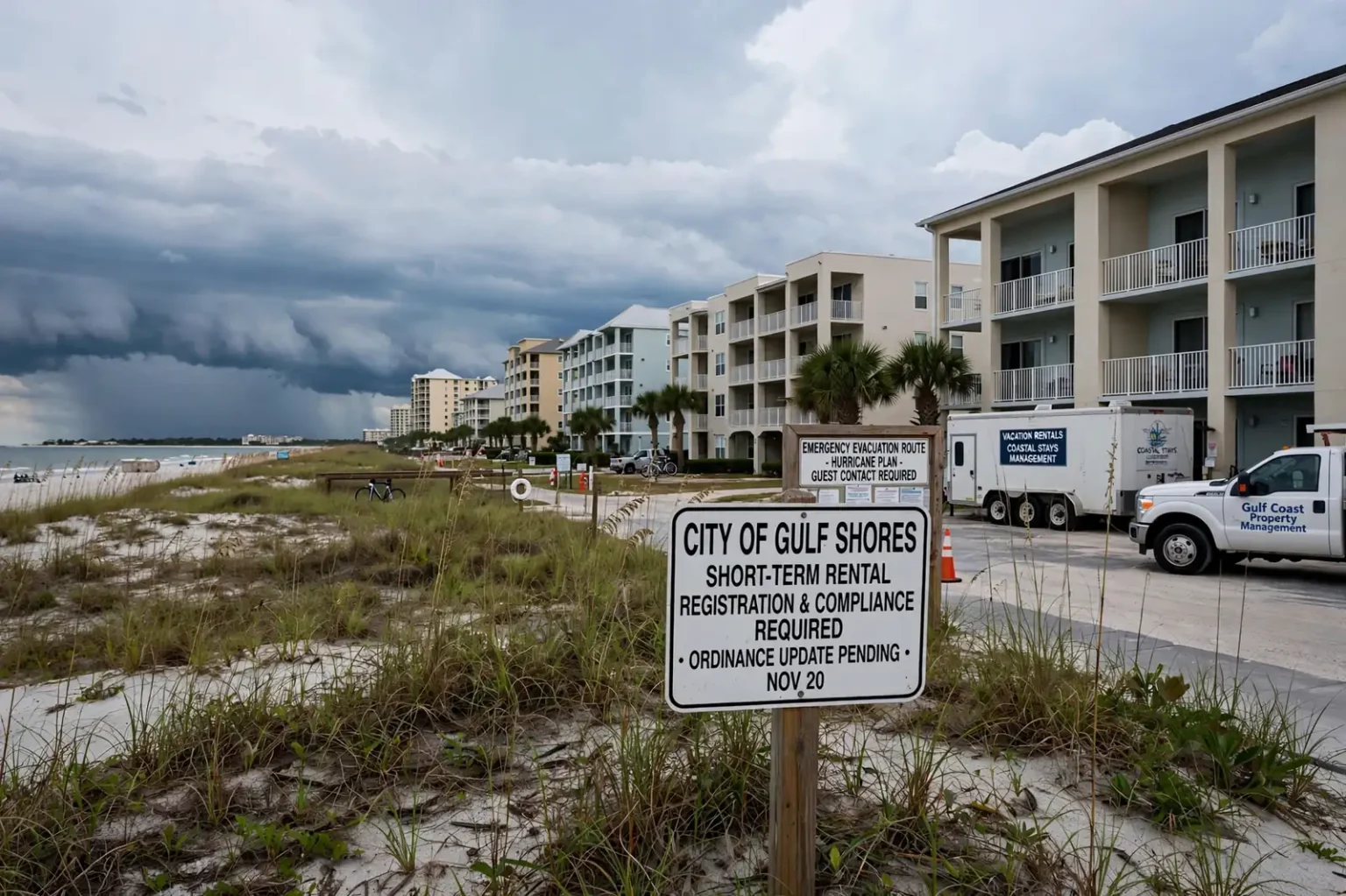
GULF SHORES, Ala. — Vacation rental operators in Gulf Shores are asking city leaders for a local safety net before Airbnb policy changes take effect on Nov. 20. During a recent Gulf Shores City Council meeting, property managers and homeowners association representatives warned that the platform’s new rules will limit their ability to verify who is staying in local units, keep in touch with guests during emergencies and back up removals with a signed contract.
Their request to the council was straightforward: adopt a city ordinance that requires every short-term vacation rental in Gulf Shores to collect a verified guest ID, direct contact information and a signed rental agreement before anyone checks in, no matter which booking website was used to reserve the stay.
What the Gulf Shores Airbnb Policy Changes Would Do
According to the rental managers who addressed the council, the nationwide Airbnb update scheduled for Nov. 20 restricts hosts in three key ways:
- Signed agreements: Hosts will no longer be allowed to require guests to sign a separate rental agreement of their own.
- Identification: Hosts will not be permitted to collect government-issued identification from guests.
- Contact details: Hosts will not be able to keep a guest’s permanent phone number or email address on file.
Instead of a guest’s real phone number, managers said, the platform supplies a temporary relay number that stops working two days after checkout. Operators described these as fine-print changes, but they told the council the practical effects would reach well beyond paperwork.
Why Local Rental Managers Say Safety Is at Stake
The concerns raised at the meeting fell into three broad areas, each tied to the realities of running rentals on the Alabama Gulf Coast.
Storms and evacuations
Gulf Shores sits on a barrier island coastline that is regularly in the path of tropical storms and hurricanes. When officials call for evacuations, rental managers are often the ones responsible for making sure guests get the word and leave in time. Speakers said that depending on a short-lived relay number, rather than a guest’s own phone or email, could leave them unable to reach visitors when it matters most, which they characterized as a direct public safety risk.
Removing problem guests
Managers also told the council that, under local police practice and Alabama law, officers need a legally binding, signed rental agreement before they will help an owner remove a disruptive or noncompliant guest from a property. Without the ability to require that document, operators said, they could find themselves with no clear way to enforce house rules or end a stay that has gotten out of hand.
Fraud, parties and property damage
The third concern centered on accountability. Speakers said that limits on identity checks and signed contracts would leave owners and neighborhood associations more exposed to unauthorized occupants, party houses, occupancy violations and damage that may go unpaid. Representatives of local property owners associations agreed, noting that the effects would not stop at a single unit but could spill over to neighbors and shared amenities in condominium and residential communities.
A Major Piece of the South Baldwin Economy
The stakes are significant for a city whose economy leans heavily on visitors. Market estimates put the number of active Airbnb listings that identify Gulf Shores as their location at more than 5,300, with average annual revenue of $49,721 per unit. Taken together, those estimates suggest the listings generate well over $260 million a year in rental income.
Those figures cover only one booking platform and only listings tied to the Gulf Shores name, so they offer a partial picture of a short-term rental market that stretches across much of south Baldwin County. Still, they help explain why operators pushed the council to act quickly. Rental income supports cleaning crews, maintenance contractors, management companies and the restaurants and attractions that guests visit, and it feeds the lodging taxes that help pay for public services in coastal communities.
Orange Beach Facing the Same Questions
Homeowners association representatives pointed out that Gulf Shores is not alone. Neighboring Orange Beach is wrestling with similar concerns as the same platform rules approach, and local operators have raised the issue there as well. South Alabama News covered that discussion earlier this month in a separate report on Orange Beach rental operators and the Airbnb changes.
Because the two cities share a stretch of coastline, a guest base and many of the same management companies, rental operators have an interest in rules that line up across city limits. A patchwork of requirements could make compliance harder for companies that manage units in both places.
How a Local Ordinance Could Work
The proposal presented to the council would shift the requirement from the booking platform to the property itself. Under the approach operators described, a short-term rental in Gulf Shores would have to obtain three things before occupancy:
- a verified identification for the guest,
- direct contact details for the guest, and
- a signed rental agreement.
The idea is that a city rule applying to every rental, regardless of how it was booked, would give managers a clear legal basis to collect that information even if a platform’s own policies discourage it. Cities in Alabama generally regulate short-term rentals through local ordinances that address issues such as registration, occupancy, parking and noise, and the request would add guest verification standards to that local toolbox.
Whether such an ordinance can be written to operate alongside a private company’s terms of service is the kind of question that typically requires legal review, and the council signaled it intends to get that review.
What Happens Next for Gulf Shores
Council members asked the rental industry representatives for complete documentation of the platform changes so the city can see exactly what the new rules say. Members also said they are committed to reviewing possible ordinance adjustments with the city’s legal counsel before the Nov. 20 deadline arrives.
Any change to city code would need to go through the council’s regular process, including formal consideration at a public meeting. Residents, owners and managers who want to follow the discussion can find council agendas and meeting information on the City of Gulf Shores website. For more coverage of the city, visit our Gulf Shores news page, and for broader coverage of the visitor economy, see our tourism section.
What Rental Owners and Guests Should Watch For
For now, owners who list properties on the platform may want to review their listing settings, house rules and emergency communication plans ahead of Nov. 20, and to stay in touch with their management companies about how they plan to handle guest verification. Guests booking stays on the coast this winter may notice differences in what information hosts request and when.
The outcome of the council’s legal review will determine whether Gulf Shores becomes one of the first coastal cities in the region to set its own guest verification standard for vacation rentals.