Gulf Shores Impact Fees Would Get First Update Since 2007 as Council Heads Toward Nov. 16 Vote
Gulf Shores is proposing its first impact fee update since 2007, raising the single-family maximum from $4,780 to $10,000 while a 1% of value limit stays in place. A final vote is set for Nov. 16.
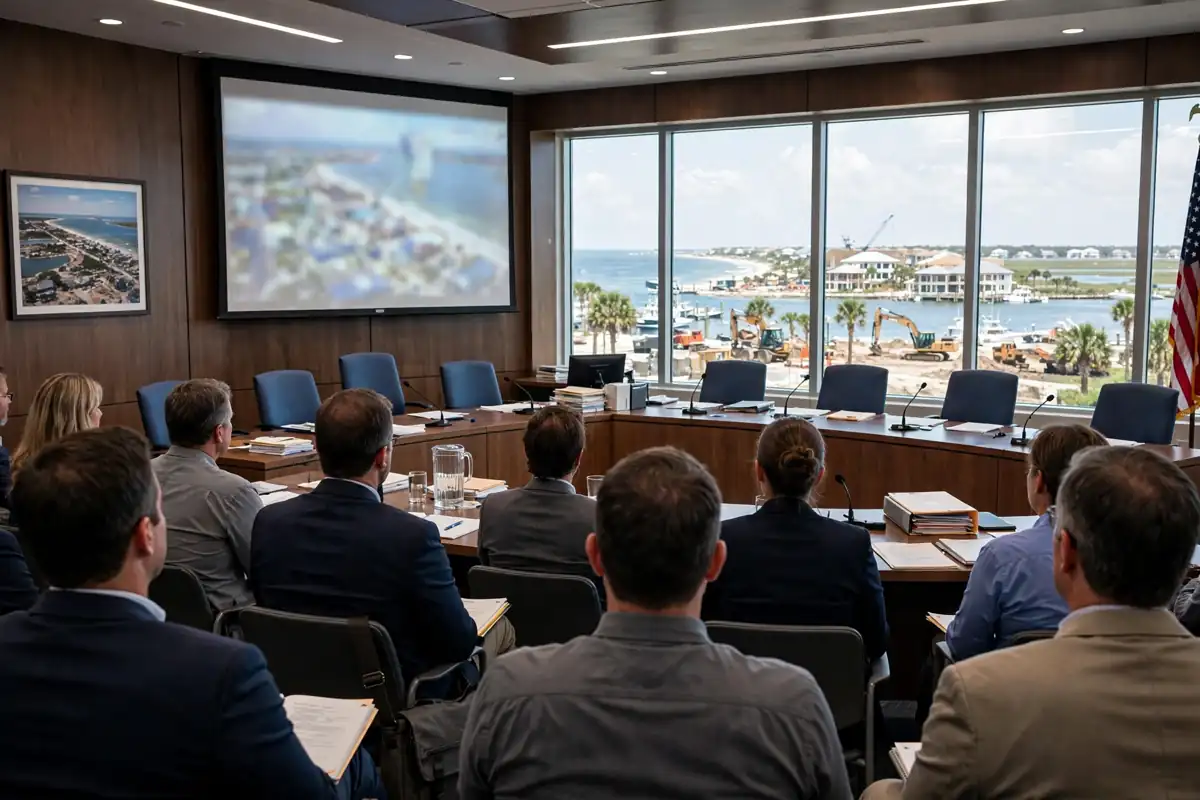
GULF SHORES, Ala. — Gulf Shores impact fees on new construction would be updated for the first time in nearly two decades under a proposal the City Council reviewed Monday, Nov. 2, a change city officials say is meant to make sure development helps pay for the roads, public safety services and schools that growth demands.
The council discussed the proposal at its Nov. 2 work session. According to the city, the plan will get further review at the next council meeting, with a final reading and vote scheduled for Nov. 16.
Impact fees are one-time charges on new construction intended to help cover the added demand that growth places on public facilities. The Gulf Shores schedule has not changed since 2007.
Why the city says an update is needed
City officials point to population as the main reason for revisiting the numbers. The city says Gulf Shores has grown from about 6,000 residents to about 18,000, roughly tripling the number of people relying on city services.
The proposed schedule grew out of a study by consulting firm TischlerBise, the same firm that produced the 2007 study. The city said the new study looked at service levels for parks, transportation, schools, police and fire.
Growth may not be the only factor. A memo included with the work session agenda, as South AL News reported before the meeting, said a recent lawsuit settlement requires the city to “update our impact fee ordinance to include schools, parks and transportation projects.” The city’s announcement of the proposal did not mention the settlement.
According to the city, money raised under the updated structure would be set aside for needs tied to development, including:
- Roads and transportation: keeping traffic moving and roadways safe as travel demand grows.
- Public safety: supporting police and fire services, including response times and department readiness.
- Schools: helping with educational infrastructure, a category the city said was not part of the 2007 schedule.
Impact fee money has recently figured in other city decisions. A staff request presented to the council Oct. 19 proposed using $805,605 in recreation impact fees toward a $1.28 million change order for plaza work tied to the city’s pedestrian bridge project.
What it would mean for a new home
The key figure for a new single-family house is the maximum fee. The city said the previous maximum was $4,780 and the proposed schedule would raise that ceiling to $10,000.
The higher ceiling does not mean every new home would pay that amount. According to the city, Alabama law bars municipalities from charging an impact fee of more than 1% of a structure’s fair market value, and that limit remains in place.
The city uses a $500,000 home as its example, saying the fee on a house at that value would be capped at $5,000. City officials said the plan therefore brings no effective cost change for homes valued at or below $500,000 and would mainly affect homes valued above that level.
The figures the city released leave a small gap in that description. A $500,000 home would be limited to $5,000 under the 1% rule, which is $220 more than the $4,780 the city gave as the old maximum, so a home valued between $478,000 and $500,000 could see a modest difference if it was paying the old maximum.
Above that range, the math changes more noticeably. Applying the 1% limit, a $750,000 home could be charged no more than $7,500, while the $10,000 maximum would be reached only at a value of $1 million or more.
Questions before the vote
Agenda materials offered a different set of numbers. A graph included with the Nov. 2 agenda showed proposed fees for new single-family homes based on size, from $4,831 for homes of 1,000 square feet or less to $15,326 for homes of 4,000 square feet or more. The top of that range is higher than the $10,000 maximum the city has since described, and the materials available did not explain how the two sets of numbers relate.
Residents and builders who want to follow the issue can expect the next discussion at the council’s upcoming meeting, ahead of the scheduled final vote Nov. 16.
The fee debate comes as the city is also looking further ahead. Gulf Shores has been gathering public feedback for its 2045 plan, including a walking tour for residents held Oct. 29.