BREWTON, Ala. — The Escambia County FEMA question is now in President Donald Trump’s hands, local officials say, and until he answers, county leaders are holding off on deciding how to pay for and carry out the removal of debris from Hurricane Isaias.
“We’ve done all we can do. We just have to wait,” Escambia County Emergency Management Agency Director Justin Jordan said.
Jordan said every local government in the area has turned in the documents needed to show why federal help is necessary. He pointed to Florida’s experience as a possible guide to the timing.
“Florida submitted their request and it took 12 days to get an answer,” Jordan said. “We are at day 8 (as of Monday) so, hopefully, we will hear something in the next couple of days.”
What is at stake for the county and its cities
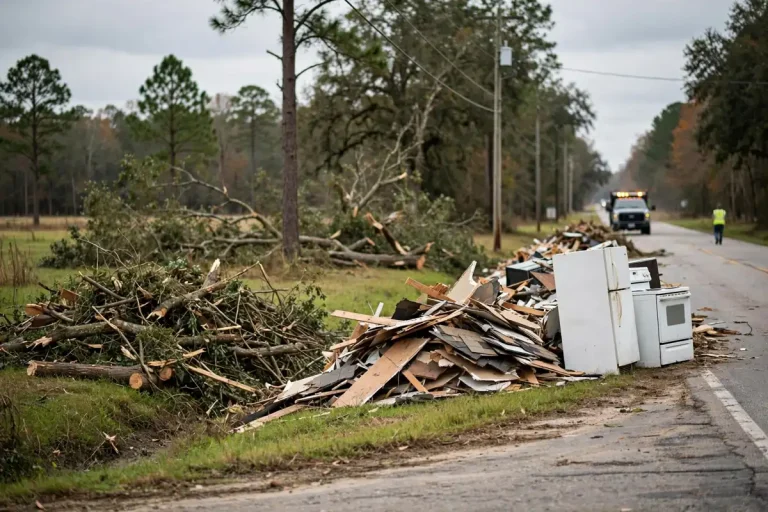
County Commission Chairman Raymond Wiggins said federal aid would help cover a debris removal job he estimates could cost up to $15 million. A separate estimate of the work says that if no declaration comes, the county and each affected city would be responsible for removal and disposal at a cost that could top $20 million, with the job taking as long as four months.
The Escambia County EMA warned in mid-October that pickup could take months in some areas.
Wiggins described the cleanup as very challenging, now and in the months to come.
“We are waiting on the President’s answer to see which way we need to go,” he said. “We have some options on how to proceed with the debris removal, but we are hoping for FEMA reimbursement for some of that cost.”
The county’s options for debris removal
Wiggins laid out several ways the county could handle the work:
- Hire DRC Emergency Services, a state-approved contractor
- Bid the project out on its own
- Accept mutual aid that neighboring counties have offered
- Use county Road Department personnel
“We are not ready to make that decision today,” Wiggins said. “Until we know what we are facing, financially, we will wait on making that call.”
Some debris is already moving. Contractors are clearing state highways and interstates, including local stretches of routes 41, 31 and 29, with CrowderGulf Disaster Recovery & Removal handling that work. The Alabama Department of Transportation began its pickup along state-maintained routes in Conecuh, Escambia, Monroe and Wilcox counties on Oct. 19.
That work does not reach county roads and city streets, which remain the responsibility of local governments.
Where Alabama’s request stands
Gov. Kay Ivey asked Trump on Oct. 23 for a major disaster declaration covering 23 counties, including Escambia. Ivey has said the decision now lies with the federal government.
“Assessments indicated this hurricane certainly caused significant damage across communities in parts of Alabama,” Ivey said. “We saw individual homes and public infrastructure impacted. Having support from FEMA is critical to states like Alabama, and I am hopeful this request will be fulfilled so we can get Alabamians quickly back on their feet.”
The 23 counties in the request are Baldwin, Barbour, Butler, Choctaw, Clarke, Coffee, Conecuh, Covington, Crenshaw, Dale, Dallas, Escambia, Geneva, Henry, Houston, Lowndes, Marengo, Monroe, Perry, Pike, Sumter, Washington and Wilcox.
Public Assistance, which helps local governments with eligible costs, is sought for all of them. Ivey also asked for Individual Assistance, which can help residents directly with uninsured or underinsured needs such as temporary housing and essential home repairs, in Conecuh, Escambia and Monroe counties and for the Poarch Band of Creek Indians.
All nine members of Alabama’s congressional delegation signed a letter led by U.S. Sen. Katie Britt urging Trump to approve the request “without delay.” Britt is among the officials who have visited the Brewton area to see the damage in the weeks since the storm, as have FEMA representatives. Brewton Mayor Frank Nalty said FEMA teams were in the county and city on Oct. 19.
A narrower federal emergency declaration, approved before the storm, covered Baldwin, Escambia and Mobile counties and the Poarch Band of Creek Indians.
A hard-hit county still waiting
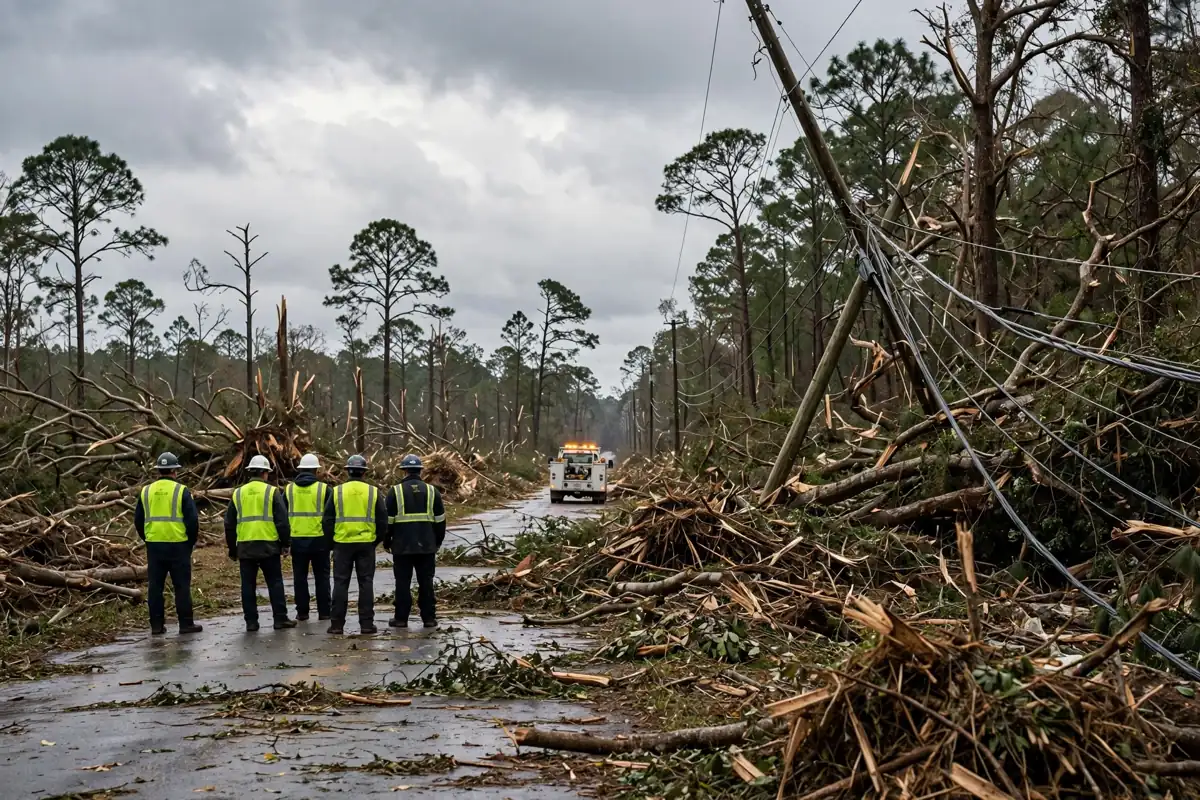
Isaias made landfall near Destin, Fla., on the evening of Oct. 9 as a Category 2 hurricane with 105 mph winds, then moved north into Alabama. Nalty has called Brewton the hardest-hit community in the state and compared the destruction to Hurricane Ivan in 2004.
Hundreds of utility poles were broken in the city, according to the mayor, and the Southern Pine Electric Cooperative reported 18,000 members without power after the storm, Jordan said. A preliminary Alabama Forestry Commission survey estimated more than $33.5 million in timber damage in Conecuh, Escambia and Monroe counties.
Debris remained enough of a concern late last month that Brewton and East Brewton moved Halloween trick-or-treating to daylight hours. East Brewton Mayor Joey Shell said small towns with limited resources are desperate. “We just need federal help,” he said.
Nalty cautioned in October that help was not assured. “There is no guarantee that FEMA assistance will come,” he said.