Gulf Shores Police Keep Visitors Off Island as Hurricane Sally Cleanup Continues
Gulf Shores police are running checkpoints and keeping visitors off the island while Hurricane Sally cleanup and power restoration continue.
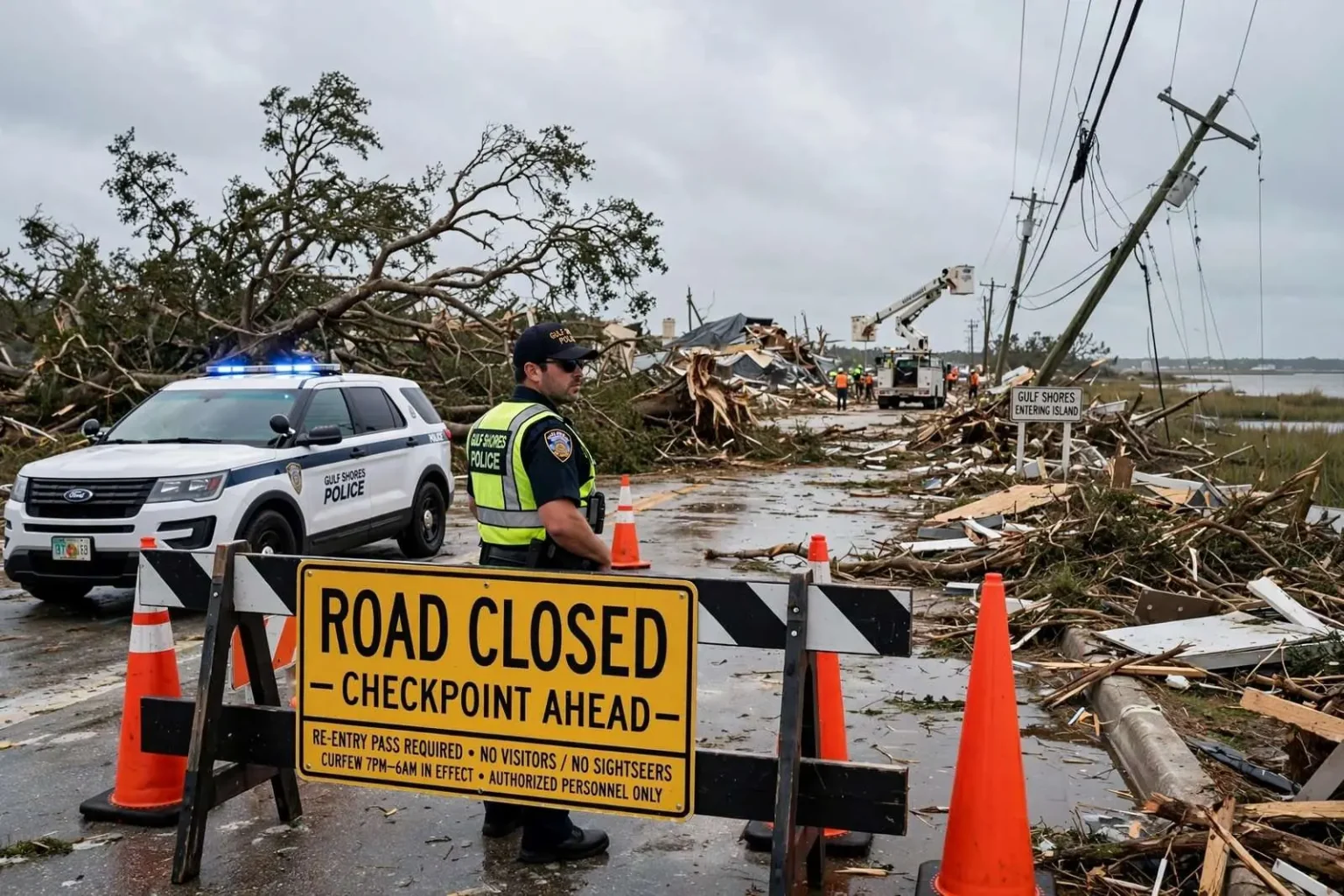
GULF SHORES, Ala. — Gulf Shores was among the first Baldwin County communities to feel Hurricane Sally’s impact when the storm made landfall just before 5 a.m. last Wednesday. Weeks of cleanup have followed, and city police are still controlling who gets onto the island. Gulf Shores Police continued running checkpoints to admit only people with re-entry passes, and curfews remained in effect to limit travel while utility and debris crews worked.
The pre-dawn landfall put Sally in a small company of storms that have come ashore on the Alabama coast overnight, catching some residents asleep as conditions deteriorated faster than the storm’s slow approach had suggested. By daylight, the scale of the task was visible across the island: downed trees and power lines blocking streets, boats torn loose from their moorings, debris from homes and businesses scattered across roads, and standing water in low-lying sections of town. City crews began clearing primary routes first, working to restore access for utility companies and emergency vehicles before turning attention to residential streets.
Officers said they had interrupted at least one suspected car burglary in progress but reported no widespread problems. “The night shift did report certainly seeing some people moving around. They didn’t catch any looting in progress,” a department spokesman said. The report was a measure of relief for a community that remembers the chaotic aftermaths of past Gulf storms, when powerless neighborhoods and emptied businesses can attract opportunistic crime. An active police presence, coupled with the checkpoint system limiting who could enter the island at all, kept the post-storm environment orderly even with much of the city still dark.
Checkpoints and Curfews: How Re-entry Works
The checkpoint system that has governed access to the island since the storm is a standard tool of Gulf Coast hurricane recovery, and Gulf Shores has refined it across multiple storms. Re-entry passes are issued in advance to residents, business owners and essential workers, often color-coded by phase: first responders and utility crews first, then residents with identification proving island addresses, then business owners and contractors, and finally the general public once conditions allow. The passes let officers at the perimeter make quick, consistent decisions instead of debating each vehicle, and they keep sightseers and self-styled volunteers from adding to congestion on streets still choked with debris.
Curfews serve the complementary purpose of clearing the streets during the hours when restoration work is most dangerous and most active. Line crews stringing new power lines, crane operators removing fallen trees and debris haulers running loads to staging areas all work faster — and more safely — on empty roads. The curfew windows also concentrate police patrols on a smaller set of problems overnight, when visibility is poor and vacant, damaged buildings are most vulnerable. City officials have repeatedly emphasized that the restrictions are temporary and will be lifted in phases as power is restored, roads are cleared and public safety needs diminish.
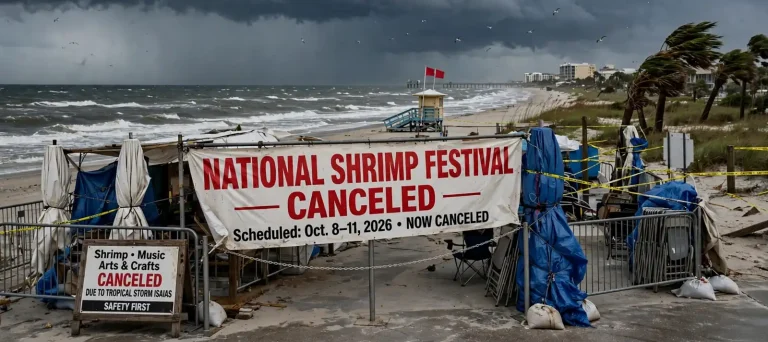
The request that visitors stay away carries real weight in a city whose economy depends on tourism. Gulf Shores Police asked visitors to remain off the island until further notice, noting that extra foot traffic and vehicles would make it harder for officers to do their jobs. Every sightseeing drive through a damaged neighborhood consumes fuel that must be conserved for utility trucks, slows crews working at intersections, and creates hazards around downed lines that may still be energized. The city’s message to would-be visitors — echoed by the tourism bureau — was that the beach will be there when the recovery is complete, and that the fastest way to reopen the island is to let the crews work.
Weeks of Cleanup, and the Long Road to Power
Many residents were still without power as restoration continued, a familiar frustration for Gulf Coast residents after any hurricane. Sally’s slow track across the northern Gulf compounded the damage: sustained winds and hours of driving rain toppled trees that had stood through earlier storms, and the saturated ground gave way beneath root systems across Baldwin County. Utility companies surged hundreds of line workers and tree crews into the region, staging equipment at fairgrounds and parking lots converted into temporary bases of operation. Restoration proceeds in a deliberate order — transmission lines and substations first, then main distribution lines, then neighborhood laterals — which explains why some neighborhoods lit up within days while nearby streets waited weeks.
Debris removal is the other visible signature of the recovery. Storm debris in Baldwin County after a hurricane is measured in cubic yards by the millions, and the cleanup is contracted in phases: crews first cut and clear roadways, then collect curbside piles street by street, then grind the collected vegetative debris into mulch at designated sites. City officials urged residents to separate storm debris — vegetative material, construction and demolition waste, appliances, electronics — from regular household garbage, because mixed piles cannot be processed for federal reimbursement and can sit far longer at the curb. The piles that lined Gulf Shores’ streets in the weeks after Sally became the recovery’s most visible symbol, shrinking slowly as the collection crews worked through the routes.
Life under the checkpoints has required patience from residents even as it protects the recovery. Those who live on the island describe adjusted routines — grocery runs scheduled around curfew hours, generators running on carefully rationed fuel, laundry and showers timed to available power or the generosity of friends across the bridge in Foley and Robertsdale. Schools in Baldwin County staggered reopenings as buildings regained power and roads became passable, and local employers from restaurants to boatyards faced the task of reopening with staffs still displaced by damage and extended power outages.
A Storm Baldwin County Will Remember
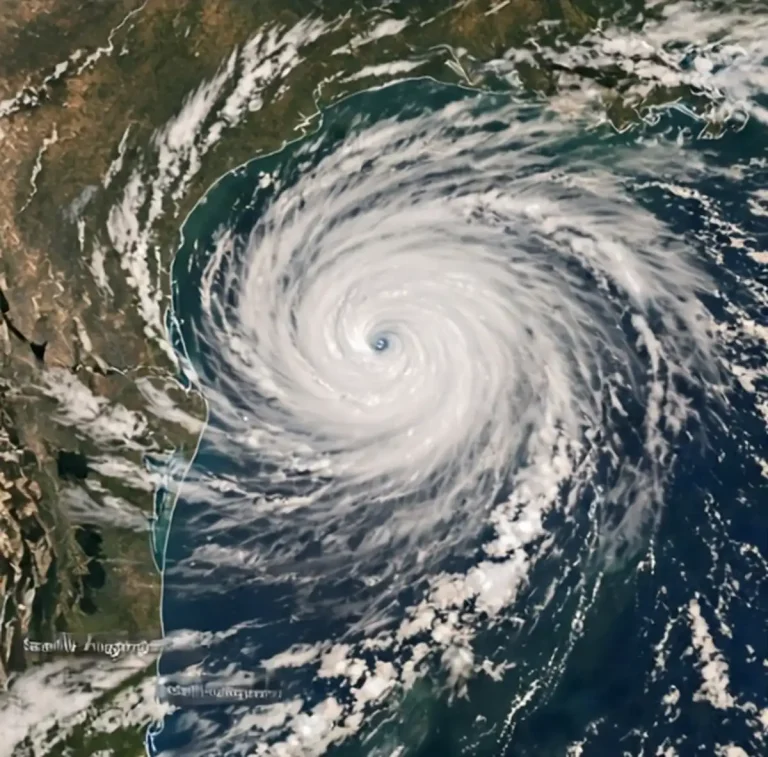
Sally’s landfall along the Gulf Coast placed it among the most significant hurricanes to affect the Alabama shoreline in recent memory, drawing comparisons to Ivan in 2004 for the breadth of its damage across Baldwin County. The storm’s slow movement — crawling at a pace that frustrated forecasters and residents alike — piled surge water into bays and bayous and dropped months’ worth of rain in a matter of hours, flooding streets well inland of the beach communities. Orange Beach, Gulf Shores and the communities along Mobile Bay all reported extensive damage, and the recovery is expected to stretch into the months ahead even after the checkpoints come down and the curfews lift.
For the police department, the weeks since landfall have meant long shifts and adjusted priorities. Routine calls — traffic enforcement, beach ordinances, the seasonal rhythm of a resort town — gave way to security patrols of damaged and vacant properties, checkpoint duty in all weather, and coordination with the National Guard units and out-of-town agencies that typically reinforce coastal departments after a major hurricane. Officers who live in the community themselves have worked through the same recovery everyone else is living: damaged homes of their own, children out of school, family members without power. City officials have praised the patience of residents who have waited in checkpoint lines and complied with curfew orders that restrict their own movements in their own town.
The phased return of normal life will follow the restoration of services rather than a single reopening date. When the checkpoint signs come down and the last debris pile disappears from the curb, Gulf Shores will begin the other recovery — the one that restores the beaches, shops and restaurants that define the city’s identity. Residents who endured the storm and the weeks of restrictions afterward have one piece of advice for visitors planning their return: the island is working its way back, and it will welcome the world again just as soon as the work is done.
Emergency management officials used the recovery period to remind Baldwin County residents of the lessons the storm reinforced. Storm preparation lists that felt academic in August proved essential in September: fuel in vehicles before the rain starts, cash for merchants whose card systems went dark, printed copies of insurance policies, and a plan for pets that many hotels will not accept. The county’s alert system, which sends severe weather and recovery updates to registered phones, saw a surge of sign-ups in the weeks after landfall — the kind of after-action behavior emergency managers say makes the next storm easier to weather.
Federal assistance also began flowing into the recovery. Presidential disaster declarations open the door to FEMA individual assistance for residents in declared counties, including grants for temporary housing, home repairs and other serious storm-related needs not covered by insurance, as well as low-interest loans through the Small Business Administration for homeowners, renters and businesses. Applicants are urged to document damage with photographs, keep receipts for repairs and lodging, and register promptly — the paperwork trails matter when inspectors and adjusters begin their rounds. State and local officials coordinate debris removal reimbursements through the same process, which is why the sorting rules at the curb are enforced so strictly.
Through it all, the police checkpoints have remained the single point of passage between the island and the mainland, and officers staffing them have become the everyday face of the recovery — waving through the re-entry passes of residents anxious to see their homes, turning back others with a reminder that the island is not yet ready. For Gulf Shores, a city built on welcoming visitors, keeping people out has been among the hardest parts of the job. It has also, officials say, been essential to getting the island back to the business of welcoming them again.