
Irvington House Fire That Killed Two Young Children Likely Started by Child Playing With Lighter
Mobile County investigators say a deadly Irvington house fire that killed Liam Barnes, 4, and Noah Gordon, 2, likely started with a lighter.
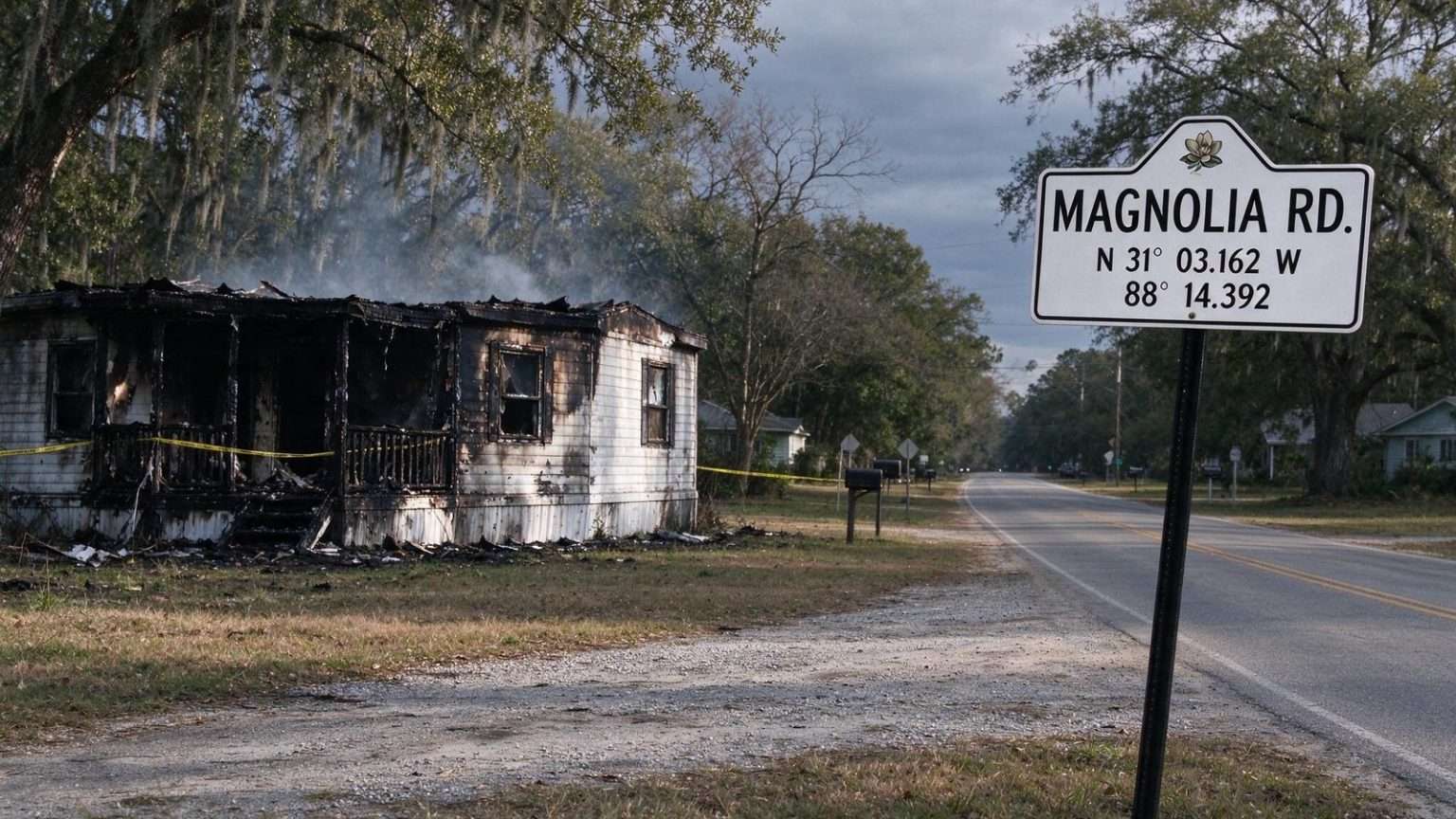
Mobile County investigators believe they know what sparked a house fire near Irvington that claimed the lives of two young children last week. According to the Mobile County Sheriff’s Office, the fire — which tore through a mobile home on Magnolia Road, near Irvington Bayou La Batre Highway, on Thursday — most likely started when one of the children was playing with a cigarette lighter and ignited a nearby mattress. Liam Barnes, 4, and Noah Gordon, 2, were killed in the blaze.
Officials said the children’s mother was outside when the fire started and rushed back inside, where she was able to rescue a 10-month-old, Sebastian Gordon. Sheriff’s investigators found no sign of foul play and said no charges will be filed in connection with the fire.
The findings brought a measure of clarity to a tragedy that shook the communities along Mobile County’s southern corridor, where news of the fire spread quickly through the close-knit neighborhoods that stretch from Irvington toward Bayou La Batre. Investigators spent the days after the blaze working to determine how it began, and the conclusion that a child playing with a lighter ignited the mattress pointed to the singular danger that lighters and matches pose in homes with small children.
How the Fire Unfolded
The fire broke out Thursday at the mobile home on Magnolia Road, a quiet residential road just off Irvington Bayou La Batre Highway in the unincorporated community near Irvington. When firefighters arrived, flames had spread through the structure. Mobile homes present particular challenges in fire emergencies because of their construction and materials, which can allow fire to move through a structure far faster than in traditional site-built houses.
The mother was outside when the fire began, according to investigators, and her decision to go back into the burning structure saved the life of her 10-month-old son. Rescuing an infant from a burning building is an act of extraordinary risk, and firefighters who respond to these scenes consistently describe how little time there is once a fire takes hold inside a home.
Despite those efforts, Liam Barnes, 4, and Noah Gordon, 2, did not survive. Young children are among the most vulnerable people in any house fire, because they depend on adults to recognize danger and lead them to safety, and because they can hide or become disoriented when smoke fills a room. Fire officials across the country emphasize that fires involving young children escalate in seconds, not minutes.
The Investigation
The Mobile County Sheriff’s Office handles fire investigations in unincorporated parts of the county, and deputies worked the Magnolia Road scene along with fire personnel to piece together the fire’s origin. Investigators examine burn patterns, the point of origin, the remains of furnishings and any objects found near where the fire started. In this case, the evidence pointed to a cigarette lighter and a nearby mattress, leading investigators to conclude that a child playing with the lighter most likely ignited the blaze.
With no sign of foul play found, the sheriff’s office said no charges will be filed. The determination reflects the accidental nature of the fire as investigators found it. Cases like this one are treated as tragedies rather than crimes, and the investigative work serves the purpose of establishing what happened so the family and the community have answers.
Fire investigations of this kind also feed into the broader record of how deadly fires start in Alabama homes. Officials use those findings to shape the safety messages they repeat at every opportunity — keep lighters and matches away from children, working smoke alarms in every sleeping area, and an escape plan every member of the household knows.
A Lesson About Lighters and Children
Fire safety educators have long identified children playing with lighters and matches as one of the leading causes of fatal residential fires involving young victims. Children are naturally curious about fire, and a lighter left on a table or counter is within reach of a toddler long before a parent might expect. The time it takes for bedding or a mattress to ignite and spread flame is measured in seconds, and a small child has neither the ability to extinguish a growing fire nor the understanding to raise an alarm.
Safety officials recommend that lighters and matches be stored out of sight and out of reach, ideally in a locked drawer, and that adults model careful handling whenever children are watching. Child-resistant lighters reduce but do not eliminate the risk, and officials stress that child-resistance is not childproofing. Smoke alarms remain the single most effective tool for surviving a nighttime or sudden fire, because early warning buys the seconds a family needs to get out.
Fire departments across Mobile County offer smoke alarm programs and safety checks, and firefighters routinely urge families in rural and unincorporated areas to verify that alarms are installed and working. In a mobile home, where fire spreads quickly and exits are limited, that early warning can be the difference between a close call and a catastrophe.
The Community Around Irvington
Irvington sits in southern Mobile County, a small community along the highway corridor that connects Mobile to the seafood communities of Bayou La Batre and Coden. The area is made up of residential streets, churches, schools and family plots of land, and word of a deadly fire travels fast in communities of this size. Neighbors, churches and school communities typically mobilize in the days after such a loss, providing clothing, meals and support to the family left behind.
The loss of two young children weighs heavily on small communities, and those who work with grieving families — firefighters, deputies, pastors and counselors — note that the aftermath of a fatal fire extends far beyond the scene itself. First responders who work a fire in which children die often carry the experience with them, and area agencies have access to chaplains and peer support programs for exactly those calls.
The mobile home on Magnolia Road was left heavily damaged by the blaze, and the family faces the practical aftermath of losing their home and belongings on top of the immeasurable human loss. Community members wishing to help grieving families in situations like this are generally encouraged to coordinate through churches or established relief channels rather than converging on the family directly.
Fire Risks in Rural Mobile County
The communities south of Mobile — Irvington, St. Elmo, Grand Bay, Bayou La Batre and Coden — are served by volunteer and combination fire departments that respond across wide rural territories. Response times in these areas are shaped by geography and distance, and once a structure fire takes hold in a mobile home, the fire department’s role is often containment rather than rescue. That reality is what makes prevention, smoke alarms and escape planning so heavily emphasized by departments across the region.
Mobile homes make up a significant share of the housing stock in southern Mobile County, as they do across rural Alabama. Their construction, including the materials used in walls and furnishings and the layout of the units, means fires can reach flashover conditions faster than in most site-built homes. National fire data has consistently shown higher per-capita fire death rates in mobile homes and in rural areas, which is why local firefighters treat every mobile home fire as a chance to renew the safety message.
Kitchen safety, heating equipment, electrical systems and smoking materials account for most home fires, but fires started by children playing with ignition sources remain a persistent and heartbreaking category. Fire educators note that a child’s fascination with fire should be addressed directly — teaching children that lighters are tools for adults, reporting when a child has played with fire, and seeking fire-safety resources when the behavior repeats.
No Charges, and a Family’s Grief
The sheriff’s office made clear that the investigation found nothing to suggest the fire was anything but a terrible accident, and no charges will be filed. The distinction matters in cases involving the death of a child, because investigators must rule out foul play before an accidental cause can be established. Having done so, the office released its findings to give the family and the public an accurate account of what happened.
What remains is grief. A mother who ran back into a burning home and came out with her infant son has lost two other children, and the community around Irvington will grapple with that loss long after the fire scene is cleared. Those who study fatal fires say the aftermath — the funerals, the ruined home, the questions — is where the true cost of these events is measured.
For families across Mobile County, the case stands as a tragic reminder of how little stands between an ordinary afternoon and an unthinkable outcome. Lighters kept away from small children, smoke alarms that work, and a family plan for getting out are the tools firefighters point to every time a fire like this one makes the news. The Mobile County Sheriff’s Office closed its investigation with no charges filed, and the community’s attention now turns to supporting the family that remains.
Funeral arrangements and family support efforts were being handled privately. The sheriff’s office did not release additional details about the fire, citing the family’s privacy in the aftermath of the children’s deaths.


