Leinkauf Elementary Teacher Named One of Alabama’s Two Extraordinary Educators
Leinkauf Elementary teacher Frinzetta Boman is one of only two Alabama educators named an Extraordinary Educator by Curriculum Associates this year.
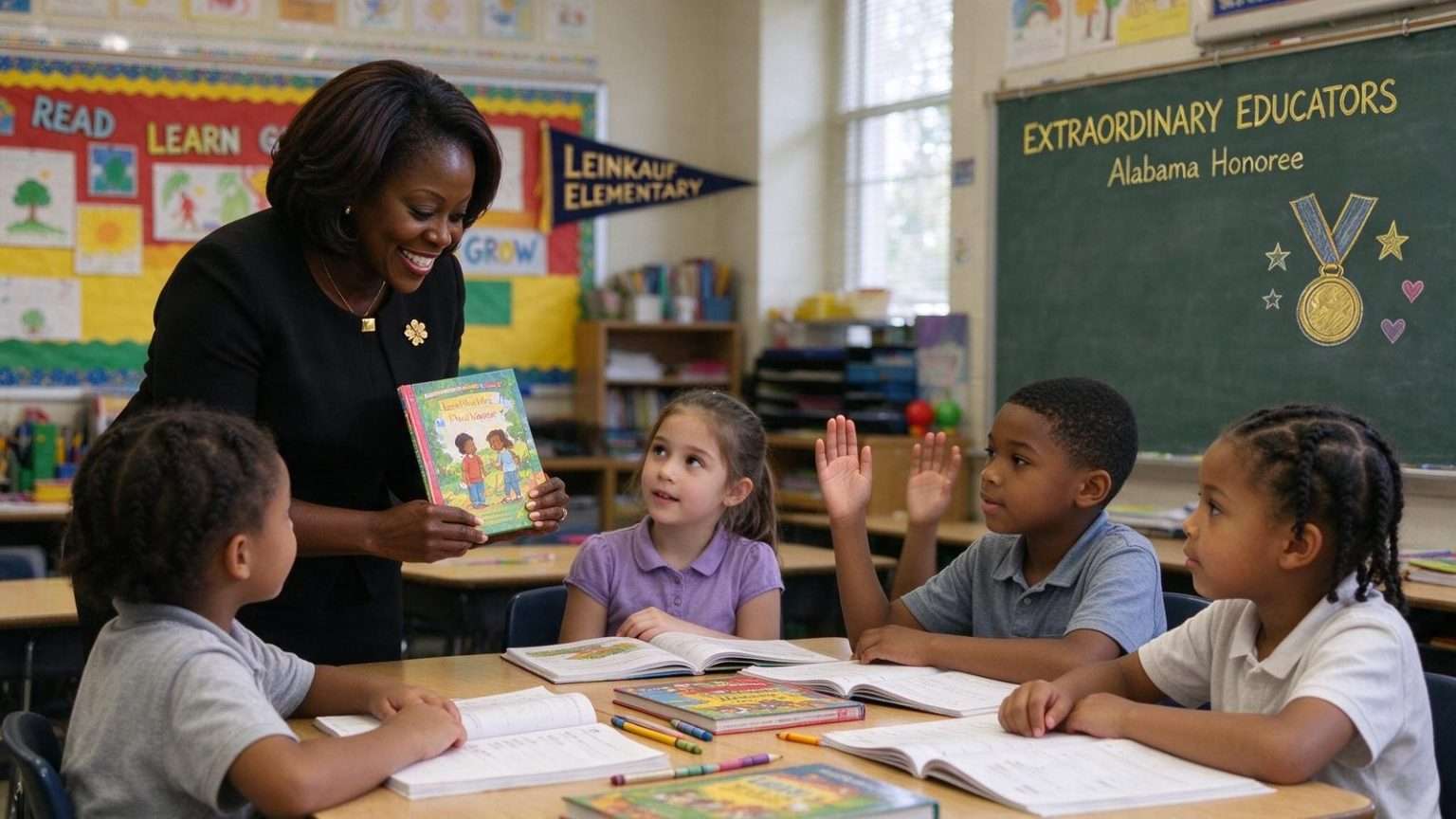
A veteran Mobile teacher has picked up national recognition for the work she has been doing in a Leinkauf Elementary School classroom. Frinzetta Boman was named one of just two Extraordinary Educators from Alabama by Curriculum Associates, an educational publishing company that selects the honorees each year. The recognition puts a Mobile public school classroom on a national list that educators across the country compete to join, and it arrives at a moment when keeping students engaged has never been harder.
Boman said the award followed a long stretch of experimenting with how she reaches students. “For the last two or three years, I’ve been doing a lot of innovative things and motivational things to keep the kids engaged — and I guess it got noticed,” she said. The description could serve as a mission statement for teachers everywhere during the pandemic era, when the standard toolkit — a classroom, a routine, a room full of faces — was disrupted for stretches of the year and creativity became a survival skill rather than a bonus.
Curriculum Associates, the company behind the honor, produces widely used instructional materials and assessment programs in reading and mathematics, and its Extraordinary Educators program draws on the community of schools that use its tools. Selections are based on educators’ demonstrated classroom impact and innovative instructional practice, which makes the award less a lifetime-achievement plaque than a snapshot of what a teacher is doing right now. Being one of two honorees from Alabama places Boman in a small group within an already selective program.
A familiar name in Mobile classrooms
The recognition is not Boman’s first. She was named a Golden Apple winner in December 2019, an award that put a spotlight on a career spanning several decades and two states. Boman taught in Orlando for 32 years before retiring, then moved back to Mobile and returned to the classroom rather than staying retired. The arc is unusual in a profession where careers more often run in one direction — toward the door, not back through it — and it reflects both the pull of home and the pull of the work itself.
She said the decision came down to unfinished work and a sense that she was needed where she was. “I wasn’t finished. I had to come home to be near my family, but I knew I wasn’t finished yet,” she said. “There’s a lot more kids that need to be reached and I think I was supposed to be here during this time during the pandemic.” The timing of that sentence matters. Teachers who spent the pandemic year improvising through hybrid schedules, remote lessons and worried parents will recognize the sentiment — a conviction that showing up mattered more in that year than it ever had.
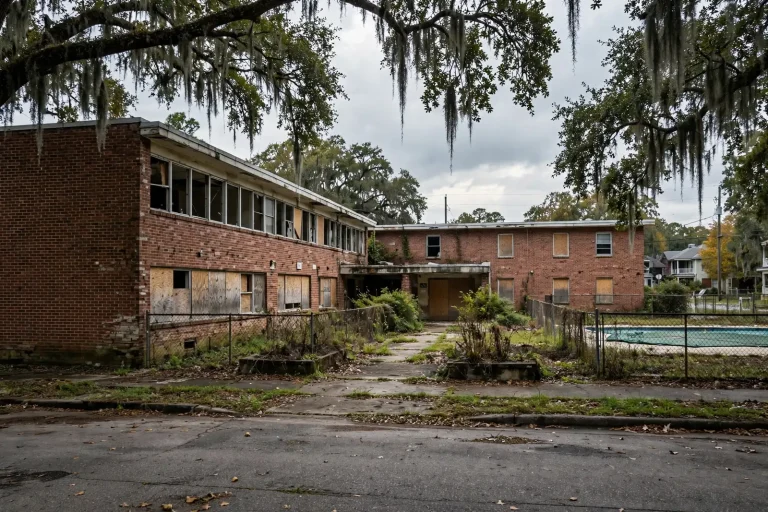
Leinkauf Elementary, where she teaches, is one of Mobile County Public Schools’ oldest continuously operating schools, a neighborhood institution in the city’s historic district serving students from pre-kindergarten through the upper elementary grades. Schools like Leinkauf carry the extra weight of history in their communities, and veteran teachers who return to them after careers elsewhere bring a perspective that neither new graduates nor mid-career transfers quite match.
What the honor brings
Being named an Extraordinary Educator carries both local and national recognition, but Boman said the practical value is in the connections. Honorees join a network of peers from around the country they can turn to for classroom ideas, and the program opens additional professional development opportunities. For a teacher working through the hardest instructional year in generations, access to a national network of colleagues solving the same problems is worth as much as the certificate itself.
The award normally includes a trip to Boston, where the honorees collaborate in person. Whether that portion happens depends on pandemic conditions and vaccination timelines, Boman said. The uncertainty was a small emblem of the era — even the reward for exemplary teaching during the pandemic had to be scheduled around the pandemic. Virtual collaboration filled some of the gap in the meantime, and the network of honorees stayed connected remotely regardless of whether the trip went forward.
Her classroom work at Leinkauf continues in the meantime, with the same approach that drew the selection committee’s attention: keeping students engaged through methods that go beyond a standard lesson plan. In practice, that means the motivational techniques she described — the rituals, incentives and creative hooks that make students want to be present — layered onto the fundamentals of elementary instruction that she has spent more than three decades sharpening.
Why veteran teachers matter now
The recognition of a retired-and-returned teacher lands during a period when school systems everywhere have been worrying about the opposite pattern — experienced educators leaving the profession early, burned out by pandemic demands. Against that backdrop, a teacher with 32 years in one state’s classrooms who came back for more in another state’s reads as evidence for the opposite proposition: that the work, for some, is not something to retire from but something to return to.
Veteran teachers also anchor the profession’s institutional memory. A teacher who has taught in two states and multiple decades has seen curricula, technology and testing regimes come and go, and knows which classroom fundamentals survive every reform cycle. When that experience is paired with the willingness to keep experimenting — as Boman’s own account of the past several years shows — it becomes a resource for everyone in the building, from first-year teachers to administrators.
For Mobile County Public Schools, the state’s largest school system, having a teacher named to a two-person Alabama slate of national honorees is a point of pride that reaches beyond one campus. It highlights the county’s ability to draw experienced educators back into its classrooms and to keep them there through the most difficult stretch the profession has faced in decades.
The Golden Apple recognition she received in December 2019, just months before the pandemic reshaped schooling, now reads as a preview of the trajectory that followed. That award celebrated the same qualities — engagement, innovation, longevity — that the national honor later confirmed, and the fact that both arrived during a period when she described herself as still experimenting suggests the recognition tracked a genuine practice rather than a career-capping summary.
Her reasons for returning to the classroom after retiring in Orlando deserve emphasis, because they answer a question many districts ask: how do you get experienced teachers back? Her answer was family and unfinished work. The family half is straightforward — Mobile is home, and coming home to be near family is the most common reason retirees relocate anywhere. The unfinished-work half is the rarer motivator, and it is the one school systems cannot manufacture. It shows up in teachers who believe a particular group of students, at a particular moment, needs them specifically.
In her framing, the pandemic was that moment. “There’s a lot more kids that need to be reached and I think I was supposed to be here during this time during the pandemic,” she said. The sentence compresses a year of disruption into a sense of purpose — the conviction that her three decades of experience existed precisely so she could deploy them when classrooms went remote, when routines collapsed, when engagement became the central problem of elementary education.
The Extraordinary Educators program will continue to draw on its honoree network in the years ahead, and the Boston collaboration — whenever it happens — will put Alabama’s two representatives in a room with peers from across the country. In the meantime, the recognition’s most concrete effect may be local: a national spotlight on a Mobile classroom, proof that innovation is happening in public school buildings here, and a veteran teacher who has no plans to stop reaching the kids who need reaching.
For the students at Leinkauf, the awards are context. What they experience is the teacher herself — the one who spent two or three years trying new things to keep them engaged, and who came out of retirement because she believed she wasn’t finished. Both national Curriculum Associates and the Golden Apple committee apparently agree with the students on the essentials: they have a remarkable educator in the room.
Curriculum Associates’ honoree selection also reflects a shift in how educational excellence is identified — from test scores alone toward documented classroom practice. Programs like Extraordinary Educators look at how teachers use instructional data, how they adapt materials for the students in front of them, and how their peers describe their influence. That approach tends to surface exactly the kind of educator Boman describes herself as: one who treats published curriculum as a foundation and builds engagement on top of it rather than assuming the materials will do the work themselves.
The professional development angle is easy to underestimate from outside the profession. Teachers often describe isolation as one of the job’s chronic difficulties — one adult in a room of children, with few chances to watch another skilled practitioner work. National networks attack that isolation directly, connecting honorees with counterparts facing similar student populations and giving them a channel to trade what works. For a teacher in Mobile, that means her classroom experiments are no longer confined to one building; they circulate among hundreds of classrooms nationally, and the best of what others are doing flows back to Leinkauf.
Elementary engagement, the heart of her approach, has become the watchword of post-pandemic instruction. Young students who spent formative months in remote or hybrid learning returned with uneven academic foundations and, in many cases, a weakened connection to school itself. Educators have responded with a renewed emphasis on the motivational layer of teaching — celebration, novelty, belonging — precisely the “innovative things and motivational things” Boman said she had been building for years before anyone had heard of the virus that would make them essential.
Mobile County’s classrooms have produced their share of recognized teachers over the years, and each recognition cycle tends to highlight the same structural truth: the county’s size means its best educators shape thousands of students over a career, multiplying every award’s impact. A teacher who reaches two dozen students a year for three decades touches more young lives than most professions encounter in a lifetime — and a teacher who then returns to do it again, in a pandemic, extends that reach into the years students needed it most.