Man Seen in Viral Video Riding Out Hurricane Isaias on a Sailboat off Dauphin Island Explains Why He Stayed
Ethan Warren, the man in a widely shared video showing a sailboat off Dauphin Island as Hurricane Isaias approached, says six years of living aboard and backup anchors led him to stay, and that he was glad authorities checked on him.
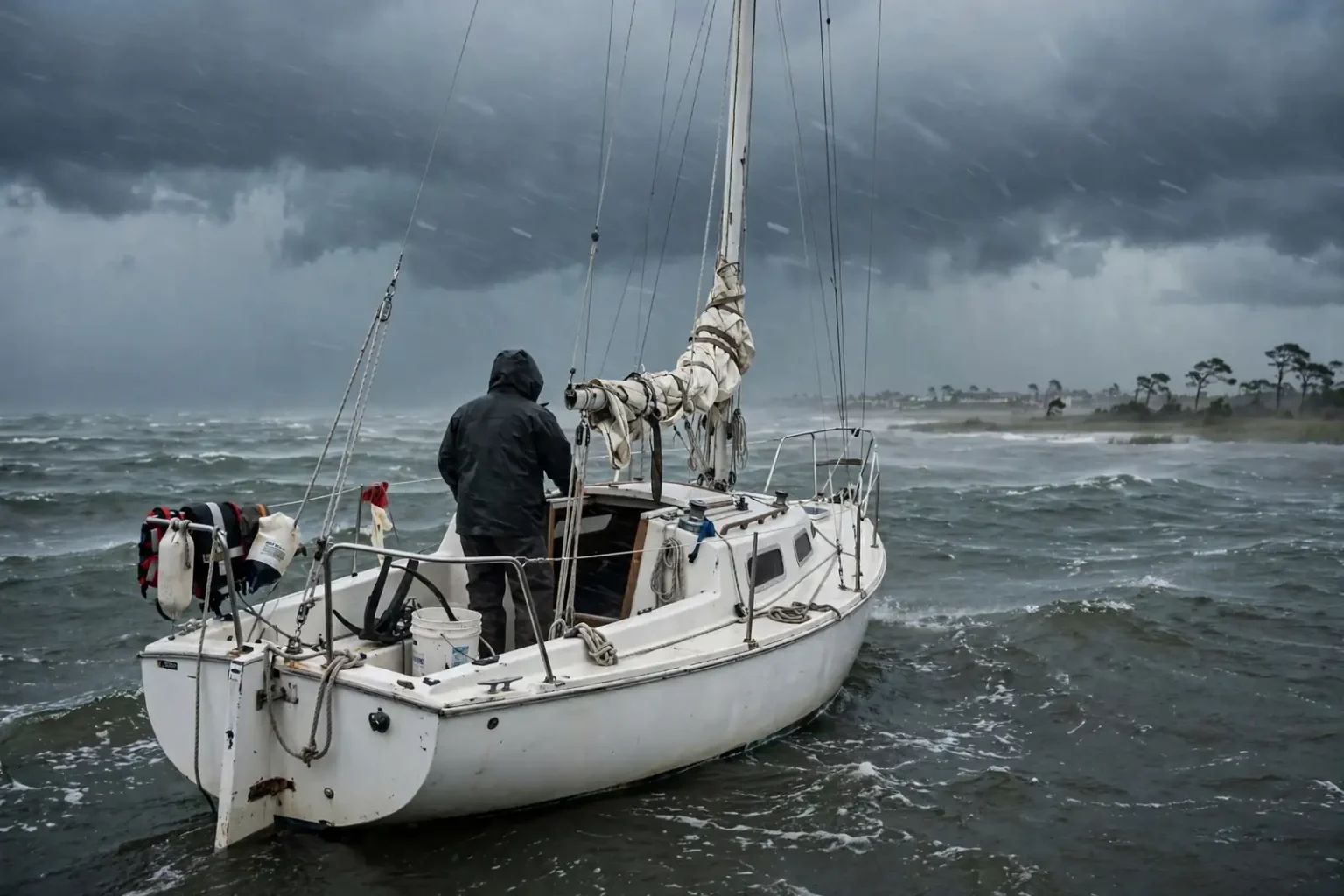
DAUPHIN ISLAND, Ala. — As Hurricane Isaias closed in on the Gulf Coast, a video of a lone sailboat bobbing in the water off Dauphin Island spread rapidly across social media. Viewers wanted to know who was aboard and why anyone would stay on the water with a hurricane bearing down.
The man on the boat, Ethan Warren, has now explained his decision. He said years of living on the water, experience riding out previous major storms and a set of backup plans gave him confidence that he could weather Isaias safely.
Six years living aboard
Warren said he has made his home on the water for about six years.
“I’ve been living on the boat about six years. I got it April about April of 2020,” Warren said.
His vessel is a 22-foot sailboat, which he kept anchored off the east end of Dauphin Island as Isaias approached the coast.
Previous storms shaped his decision
Warren said his experience during earlier hurricanes along the Gulf Coast played a major role in his choice to stay aboard.
“I’ve already been through two or three hurricanes that have had 100 mile an hour plus winds, so I felt confident that my anchoring was going to be secure, and so I decided to ride the storm out,” Warren said.
Officials warned Warren about the dangers of remaining on the water. Forecasters were calling for hurricane-force winds and a dangerous storm surge along the coast. In the days before landfall, the National Weather Service projected storm surge of five to seven feet in coastal Alabama, and Dauphin Island officials urged residents and visitors to evacuate the island’s West End. Gov. Kay Ivey also ordered visitors on Dauphin Island to leave.
Backup plans in place
Warren said he did not stay without a plan for what could go wrong. His main concern was the possibility of his anchor dragging or breaking loose in the storm.
“I had redundant like, in case things went wrong, I had backup plans. So I always had a, you know, in case the like the anchor came loose or something, I had another anchor in the back of the boat to throw for safety,” Warren said.
‘Glad someone was there’
Warren said he understood the risks he was taking, and he appreciated that authorities kept an eye on him during the storm.
“I was still glad someone was there. You know, had my back. If anything went wrong,” he said.
How Isaias played out
Isaias strengthened into a Category 3 hurricane on the morning of Friday, Oct. 9, with sustained winds around 120 mph, before weakening slightly and making landfall that evening near Destin, Fla., as a Category 2 storm. That track placed coastal Alabama on the western side of the hurricane, sparing Mobile and Baldwin counties the most severe surge and wind, though the region still saw downed trees, widespread power outages and gusty conditions. A wind gust of 47 mph was reported at Dauphin Island on Friday afternoon as the storm approached.
Communities to the east in the Florida Panhandle experienced more significant impacts.
Why officials urge boaters to get off the water
Warren’s experience ended without incident, but emergency managers consistently urge people not to stay aboard boats during hurricanes. Conditions on the water can change rapidly, anchors can drag as winds shift around a storm’s center, and storm surge can carry vessels into shorelines, docks, bridges and other boats. Once a storm arrives, conditions can become too dangerous for rescuers to reach someone in trouble.
Boating safety organizations recommend that vessel owners make hurricane plans well before a storm threatens. Common recommendations include:
- Moving smaller boats out of the water and onto trailers or secure storage when possible.
- Identifying a protected hurricane hole or marina well in advance for boats that must stay in the water.
- Using multiple anchors or doubled lines and adding chafe protection where lines pass through chocks.
- Removing sails, canvas, electronics and other loose gear to reduce wind resistance and damage.
- Documenting the boat with photographs and keeping insurance and registration papers in a safe place on land.
- Leaving the vessel and sheltering on land once preparations are complete.
Before Isaias, Mobile County officials urged residents in flood-prone areas, RVs and campers to evacuate and asked campers to vacate county parks, reflecting concern about anyone in vulnerable locations during the storm.
A story that caught attention
Dramatic images of storms on the Gulf Coast frequently circulate widely online, and Warren’s video drew attention because it showed a small boat on open water at a time when officials were urging people to seek shelter. His account offers a glimpse into the choices made by people who live aboard their boats year-round, a way of life common along the Gulf Coast’s waterways.
For Warren, the outcome was a safe one. Officials, however, continue to stress that the safest place during any hurricane is on land, in a sturdy shelter away from storm surge.