Manchester Park Apartments on Spring Hill Avenue Set for $11.2 Million Renovation After Years of Vacancies
A Birmingham developer has filed for an $11.2 million permit to rehabilitate Manchester Park Apartments, a 139-unit complex on Spring Hill Avenue near Mobile Infirmary that was only 27% occupied when it was marketed for sale in 2025.
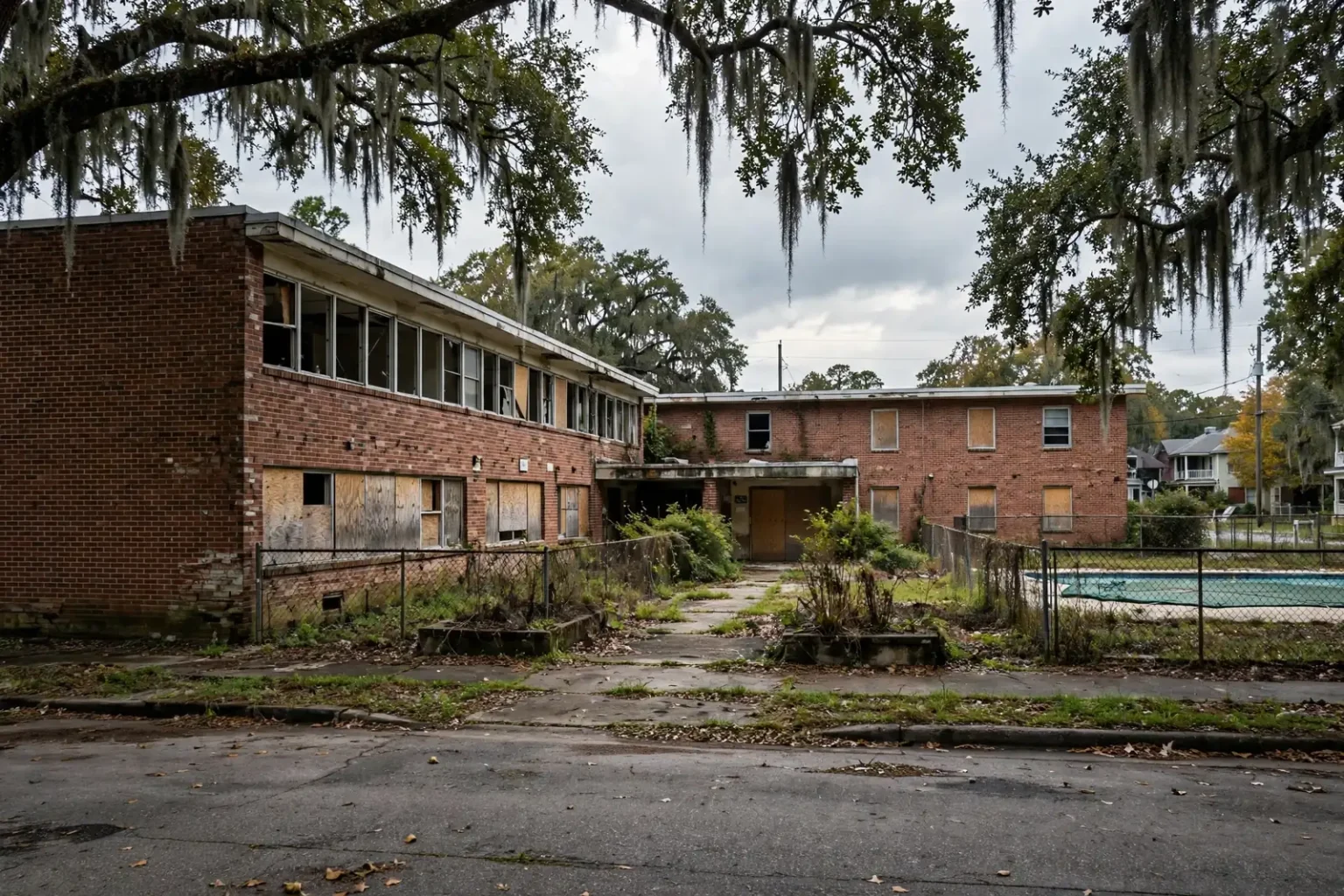
MOBILE, Ala. — A struggling Midtown Mobile apartment complex where most units sat empty just a year ago could be on the verge of a major comeback. An $11.2 million renovation is planned for Manchester Park Apartments on Spring Hill Avenue, where a sweeping rehabilitation would overhaul a 139-unit complex that has wrestled with vacancies and deteriorating conditions.
A building permit application filed with the City of Mobile on Tuesday, Oct. 6, calls for interior and exterior repairs and alterations to the existing apartment buildings at 1575 and 1621 Spring Hill Avenue, near Mobile Infirmary.
Who is behind the project
The project is being led by The Dobbins Group, a real estate development company based in Birmingham. The developer describes Manchester Park as an acquisition and rehabilitation project, with construction projected to start in the fourth quarter of 2026.
The permit application carries an estimated construction valuation of $11.2 million. As of the latest permit record, the application’s status was listed as submitted, with no issuance date.
The property
Manchester Park consists of two brick buildings constructed in 1963. Together they occupy roughly 5.1 acres inside the Old Dauphin Way Historic District, one of Mobile’s established historic neighborhoods, which stretches through the Midtown area west of downtown.
The complex has had a difficult recent history. When the property was marketed for sale in 2025, its occupancy was reported at just 27%, meaning nearly three out of every four apartments were vacant at the time.
During an inspection of the property, city preservation staff documented broken and missing window glass, openings covered in plywood and deteriorated window frames.
What the renovation includes
Construction bidding documents describe an extensive, top-to-bottom renovation. The scope of work includes:
- Asbestos abatement
- Mold remediation
- Interior demolition
- New flooring
- Roofing
- Replacement windows and doors
- Plumbing, electrical and mechanical systems
- Landscaping and courtyard improvements
The work also covers the complex’s shared spaces: the leasing office, laundry room, mail room and two swimming pools.
Asbestos abatement and mold remediation are common first steps when rehabilitating buildings of this age. Asbestos was widely used in building materials through the 1970s, and long-vacant units are often susceptible to moisture problems, particularly in Mobile’s humid climate.
Architectural Review Board weighs in
Because the property sits in a historic district, exterior changes must go before the Mobile Architectural Review Board, which reviewed the renovation plans on June 3.
The exterior proposal included:
- Replacing 604 aluminum windows with custom vinyl windows
- Redesigning the main leasing office entrance with brick pillars and a metal awning
- Relocating an existing fountain
- Applying a white limewash to the exterior brick
Board members voted unanimously to approve the application, with one exception. The proposal to limewash the exterior brick was tabled until the developer provides additional renderings and photographs.
The board approved the vinyl windows even though city preservation staff raised concerns that the material did not meet the historic district’s guidelines. Window materials are a frequent topic in historic district reviews, because preservation standards generally favor materials and designs that match a building’s original character. In this case, the board signed off on the replacement as part of the broader effort to bring the long-neglected buildings back into service.
Why it matters for Midtown
Spring Hill Avenue is one of Midtown Mobile’s major corridors, connecting downtown with neighborhoods, medical offices and businesses to the west. Manchester Park’s location near Mobile Infirmary, one of the city’s largest hospitals and employers, places it close to a significant concentration of jobs.
A property with 139 apartment units is a sizable piece of the area’s rental housing stock. With roughly three-quarters of those units empty when the complex was listed for sale, a successful rehabilitation could return dozens of homes to the market and remove a source of blight from a highly visible stretch of the historic district.
The project also comes as Mobile city leaders are focused on reinvestment in Midtown. Mayor Spiro Cheriogotis recently proposed a tax increment financing district for parts of Midtown aimed at encouraging new investment in the area’s housing and commercial properties, though that proposal is separate from the Manchester Park project and still awaits City Council action.
What happens next
Before construction can begin, the city must issue the building permit, and the developer must still return to the Architectural Review Board if it wants approval for the limewash treatment on the exterior brick. The Dobbins Group’s projected timeline calls for work to start during the fourth quarter of 2026, which runs from October through December.
South Alabama News will continue to follow the project as it moves through the permitting process.