Little Lagoon Preservation Society Meeting Oct. 15 to Focus on Fish Hatchery Work and Fishery Trends
The Little Lagoon Preservation Society meets Oct. 15 at the Gulf Shores Activity Center, where two state marine biologists will discuss mariculture operations and fish population trends.
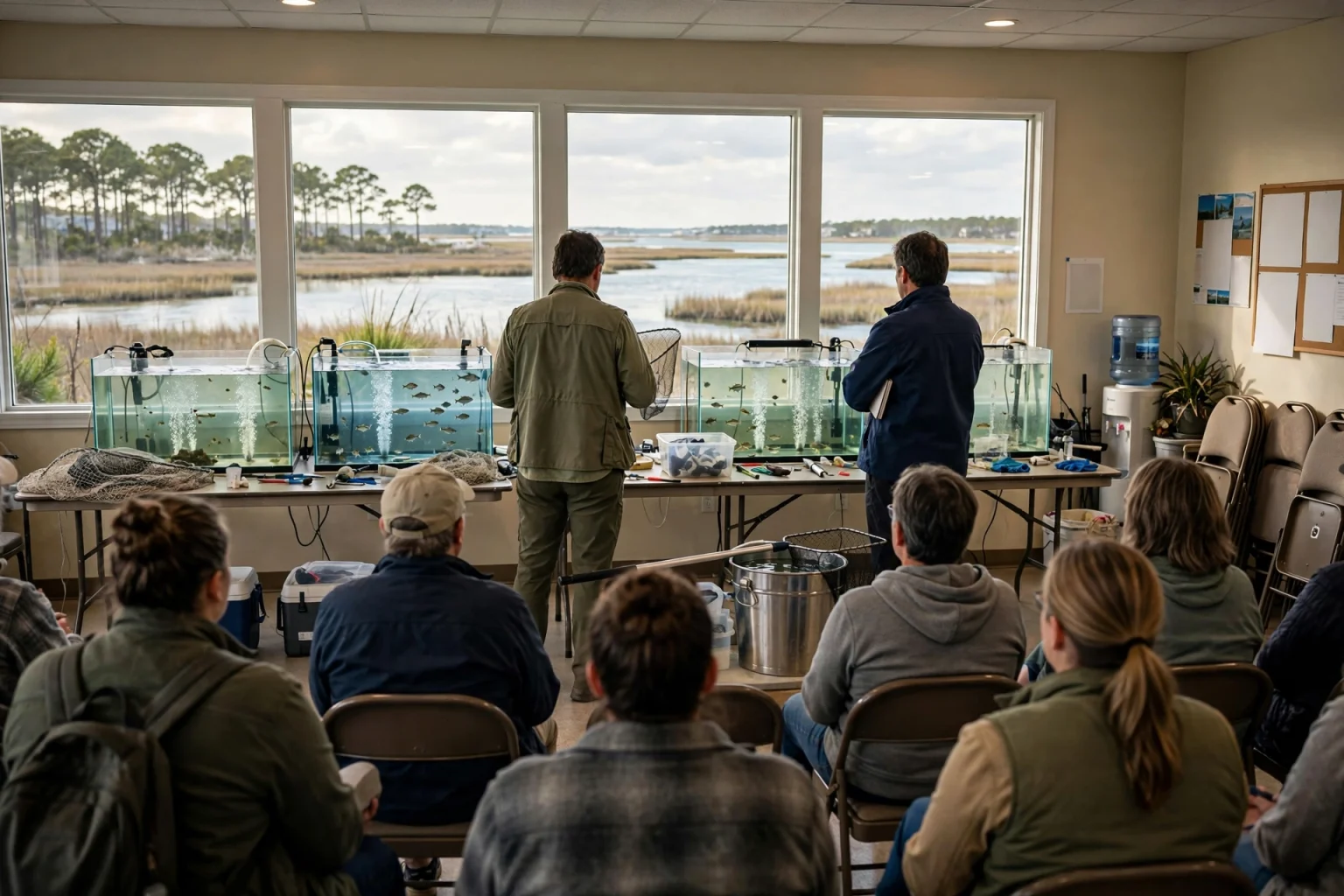
GULF SHORES, Ala. — The Little Lagoon Preservation Society will turn its attention to fish hatcheries and fish populations when it holds its quarterly meeting Thursday, Oct. 15, at the Gulf Shores Activity Center, with two state marine biologists scheduled to talk about mariculture operations and the latest fishery trends in Little Lagoon.
The meeting is set for the activity center at 260 Clubhouse Drive. Doors open at 5:30 p.m. with light refreshments and time for informal conversation, and the presentations begin at 6 p.m. A question-and-answer session will follow the speakers.
People who cannot attend in person will be able to join through Zoom. The society says it will post the details for the virtual option on its Facebook page.
Who is speaking
Both presenters are biologists with the Alabama Department of Conservation and Natural Resources’ Marine Resources Division, the state agency responsible for managing Alabama’s saltwater fisheries and coastal marine resources.
Maxwell Westendorf: inside the hatchery
Maxwell Westendorf is a Biologist III and serves as hatchery manager at the Claude Peteet Mariculture Center in Gulf Shores. He plans to give an overview of how the center operates and which species it produces.
His talk will cover the center’s work raising four popular coastal species — red drum, Florida pompano, southern flounder and spotted seatrout — for sport fish restoration efforts in Alabama’s coastal waters, including Little Lagoon itself.
Chase Katechis: tracking what lives in the lagoon
Chase Katechis, a Biologist II based in the Marine Resources Division’s Mobile office, will speak about the agency’s trawl survey and gillnet sampling programs. His presentation is expected to include an update on the most recent trends in species populations in Little Lagoon and the surrounding waters.
Background: what is mariculture?
Mariculture is a branch of aquaculture that focuses on raising marine organisms — fish, shellfish and other saltwater species — in controlled settings. When it is used for restoration or stock enhancement, hatchery staff typically spawn fish from adult broodstock, raise the young through their most vulnerable early stages and then release juveniles into the wild, where they can grow and add to natural populations.
The four species Westendorf will discuss are familiar to anyone who fishes the Alabama coast. Red drum, often called redfish, and spotted seatrout, commonly known as speckled trout, are among the most sought-after inshore game fish on the Gulf Coast. Southern flounder are prized by anglers and by those who gig for flounder at night, and Florida pompano are a favorite of surf fishermen along the beaches.
Background: sport fish restoration
The phrase “sport fish restoration” refers to a long-standing federal-state partnership. Under the Federal Aid in Sport Fish Restoration Act, passed in 1950 and often called the Dingell-Johnson Act, excise taxes on fishing equipment and certain motorboat fuels are collected and returned to state wildlife agencies to support fisheries management, research, habitat work, boating access and aquatic education. In practice, that means anglers who buy fishing tackle help fund programs designed to keep fish populations healthy.
Background: how scientists sample fish populations
Trawl surveys and gillnet sampling are two of the standard tools fishery biologists use to keep tabs on what is living in a body of water. A trawl is a net pulled behind a boat that collects fish and other animals from a given area, while a gillnet is set in place and catches fish as they swim into the mesh. By repeating these sampling methods at set locations and times over many years, biologists can compare results and spot changes — whether certain species are becoming more or less common, how the size of fish is shifting and how populations respond to weather, water conditions or management decisions.
Because this kind of monitoring does not depend on what anglers happen to catch, it gives managers an independent look at the health of a fishery. Katechis’ update is expected to share what that long-term sampling is showing in Little Lagoon and nearby waters.
Why Little Lagoon matters
Little Lagoon is a shallow coastal lagoon on the western side of Gulf Shores, separated from the Gulf of Mexico by a narrow strip of land and connected to the Gulf through a small pass. The lagoon is a popular spot for fishing, paddling and wildlife watching, and it provides habitat for juvenile fish and other marine life.
Its relatively enclosed nature also makes it sensitive to changes in water quality and to development along its shoreline, which is why community groups such as the Little Lagoon Preservation Society focus on protecting it. Presentations like the ones planned for Oct. 15 give residents a chance to hear directly from the scientists who study the lagoon and to ask questions about what they are seeing.
How to get involved
The society is inviting anyone who cares about protecting Little Lagoon to join as a member and to volunteer for its upcoming projects.
- What: Little Lagoon Preservation Society quarterly meeting on mariculture and fishery trends
- When: Thursday, Oct. 15; refreshments and conversation at 5:30 p.m., speakers at 6 p.m., followed by questions and answers
- Where: Gulf Shores Activity Center, 260 Clubhouse Drive, Gulf Shores
- Speakers: Maxwell Westendorf and Chase Katechis, biologists with the ADCNR Marine Resources Division
- Virtual option: Zoom details to be posted on the society’s Facebook page