Local Leaders Weigh Shared Downtown Arts Campus for Mobile’s Colleges
A proposal quietly gaining traction among Mobile-area arts and education circles would pool resources from the University of South Alabama, Spring Hill College, Bishop State Community College and Faulkner State Community College into a shared downtown arts campus.
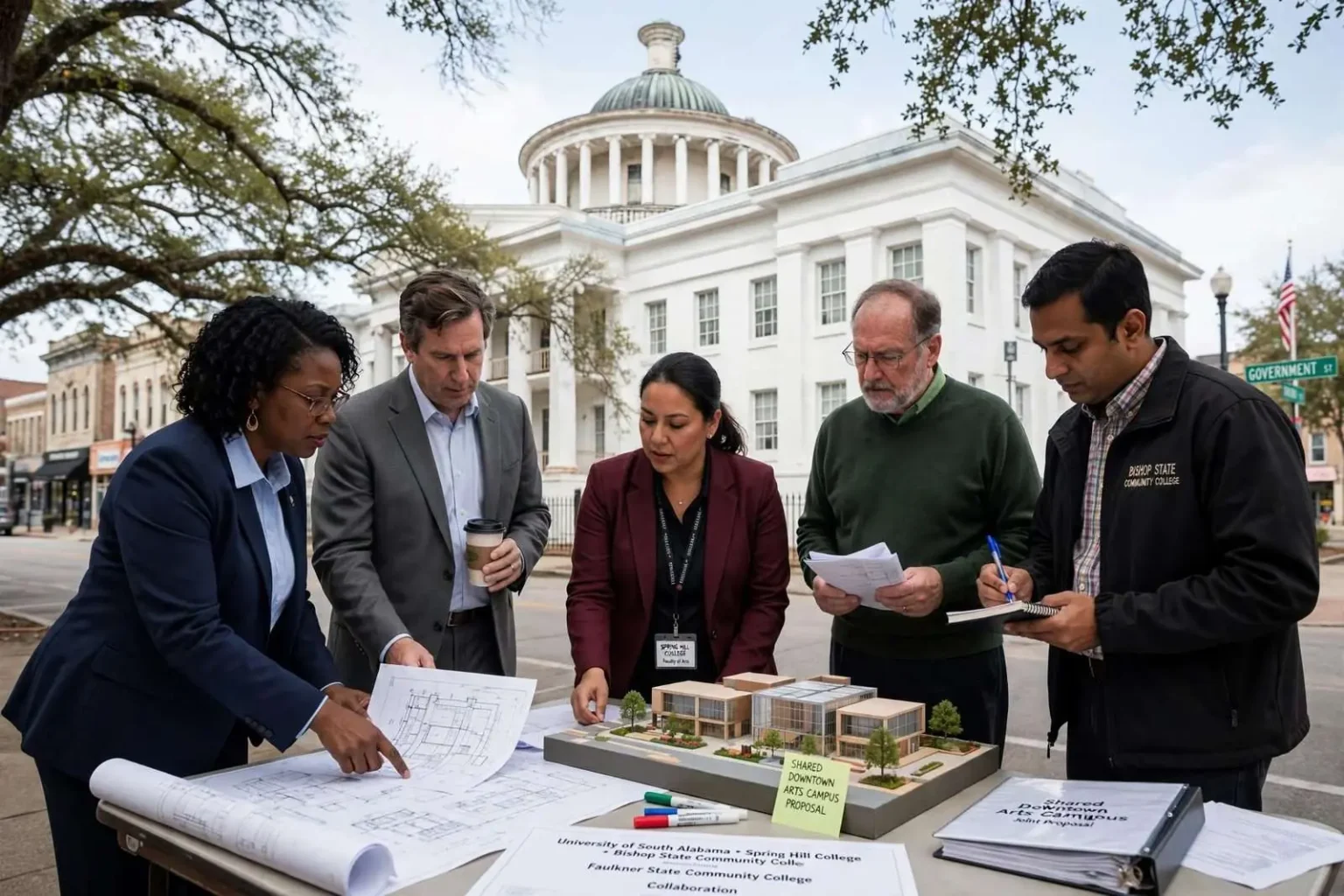
A proposal is circulating among Mobile-area arts and education leaders that would pool the resources of the city’s colleges into a single, shared downtown arts campus, an idea that supporters say could stop the area from losing young artistic talent to schools elsewhere.
The concept centers on a familiar problem for smaller academic departments: individually, the visual and performing arts programs at the University of South Alabama, Spring Hill College, Bishop State Community College and Faulkner State Community College are often too small to offer a full slate of classes on their own. Students with niche artistic interests frequently end up leaving the region to study at larger schools that can support those programs, a loss that local advocates say drains talent and energy from the community.
A Shared Downtown Campus Model
Under the plan being discussed, the schools would pool similar arts programs into a joint downtown satellite location, allowing students from multiple institutions to take shared classes that would count toward degrees at their home schools. Proponents point to a cluster of colleges in the Northeast that have used a similar cooperative model for decades, combining small departments across campuses to build fuller curricula without each school having to duplicate faculty, equipment or classroom space.
Adding the two area junior colleges to the mix, backers argue, would make any such program more robust still, widening the pool of students and disciplines that could be served by a single, well-equipped facility rather than several thinly stretched ones.
The idea is not entirely new to Mobile. The Mobile County School Board once floated a plan to place an arts school on Bienville Square, a vision that ultimately did not materialize, joining a long list of ambitions tied to the historic Barton Academy building downtown that have faded over the years. Supporters of the current proposal say the underlying logic of that earlier plan still holds: schools draw young people into an area, and young people bring foot traffic and vitality to downtown sidewalks and storefronts.
Benefits, Logistics and Existing Satellites
Some departments would likely see more benefit from the arrangement than others. South’s music program, for instance, already has well-established facilities and might have little incentive to relocate any of its offerings downtown. But smaller disciplines, such as dance — which at South is folded into the drama department rather than standing on its own — could gain considerably from access to shared studio space and a broader roster of course offerings drawn from multiple schools.
Logistics may be less of an obstacle than they first appear. South Alabama already draws a large share of its enrollment from students who commute from off-campus, meaning a downtown location would not represent a dramatic change in travel patterns for many of them. The university already operates satellite facilities at Brookley and in Fairhope, and Bishop State maintains a campus on Dauphin Island Parkway, so the idea of coursework happening away from a main campus is already part of daily life for students at both schools.
Downtown Partners and Next Steps
Backers of the plan also note that downtown Mobile already has organizations positioned to help make a shared arts campus a reality. The Centre for the Living Arts, which has its own long-range plans for classes and tutorials, could complement rather than compete with a pooled college program, given its studios, rehearsal halls and exhibition space already located in the urban core. Philanthropic institutions with a strong local presence, including the Sybil Smith Family Village trust, have also been mentioned as potential partners capable of giving such an effort the financial backing and community credibility it would need to get off the ground.
No formal agreement between the schools has been announced, and any such partnership would likely require buy-in from administrators, trustees and possibly state education officials across multiple institutions.
Barton Academy on Government Street opened in 1836 and is considered the oldest public school building in Alabama. For decades it also housed the central offices of the Mobile County Public School System.