LoDa Bier Garten Adds Exotic Burgers to the Menu
LoDa Bier Garten, a Dauphin Street staple known for its long draft list, is drawing attention with a new lineup of grass-fed, elk and bison burgers.
LoDa Bier Garten, a Dauphin Street staple known for its long draft list, is drawing fresh attention with a new lineup of exotic burgers. The bar-and-restaurant in the heart of Mobile’s Lower Dauphin entertainment district has built its reputation on beer, and the kitchen’s move into game-meat burgers gives regulars a reason to think about the food side of the menu just as seriously.
Thursday through Sunday, patrons can order grass-fed beef, elk or bison burgers built from the bun up by head chef Michael Mclean. The limited-week schedule reflects both the sourcing and the intent: these are specialty builds, prepared in limited runs, positioned above the standard pub fare rather than alongside it.
The lineup puts LoDa Bier Garten in territory most Gulf Coast pubs never enter. Exotic meats — elk, bison, and the farm-raised versions of both that dominate the specialty market — carry a premium price and a premium expectation, and a kitchen that commits to them is betting that Mobile diners will pay for something beyond the familiar. The Dauphin Street crowd, which has historically supported restaurants that take chances, is the natural audience.
Three Premium Builds
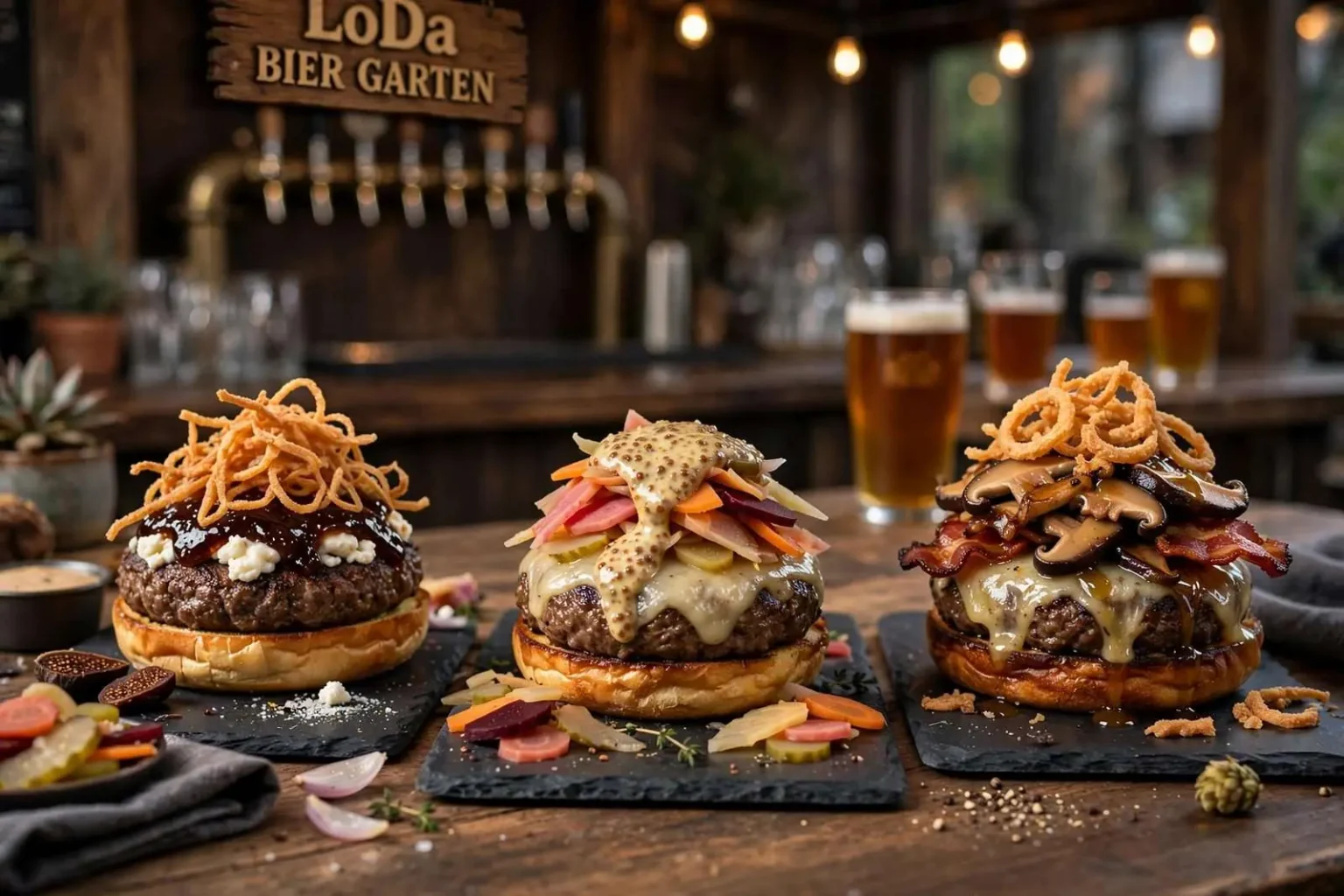
The grass-fed burger, $16, starts with a half-pound White Oak Pastures organic patty topped with goat cheese, fried shallots and ginger fig preserves. The build pairs the clean, mineral-forward flavor of grass-fed beef with tangy goat cheese and the sweet-sharp note of fig preserves, a combination that leans on the quality of the patty rather than hiding it under condiments.
White Oak Pastures, the Georgia farm that supplies the beef, is one of the Southeast’s best-known regenerative agriculture operations, famous for its organic, pasture-raised meats. Sourcing from a farm of that profile is a statement: the patty is the point of the dish, raised on pasture rather than finished in a feedlot, with the leaner texture and fuller flavor that grass-fed beef delivers.
The elk burger, $18, pairs farm-raised elk with pickled root vegetables, provolone and Creole Dijonaise; its texture is leaner and closer to venison. Elk is one of the leanest red meats on the market, and the pickled vegetables and Dijonaise cut through its density with acid and heat — a build designed around the meat’s game character rather than against it.
The bison burger, $22, stacks a Colorado bison patty with apple butter, bacon, shiitake and portobello mushrooms, smoked gouda and beer-battered shallots. It is the most elaborate of the three builds, and the most expensive — appropriate for the menu’s marquee item. Colorado is the historic center of American bison ranching, and the state’s pasture-raised herds supply much of the country’s specialty market. The stack of mushroom, gouda and apple butter plays the bison’s slightly sweet richness against smoke and earthiness.
None of the burgers use lettuce, tomato or ketchup. The omission is a declaration: these are composed dishes, built like restaurant plates, not dressed-up fast-food burgers. The chef’s argument is that a patty of this quality deserves accompaniments chosen for flavor architecture, not the default cold-stack.
From Hunting Camps to Downtown Menus
All meat comes from specialty farms rather than hunting, so the experience stays conversation-friendly. That distinction matters for the restaurant’s broad Dauphin Street clientele: farm-raised elk and bison arrive inspected, consistent and legally sourced, with none of the questions that wild game raises — and none of the seasonal limits that make game meat a hunting-camp delicacy rather than a menu staple.
The specialty-farm supply chain is also what makes the pricing possible at all. Bison ranching, nearly extinct as an industry a century ago, has rebuilt itself into a niche agricultural sector centered in the Plains states and the Mountain West, with Colorado among its historic anchors. Elk ranching followed a similar path, supplying restaurants with a consistent product that wild harvests never could. Both meats remain premium-priced — reflected in the $18 and $22 menu prices — but they are dependable enough for a small kitchen to build a weekend menu around.
The health profile is part of the pitch for curious diners. Elk and bison are both lower in fat than conventional beef while delivering comparable or higher protein, and grass-fed beef carries a fat profile different from grain-finished meat. Nutrition claims aside, the practical appeal is flavor: these are meats that taste like what they are, and the chef’s builds treat that flavor as the ingredient to showcase.
A Beer Bar’s Food Turn
For a venue known for its long draft list, the burger program is a natural extension. Craft beer culture has always been paired with food that takes itself seriously — the same diners who read a tap list line by line read a menu the same way — and a bar with LoDa Bier Garten’s beer credibility can afford a kitchen that experiments. Game meats, with their depth and richness, pair with the malty, hoppy and Belgian-style brews that dominate serious draft lists, which is exactly the logic of putting them on a bier garten’s menu.
The Thursday-through-Sunday schedule also fits the Dauphin Street rhythm. Lower Dauphin’s foot traffic peaks on weekend nights, when the district’s bars and restaurants draw crowds from across the Gulf Coast, and a specialty menu concentrated on the busiest nights gives the kitchen manageable volume while putting the exotic builds in front of the widest audience.
The limited run creates its own pull. Menu items that appear four days a week and sell at a premium become destination orders — the thing regulars bring visitors to try, the dish that gets photographed and shared. For a district that runs on reputation and repeat traffic, that is worth more than a permanent menu line.
The Lower Dauphin Setting
LoDa Bier Garten sits in the middle of the Lower Dauphin district, the stretch of Dauphin Street that anchors downtown Mobile’s nightlife. The district takes its nickname from the street’s lower half, where block after block of bars, restaurants and music venues occupy historic buildings, and where the city’s weekend energy concentrates after dark. A bier garten concept — long tables, a deep tap list, a European public-house spirit — fits the street’s mix of college crowds, young professionals and downtown residents.
The district has spent years building a food-and-drink identity to match its nightlife reputation. Downtown Mobile’s resurgence brought steady investment in restaurants that take chances, and the walkable Dauphin Street corridor lets patrons move between a craft cocktail bar, a taco spot and a bier garten in a single evening. In that economy, a distinctive menu item is a piece of district infrastructure: something the street becomes known for.
For Mobilians looking past corporate chains, the menu is a way to back a distinctive local business. The argument is familiar in downtown revitalization circles — money spent at an independent local restaurant circulates locally, and the character that makes a district worth visiting comes from owners who take risks chains will not. A $22 bison burger on Dauphin Street is exactly the kind of risk that separates a local food scene from a interchangeable one.
Exotic Meats on the Gulf Coast
The Gulf Coast restaurant scene has historically leaned on the bounty of the water — oysters, shrimp, fish — while treating red meat as standard steakhouse territory. A bier garten putting elk and bison at the center of its menu inverts that pattern, and it tracks a broader national trend: as American diners have grown more adventurous and specialty meat supply has matured, game meats have migrated from novelty status to respectable menu positions in craft-beer bars and gastropubs.
The timing also reflects the maturing of Mobile’s dining public. The city’s restaurant scene has expanded steadily alongside downtown’s revival, and diners who a decade ago would have had to travel to New Orleans for this kind of menu increasingly find it at home. That shift raises the bar for local kitchens and gives them the customer base to attempt ambitious builds — the cycle that made this menu possible.
Price remains the gate. At $16 to $22, these burgers sit well above standard pub fare, and the kitchen is clearly pricing to the ingredient: farm-raised game meat, specialty cheese, and composed builds that take real labor. The audience is the diner treating the meal as an experience — the same customer who orders a limited-release beer rather a house lager.
What It Means for the Menu’s Future
A successful exotic-burger program changes what a venue can attempt next. Kitchens that sell out premium builds earn the freedom to experiment further — specials, seasonal variations, and new proteins — and regulars reward the ambition with the repeat visits that keep a bar-and-restaurant alive in a competitive district. The weekend-only structure leaves room for that evolution: four days of exotic burgers, with the rest of the week open to the menu’s other offerings.
For now, the lineup stands as one of the more distinctive bar-food bets on the Gulf Coast: a grass-fed organic patty from a Georgia regenerative farm, farm-raised elk from the specialty ranching industry, and a Colorado bison stack — all built by a head chef who treats the burger as a composed plate rather than a sandwich, none of them touching lettuce, tomato or ketchup.
Thursday through Sunday on Dauphin Street, Mobile diners can decide for themselves whether an exotic burger belongs in a beer town — and by most signs, the crowd that fills Lower Dauphin on a weekend night is exactly the crowd willing to try.