MOBILE, Ala. — A 66-year-old man is charged with third-degree robbery after Mobile police say he walked into a PNC Bank branch in Midtown on Tuesday morning, demanded cash from the tellers and walked out empty-handed, only to be picked up a few blocks away within minutes. The Government Street bank robbery brought multiple Mobile officers and FBI agents to the scene, though no one was hurt.
Police identified the man as Michael Lachunn Smith. He was booked into Mobile County Metro Jail at 2:17 p.m. Tuesday, Oct. 27, according to jail records, which also show he is being held for another agency on separate, unrelated warrants.
What police say happened inside the bank
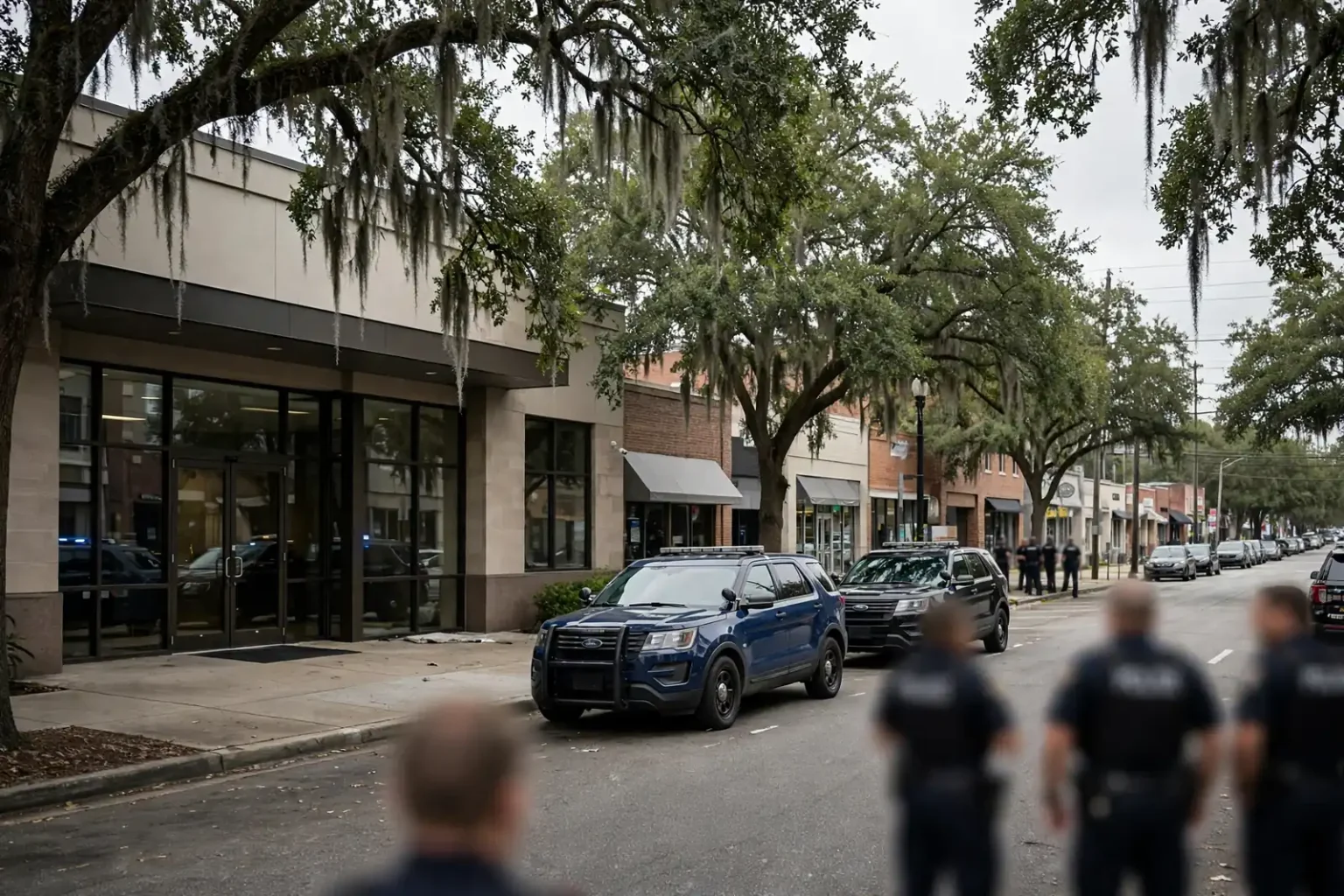
According to the Mobile Police Department, officers were notified at about 10:30 a.m. Tuesday that a bank had just been robbed. A department news release placed the incident between 10:30 and 10:45 a.m. at the PNC Bank at 1402 Government Street, a branch that sits in the stretch of Government Street between South Lafayette and Espejo streets, just west of downtown.
Multiple officers were sent to the branch. When they arrived, they spoke with bank employees, who told them a man they did not know had come inside and demanded U.S. currency from the tellers, police said.
Employees also told investigators that the man was holding something in his hand that looked like a weapon, according to police. Authorities have not said what the object was or whether a weapon was ever recovered.
Accounts of whether the man got any money shifted as the morning went on. An early police account given late Tuesday morning indicated that employees had handed over what he asked for. Later statements from the department, however, said the man left the bank without receiving any money, and that he was gone before the first officers got there.
A quick search ends a few blocks north
The search did not last long. Police said officers soon spotted a man who matched the description of the person seen in the bank’s video footage and the description provided by employees.
He was found a short distance north of the bank, near the intersection of Springhill Avenue and Ann Street, police said. Officers detained him there without further incident and held him for questioning.
For several hours after the man was stopped, police said publicly that no arrest had been made. By mid-afternoon, the department announced that Smith had been arrested in connection with the robbery, charged with third-degree robbery and taken to Metro Jail.
Police and FBI agents were both at the scene during the day, and police described the case as an active investigation. No injuries were reported.
Why the FBI shows up at bank robberies
The presence of federal agents at a local bank robbery is routine. Robbing, or attempting to rob, a federally insured bank is a federal crime under the Federal Bank Robbery Act, and the FBI commonly responds alongside local police when a bank is targeted. That overlap means a case can be handled in state court, federal court or, in some instances, both.
As of Tuesday, the only charge listed for Smith was the state charge of third-degree robbery. Authorities had not announced any federal charges.
What third-degree robbery means in Alabama
Some readers may wonder how a person can be charged with robbery when no money changed hands. Under Alabama law, robbery does not require that the theft succeed. The state’s robbery statutes cover the use or threat of force “in the course of committing a theft,” and the law defines that phrase to include acts that take place during an attempt to commit theft.
Third-degree robbery is the least serious of Alabama’s three robbery offenses, but it is still a Class C felony. A conviction on a Class C felony carries a possible prison sentence of one year and one day up to 10 years under state sentencing law, along with possible fines. First- and second-degree robbery, which are more serious felonies, involve factors such as being armed or appearing to be armed, causing serious injury, or being helped by another person. Prosecutors and a grand jury ultimately decide what charges a case goes forward on, and those can differ from the charge listed at the time of arrest.
Smith has only been accused of the crime. He is presumed innocent unless and until he is proven guilty in court.
Other holds and prior arrests
The robbery charge is not the only thing keeping Smith in custody. Jail records show a hold placed by the Spanish Fort Police Department for two failures to appear in cases tied to fourth-degree theft of property charges.
Fourth-degree theft of property is the lowest level of theft in Alabama, generally covering property worth $500 or less, and it is classified as a misdemeanor. A failure-to-appear warrant is typically issued when a defendant misses a scheduled court date. Holds like this one mean that even if a defendant is granted bond on a new charge, he may not be released until the other agency’s warrants are addressed.
Jail logs also show Smith had been arrested two other times earlier this year, both on retail theft accusations.
What happens next in the case
In Alabama, a person arrested on a felony is brought before a judge for an initial appearance, generally within 72 hours of arrest. At that hearing, the defendant is told of the charge, advised of the right to an attorney and has bond conditions addressed.
A felony case like this one typically moves through Mobile County District Court first, where a defendant can request a preliminary hearing. At that hearing, a judge decides only whether there is probable cause to send the case on; it is not a trial. From there, the case can be presented to a Mobile County grand jury, a panel of citizens that meets in private to review evidence from prosecutors and decide whether to issue an indictment. If an indictment is returned, the case moves to Mobile County Circuit Court for arraignment and, eventually, a plea or trial.
Federal prosecutors can also review bank robbery cases investigated with the FBI. Whether that happens here had not been announced.
A midday scare on a busy corridor
Government Street is one of Mobile’s main east-west routes, connecting downtown to Midtown and beyond, and the stretch where the bank sits is lined with businesses, offices and nearby residential streets. Ann Street and Springhill Avenue, where police say the man was found, are a short distance from the branch, in an area of Midtown that sees steady traffic during the workday.
Tuesday’s response unfolded during business hours, with multiple officers sent to the branch. Police said the man was detained without further incident, and no injuries to employees, customers or officers were reported.
Police have not released additional details about what investigators recovered, what the video footage shows or whether anyone else is being sought. The Mobile Police Department said the investigation is continuing.