Mardi Gras artistry takes center stage at Mobile Museum of Art
The Mobile Museum of Art drew thousands to its new exhibition spotlighting the costumes, craftsmanship and design behind the city's Mardi Gras.
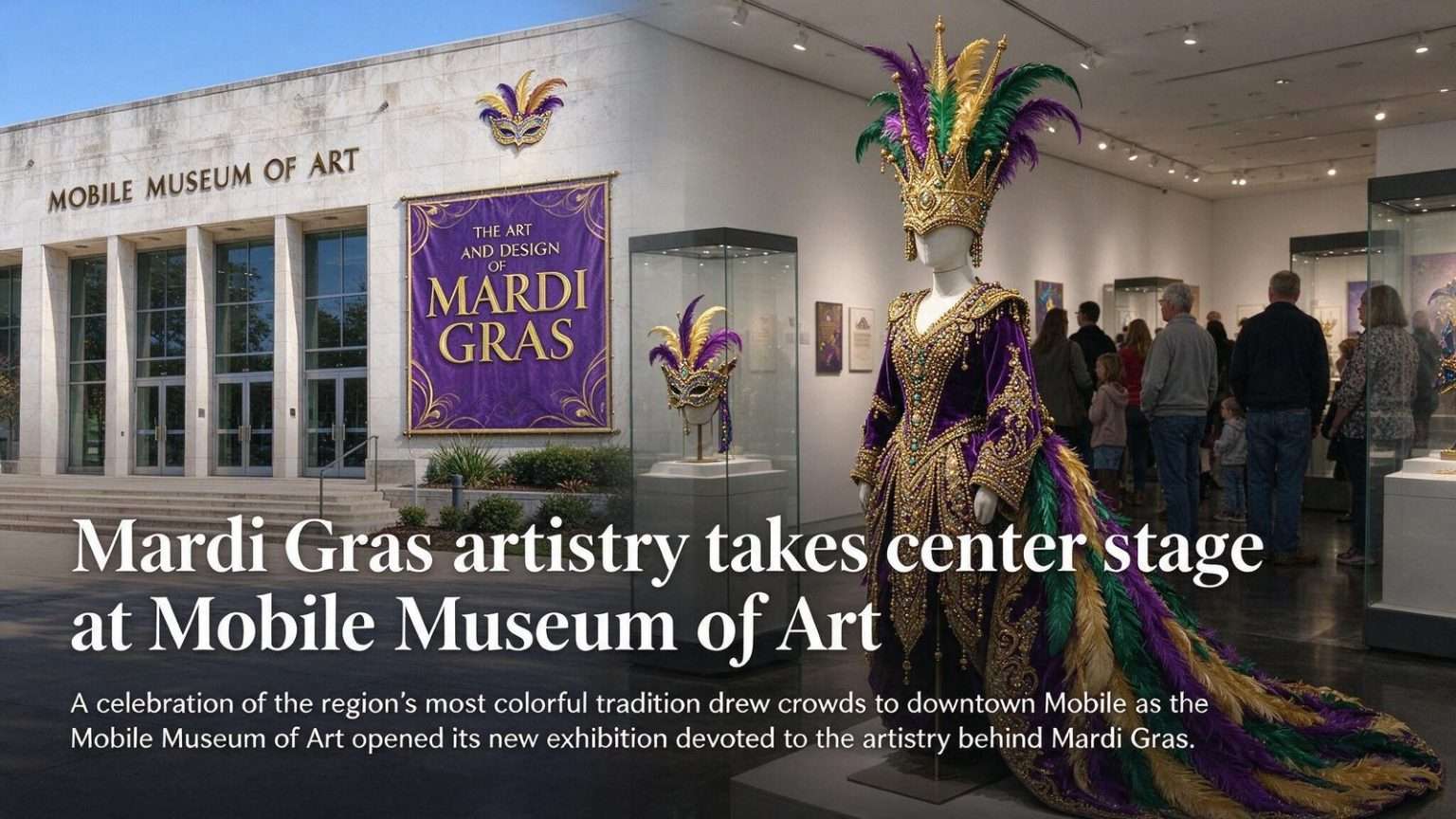
A celebration of the region’s most colorful tradition drew crowds to downtown Mobile as the Mobile Museum of Art opened its new exhibition devoted to the artistry behind Mardi Gras.
Titled “The Art and Design of Mardi Gras,” the exhibition gathers together the tokens, costumes and craftsmanship that define one of the city’s most cherished social seasons. From the moment the doors opened to the public, thousands of visitors streamed through the galleries, eager for a closer look at the regalia that most residents only glimpse from a curbside on parade day.
Mobile lays claim to the oldest organized Carnival celebration in the United States, a heritage that predates the better-known festivities in New Orleans. That deep history gives the museum a rich well to draw from, and the show puts the results of generations of local imagination on display in a way that rewards lingering.
A Closer Look at the Costumes and Craftsmanship
The exhibition invites guests to examine the elaborate handiwork up close: the beading, the feathers, the gilded emblems and the towering headpieces that transform ordinary citizens into royalty for a night. Each piece reflects the labor of the mystic societies and designers who spend months preparing for the fleeting weeks of the Carnival calendar.
For many who attended the opening, the appeal was the chance to slow down and appreciate objects that normally rush past in a blur of floats and flambeaux. Away from the noise and crush of the parade route, the craftsmanship stands on its own, offering a quieter appreciation of the artistry that fuels the season.
Organizers positioned the show as both a tribute to local culture and an educational experience, connecting longtime residents to the roots of a tradition they may take for granted and introducing newcomers to what makes Mobile’s Carnival distinct.
Mobile Museum of Art’s Role in Local Culture
The Mobile Museum of Art, located in the city’s Langan Park, regularly rotates exhibitions that spotlight regional heritage alongside works of national and international significance. This exhibition fits squarely within that mission, turning a spotlight on a homegrown art form that shapes community identity every winter.
Mobile’s parading tradition dates to 1830, when the Cowbellion de Rakin Society first took to the streets on New Year’s Eve. The mystic societies that followed moved their parades to the Carnival season, and Mardi Gras is now a legal holiday in Mobile and Baldwin counties.