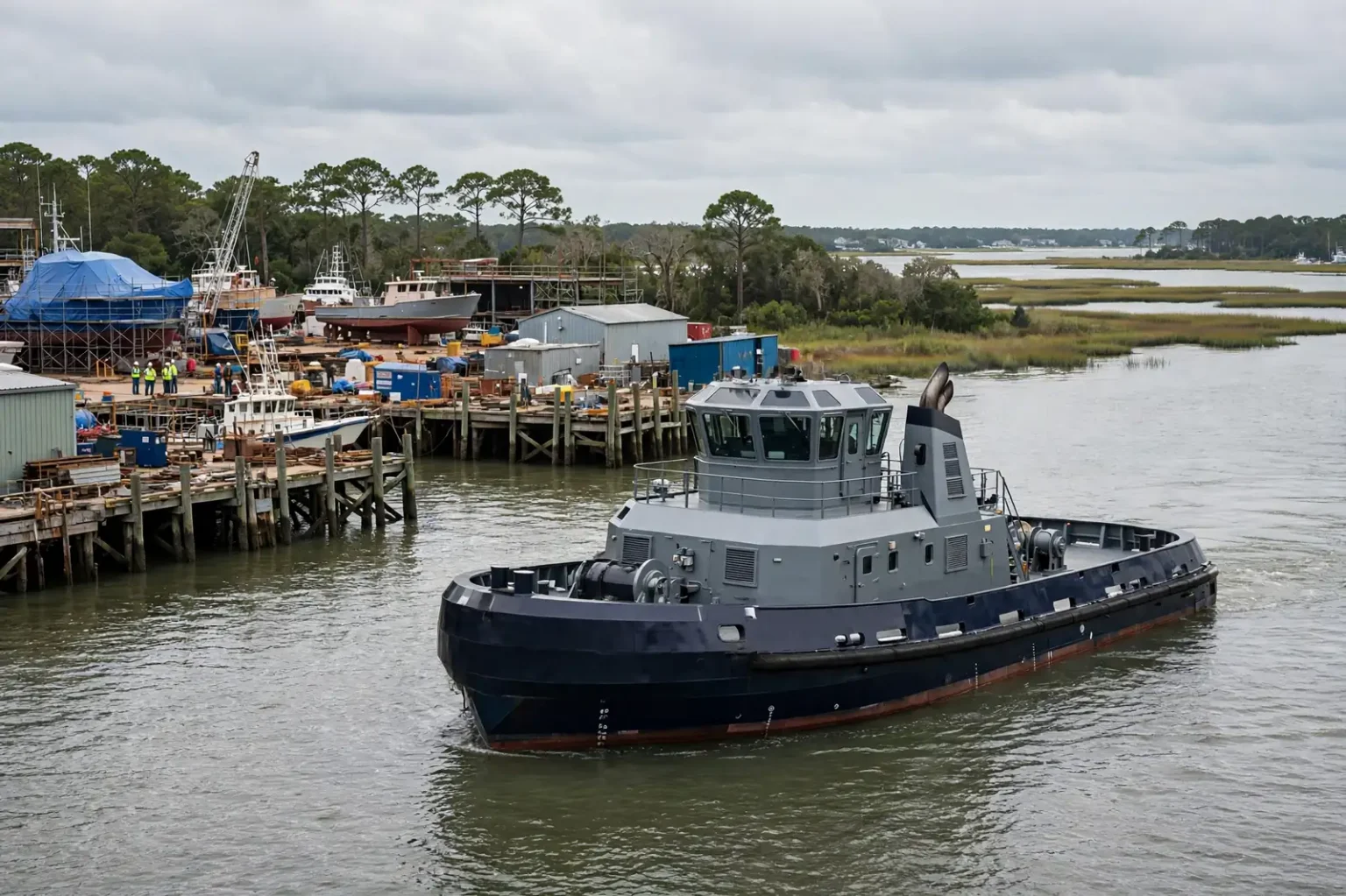
CODEN, Ala. — A south Mobile County shipyard is now halfway through one of its larger building programs. Master Boat Builders Inc. has put the Intrepid in the water. The tug is No. 4 in a series of eight that the Coden company is constructing for Maritime Partners LLC.
Maritime Partners manages a diversified fleet of roughly 1,800 vessels that work in domestic trades governed by the Jones Act, the federal law that sets rules for shipping between U.S. ports.
Intrepid by the numbers
- Length: 88 feet
- Classification: A1 Escort Tug and Towing Vessel
- Certifications: Automated Machinery System; Underwater Inspection in Lieu of Drydocking
- Firefighting: FFV1 capability
- Environmental designation: Low Emissions Vessel under U.S. standards
- Place in series: Fourth of eight tugs for Maritime Partners
What the vessel’s ratings mean
The Intrepid’s list of certifications tells a lot about the work it is built for and how it will be maintained.
Escort and towing
An escort tug is built to accompany larger ships, such as tankers or cargo vessels, through harbors and narrow channels, where it can help steer or slow the ship if needed. Towing classification covers the more familiar tug role of pulling or pushing barges and other vessels. The Intrepid is rated for both roles.
Automated machinery
An Automated Machinery System certification generally indicates that a vessel’s engine room is equipped with monitoring, alarm and control systems that allow machinery to be watched and managed from a central location rather than requiring constant hands-on attention in the engine space.
Inspections without drydocking
Vessels normally must be taken out of the water periodically so their hulls can be inspected. An Underwater Inspection in Lieu of Drydocking certification allows certain of those required examinations to be done in the water, typically by divers or remote equipment, under approved conditions. For an operator, that can mean less time out of service and lower maintenance costs between full drydockings.
Firefighting and emissions
FFV1 refers to the first tier of firefighting vessel capability, meaning the tug carries pumps, monitors and related equipment that allow it to help fight fires on other vessels or along the waterfront. The Low Emissions Vessel designation under U.S. standards reflects equipment intended to reduce engine exhaust emissions.
From launch to delivery
In shipbuilding, a launch marks the moment a vessel’s hull first goes into the water, but it is not the end of construction. After launch, crews typically continue outfitting the boat, finishing systems and interior spaces, then test its machinery and handling during sea trials before the vessel is formally delivered to its owner.
A milestone in a longer partnership
The shipyard’s president described the launch as an important marker in the eight-vessel program and said the series shows the value of a lasting working relationship that matters in the maritime industry, one built on trust, common standards and a shared goal of delivering capable boats.
With four tugs launched, the remaining four in the order are still to come from the Coden yard.
About Master Boat Builders
Master Boat Builders was founded in 1979. Its product line spans tugs and dive support boats as well as commercial fishing boats and vessels that supply offshore platforms.
The yard is based in Coden, an unincorporated community in southern Mobile County near Bayou La Batre and Portersville Bay. The area has long been known for commercial fishing, seafood processing and boatbuilding, and small and midsize shipyards along this stretch of coastline have built vessels for fishing fleets, offshore energy work and inland and coastal towing for generations.
Why the Jones Act matters to local yards
The Jones Act is the common name for a section of the Merchant Marine Act of 1920. It requires that cargo moved by water between two U.S. points be carried on vessels that are built in the United States and that are owned, crewed and flagged under U.S. rules. Because of that requirement, companies operating in domestic trades, including tug and barge operators, must turn to American shipyards when they add new vessels to their fleets.
That steady domestic demand supports shipbuilding jobs along the Gulf Coast, where yards in Alabama, Mississippi and Louisiana build a large share of the country’s commercial workboats.
The role of tugs on the water
Tugboats are small compared with the ships they handle, but they carry enormous power for their size. In ports such as Mobile, tugs guide large ships to and from docks, help them turn in tight spaces and stand by for emergencies. On coastal and inland routes, towing vessels move barges loaded with fuel, chemicals, grain, aggregates and other bulk goods. Modern tugs are increasingly built with automation, firefighting gear and cleaner engines, features that are reflected in the Intrepid’s certifications.
The Intrepid will join the Maritime Partners fleet once outfitting and delivery are complete, and work continues at the Coden yard on the remaining vessels in the series.