Mobile City Employees and Volunteers Sweep Litter from West Mobile Neighborhoods
City employees and volunteers picked up litter across west Mobile's Terrace, Hillsdale, Ziegler and Cody Road areas during community service day.
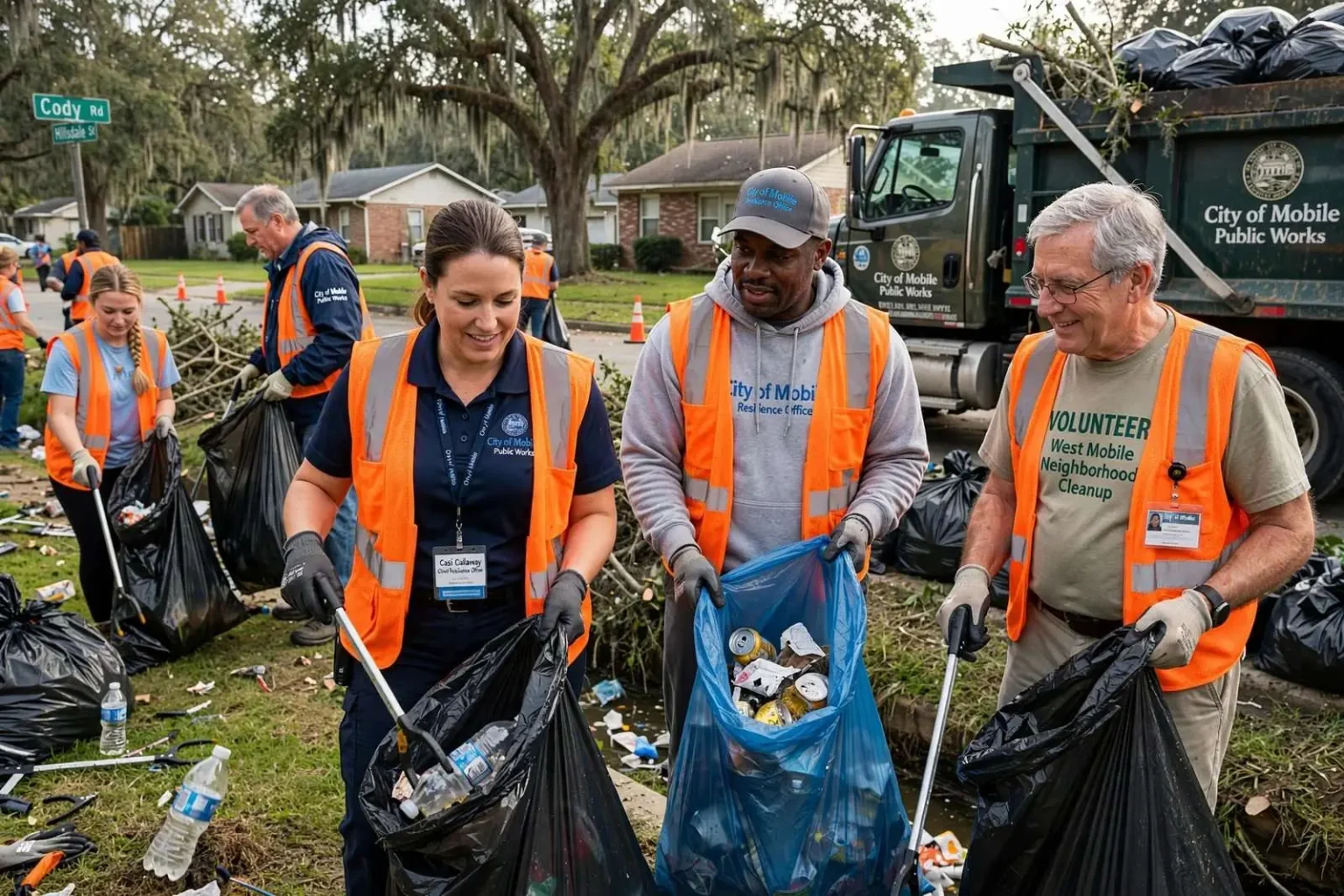
City workers traded desks for trash bags Friday morning, joining volunteers to clear litter from several west Mobile neighborhoods as part of the city’s community service day. The cleanup ran from 8:00 to 11:00 a.m. across the Mobile Terrace, Hillsdale, Ziegler and Cody Road area, putting municipal employees and residents side by side along streets that had drawn a steady stream of complaints about litter in recent months.
City leaders said the spots were chosen because residents had been calling about littering problems there in recent months. The west Mobile neighborhoods in the cleanup zone are established residential areas whose streets funnel daily traffic along Cody Road and Ziegler Boulevard, and residents there had grown vocal about trash accumulating along roadsides, ditches and vacant lots. Friday’s effort aimed the city’s resources directly at the complaints rather than waiting for a long-term solution to arrive first.
Why the City Went Where the Calls Came From
“This is an area we have been getting calls from community members lately,” said Casi Callaway, the city’s Chief Resilience Officer. “They care about their neighborhood and they needed more help.”
The approach reflects a responsiveness-first philosophy for the city’s cleanup operations. Rather than spreading a modest crew thinly across the city, organizers concentrated Friday’s effort on the specific corridors where residents had reported problems, pairing city manpower with the people who live with the problem daily. Officials hope the model works both ways — the city responds to complaints, and residents see a response worth sustaining themselves.
The three-hour window also reflects the practical rhythm of municipal cleanups. A morning shift lets crews work in cooler hours, finish before afternoon heat and thunderstorms, and free volunteers for the rest of their day — all while generating a visible, same-day improvement that residents notice on their drive home.
The Mayor’s Nudge
Mayor Sandy Stimpson, who regularly led such cleanups before the pandemic, said more are planned in the coming months. He framed the effort as a nudge to neighbors: keeping areas clean is up to all citizens, he said, and showing up to help might inspire residents to keep the roadway clean themselves.
The argument behind that framing is a familiar one in city government. A freshly cleaned street does not stay clean if the behavior that littered it continues, so a visible city-led effort is designed partly as persuasion — demonstrating care for a neighborhood in a way that discourages dumping and littering better than a sign or an ordinance can. The mayor’s return to hands-on cleanups as the city moves past pandemic-era restrictions signals that the administration intends to make community service days a recurring feature again.
The timing also marks a milestone of sorts. For more than a year, pandemic precautions curtailed the mass volunteer gatherings that cleanups depend on, and the city’s scheduled service days largely went quiet while the litter kept coming. Restarting the program means restarting a habit on both sides: residents relearning that help is available if they ask for it, and city hall re-establishing the routine of answering. Friday’s turnout was the first step in rebuilding that rhythm.
Litter’s Long Journey to Mobile Bay
Litter cleanup in Mobile is about more than appearances. Trash discarded along roads in west Mobile does not stay there: rain washes it into ditches and storm drains, storm drains feed creeks, and the creeks carry the litter down into Mobile Bay. In a city ringed by water on three sides, roadside litter is the visible top of a pipeline that ends in the estuary that defines the region’s environment and economy. City resilience officials have increasingly connected neighborhood cleanup work to that larger water-quality picture.
Blocked drains create a second, more immediate problem in a hurricane-prone city. Trash and debris that clog storm drainage structures reduce the system’s capacity exactly when it matters most — during the heavy rain that tropical systems deliver. Keeping streets and ditches clear is therefore part of flood mitigation, not just beautification, and each cleanup reduces the amount of debris that can back up drainage when the next storm arrives.
Trees Trimmed Ahead of Hurricane Season
The work wasn’t limited to litter. The city’s Urban Forestry Team partnered with community groups on tree trimming in Hillsdale, getting limbs squared away ahead of hurricane season.
Tree trimming is a quiet but consequential part of storm preparation in Mobile, a heavily wooded city where overhanging limbs become projectiles and road-blocking debris in high winds. Limbs that reach toward power lines or hang over streets are the ones most likely to fall in a hurricane’s sustained gusts, taking lines down and closing evacuation and response routes. Trimming them in advance — before the season’s first named storm — is far cheaper and safer than clearing them after the fact.
Pairing the tree work with the litter cleanup in the same neighborhoods let the city address two different sources of storm vulnerability in a single morning: loose trash that clogs drainage, and overgrown limbs that threaten power and access. Both efforts rely on the same ingredient, the cooperation of the neighborhoods themselves, whether that means residents flagging problem spots or community groups turning out with gloves and tools.
The Urban Forestry Team’s work carries benefits that outlast storm season as well. A healthy, well-maintained canopy shades streets, raises property values and anchors the character of neighborhoods like Hillsdale, which is why the city pairs its storm-driven trimming with ongoing care rather than one-time cutting. Residents who watched limbs come down on Friday saw less a removal than a pruning — the difference between a tree managed for safety and one left to fail in the next big blow.
The Neighborhoods in the Cleanup Zone
The Mobile Terrace, Hillsdale, Ziegler and Cody Road area sits in west Mobile, a broad swath of the city that grew rapidly in the decades after World War II into a mix of established subdivisions, schools, churches and commercial corridors. The area’s streets carry steady daily traffic between western neighborhoods and the rest of the city, and busy connectors like Cody Road accumulate the roadside litter that high-traffic corridors attract. Residents there have watched the litter accumulate in ditches and along fence lines, and their calls to the city are what put the area on Friday’s map.
Community groups in the area turned out alongside the city’s crews, an involvement city leaders repeatedly point to as the difference between a cleanup that lasts and one that fades within weeks. When residents take part in cleaning their own streets, they are more likely to report illegal dumping, to discourage littering when they see it, and to keep an eye on the neighborhood’s appearance in the months that follow.
Who Cleans, and How
A municipal cleanup of this kind draws on several parts of city government at once. Public works crews supply trucks, bags and hauling; employees assigned from various departments supply the hands; and the resilience office coordinates the map, the neighborhoods and the volunteer groups. The city’s aim on days like Friday is to put crews where complaints have clustered, clear what a morning’s work can clear, and leave neighborhoods with the equipment and information they need to keep reporting problems.
Volunteers handle work that machines cannot. Litter wedged into ditches, fence lines and wooded margins has to be picked up by hand, and a few dozen willing workers with bags and grabbers can transform a corridor in a morning. City leaders have emphasized that these events double as introductions — between residents and the officials who serve them, and between neighbors themselves — and that the relationships formed over trash bags tend to outlast the cleanup itself.
What Comes Next
City officials said additional cleanups are planned in the coming months, with the administration signaling that community service days will continue as a regular program rather than a one-off response. Residents who want a cleanup in their own neighborhoods have a clear path: make the call. The selection of the west Mobile zone was driven by complaints, and officials have made clear that the volume and consistency of those reports shapes where crews go next.
The city’s message on Friday was twofold — the government will show up where residents show concern, and the residents’ own habits will determine whether the work holds. As bags were collected and limbs were hauled away from Hillsdale’s streets, the neighborhoods along Mobile Terrace, Ziegler and Cody Road got a fresh start, and a reminder that in Mobile, keeping it that way is a shared job.
For the city workers who traded desks for trash bags and the volunteers who joined them, the morning was short by design: three hours, a handful of neighborhoods, and a visible result. More such mornings are planned, and the city’s leaders have made the case that each one is both a cleanup and an invitation.