Mobile Council Unanimously Approves Outside Review of $14.7 Million Arena Fraud as High-Ranking Finance Employee Resigns
Mobile City Council members voted unanimously Tuesday to hire an outside firm to examine the city's $14.7 million loss in the Regions Arena payment scam, the same day city officials disclosed that a fourth Finance Department employee, a senior one, has resigned.
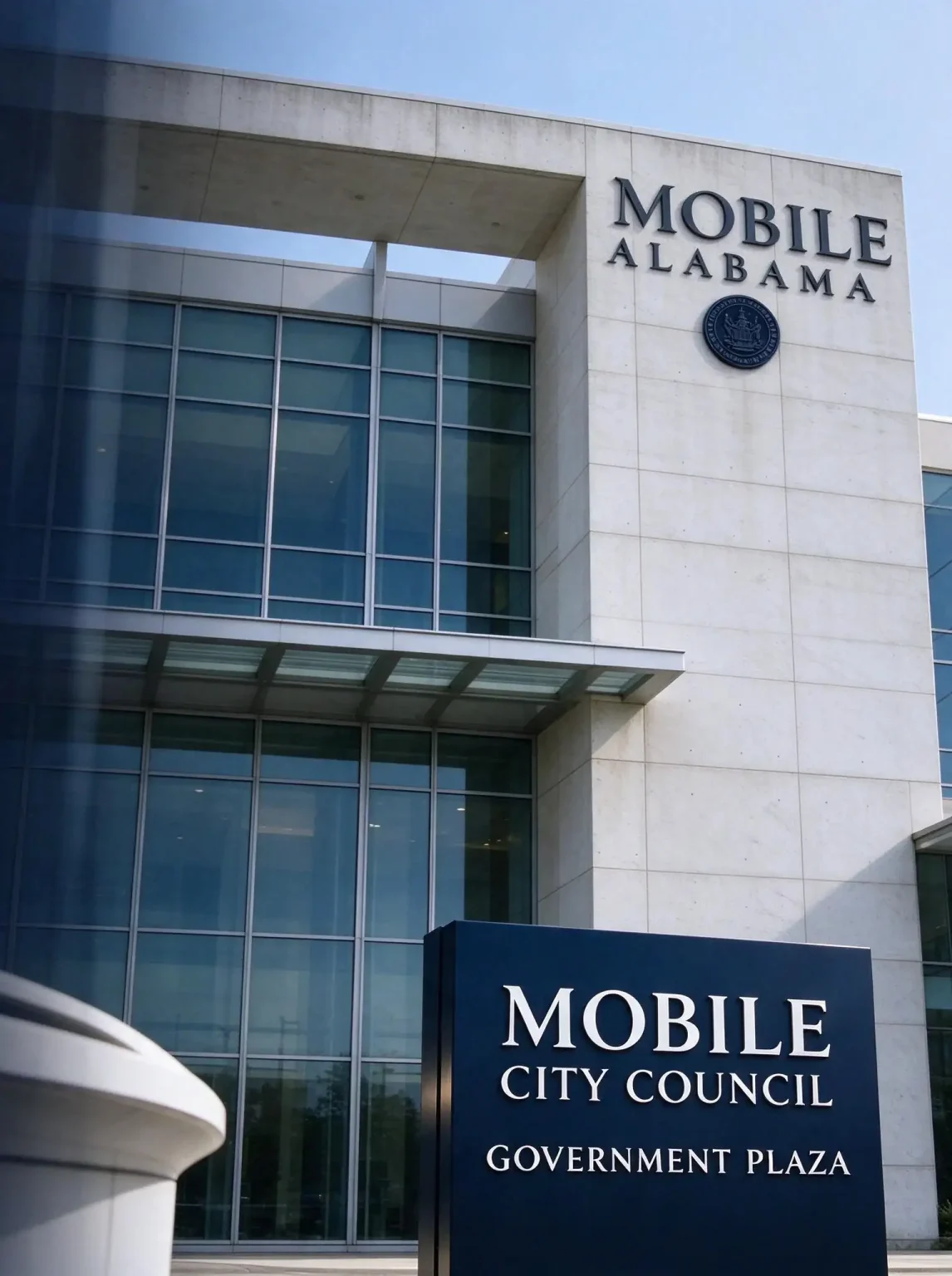
MOBILE, Ala. — Every member of the Mobile City Council voted Tuesday, Nov. 17, to bring in an outside firm to dig into how the city wired $14.7 million meant for the Regions Arena contractor to a criminal’s bank account. On the same day, city officials disclosed that yet another Finance Department employee has left, this time a senior staffer who resigned as fallout from the scam continues to ripple through City Hall.
The resignation brings the number of Finance Department employees touched by personnel actions to four. One was fired earlier, and two remain on paid administrative leave while the FBI’s investigation runs its course. City officials would not name the person who resigned, but they made a point of saying the employee did not hold a low-level position.
What the Council Approved
The unanimous vote authorizes a review that will be separate from the criminal case federal agencies are pursuing and from the internal reviews already launched by the administration. Council members described the work as an examination of the Finance Department itself: how the loss happened, where the city’s policies and procedures broke down, what changes should follow and whether there are weaknesses inside the department that need fixing.
Many details have not been settled. At a Finance Committee session held later on Tuesday, council members floated a working budget, saying they expect to spend no more than $100,000 on a third-party firm. They also suggested the review could take roughly six weeks once it begins.
The timeline points to next year. Council members said they expect to choose a firm at some point after the holidays, and they plan to reconvene next week to hammer out exactly what the investigators will be asked to do.
Key points at a glance
- Vote: Unanimous approval Tuesday, Nov. 17, for a council-directed independent investigation.
- Estimated cost: Up to $100,000, according to figures discussed in committee.
- Possible length: About six weeks of work by an outside firm.
- Hiring: Expected sometime after the holiday season.
- Next step: Council members meet again next week to define the scope.
- Personnel: One employee fired, two on paid administrative leave, and now one senior employee resigned.
Support, With Caution About Cost
Although nobody voted against the review, the discussion made clear that council members are wary of piling more expense on top of an already painful loss. One council member said he does not want the city pouring additional money into chasing something it may never get back, and stressed that the panel must be careful with taxpayer dollars. He added that he was not opposing the investigation, but wanted the council to pin down what the work will actually cover.
That same council member also raised a concern about timing and disclosure. He said the city should avoid any step that could hurt its chances of recovering some of the stolen money. Another council member echoed that point, noting that the council’s review is not a criminal investigation but that any information it releases has to be handled with care so it does not undercut efforts to get funds back.
A third council member said he was pleased to see the inquiry move ahead and looked forward to the findings, describing the review as one that will zero in on the Finance Department and the chain of events, apart from the work of federal investigators.
The administration signaled it would cooperate. City officials said they welcome any independent look at what went wrong, while pointing out that both a law enforcement inquiry and internal reviews are already in progress. Their main worry, they said, is paying twice for the same work and duplicating efforts that are already in progress.
The Personnel Fallout
City leaders have said little about the employees involved, citing the ongoing investigation. They have not identified the person who was fired, the two employees on leave or the senior staffer who just resigned.
Explaining that reluctance, city officials said public emotions remain raw so soon after the loss came to light, and that people are understandably upset to learn that $14.7 million believed to be headed to the right place ended up with a bad actor. Officials said they have serious concerns about the safety of city workers, pointing to hostile comments circulating on social media. They also described the employees as good people who made mistakes, noting that two are no longer with the city and two are on leave.
Officials have previously acknowledged that numerous red flags were missed and that employees involved in the transaction did not follow established procedures. City leadership has said it remains angry and frustrated over the loss.
Questions About Staffing and Turnover
During the Finance Committee session, council members pressed the department’s executive director on staffing levels, hiring and the steps required before a payment is approved.
The department’s recent history helps explain why those questions came up. Six different executive directors have led the Finance Department since 2020, and the department has seen complete, 100% turnover of its employees since 2023. The current executive director had held the job just a matter of weeks at the point the impostor first reached out to a department employee, and the city’s leadership has publicly defended the director.
High turnover is a well-known risk factor in financial operations. When staff are new to their roles, institutional knowledge about vendors, normal payment patterns and verification steps can be thin, and unusual requests may be less likely to stand out. That is one reason auditors commonly look at staffing stability alongside written procedures when they assess internal controls.
How the Money Was Lost
The scheme targeted payments owed to BL Harbert International, the Birmingham company serving as general contractor on downtown Mobile’s Regions Arena. Over a period of months, someone posing as a representative connected to the company persuaded city employees to change the bank account on file for Harbert’s payments. When the city sent out a $14.7 million installment in early October, the money went to the fraudulent account instead of to the contractor.
Weeks went by before the city’s top finance official and the city’s leadership learned what had happened. City leaders have conceded a series of failures over the course of the scheme, including missed warning signs and a failure to verify the change to the contractor’s banking details.
This was not the city’s first brush with payment fraud this year. In August, a separate and unrelated cybercrime led to a fraudulent transfer of roughly $1 million. In that earlier case, the city got all of the money back.
Where the Money Came From
The $14.7 million had been held in a contingency account meant to cover any shortfalls on the Regions Arena project, which carries a budget of $300 million. City officials have said the arena is reportedly coming in under budget, and it is expected to open by March 2027.
The size of the loss places Mobile among the largest municipal victims of vendor-payment fraud in the country, a category of crime that has drawn growing attention from law enforcement as criminals increasingly target public agencies that pay large contractors on regular schedules.
How Vendor-Payment Scams Usually Work
The type of crime that hit Mobile is often grouped under the broader label of business email compromise or vendor impersonation fraud. In a typical case, a criminal studies a real business relationship, then poses as a trusted vendor and asks the paying organization to update the bank account where payments should go. If the change is accepted without independent confirmation, the next legitimate payment lands in an account the criminal controls.
Federal authorities and fraud-prevention experts generally recommend several safeguards to stop this kind of theft:
- Call-back verification: Confirming any banking change by phoning the vendor at a number already on file, not one supplied in the request.
- Separation of duties: Making sure the person who changes vendor banking information is not the same person who approves or releases payments.
- Waiting periods: Holding large payments to a newly changed account until the change has been independently confirmed.
- Quick reporting: Notifying the bank and federal authorities immediately when fraud is suspected, since money moved by wire is far easier to freeze in the first hours and days.
- Staff training: Teaching employees to treat urgent or unusual payment requests with suspicion, even when they appear to come from a familiar contact.
Any review of Mobile’s Finance Department is likely to measure the city’s practices against standards like these, which are widely used by governments and private companies.
Why a Separate Review Matters
A criminal investigation and an independent operational review serve different purposes. Federal agents focus on identifying the people responsible, tracing the money and building a case that can hold up in court. An outside review commissioned by a governing body looks inward, at the decisions, policies and staffing that allowed the loss to happen, and typically ends with recommendations for changes.
For residents, the difference matters because the council’s review is the one most likely to produce a public accounting of what went wrong inside City Hall and what is being done to keep it from happening again. Council members have acknowledged, however, that what they can release may be shaped by the need to protect the federal case and any chance of recovering money.
What Comes Next
Council members are scheduled to take up the scope of the investigation again next week. Decisions still to be made include the exact questions the outside firm will be asked to answer, how the firm will be chosen and what the final price tag will be. Hiring is expected after the holidays, with the review itself possibly lasting about six weeks.
Meanwhile, the FBI investigation continues, and the two employees on paid leave will remain in that status until it concludes. The money itself has not been recovered.
Residents who want to follow the process can watch for agendas from the Mobile City Council and its Finance Committee, which typically meet on Tuesdays at Government Plaza, and can attend meetings in person or follow them through the city’s public meeting broadcasts.