Mobile Council Weighs $210,000 Deal to Keep History Museum Staff Paid Through Board Transition
The Mobile City Council is considering a $210,000 contract to fund History Museum of Mobile employees through September as a new independent board takes over operations, part of a broader meeting that also covered litter cleanup, a sign ordinance dispute and several city contracts.
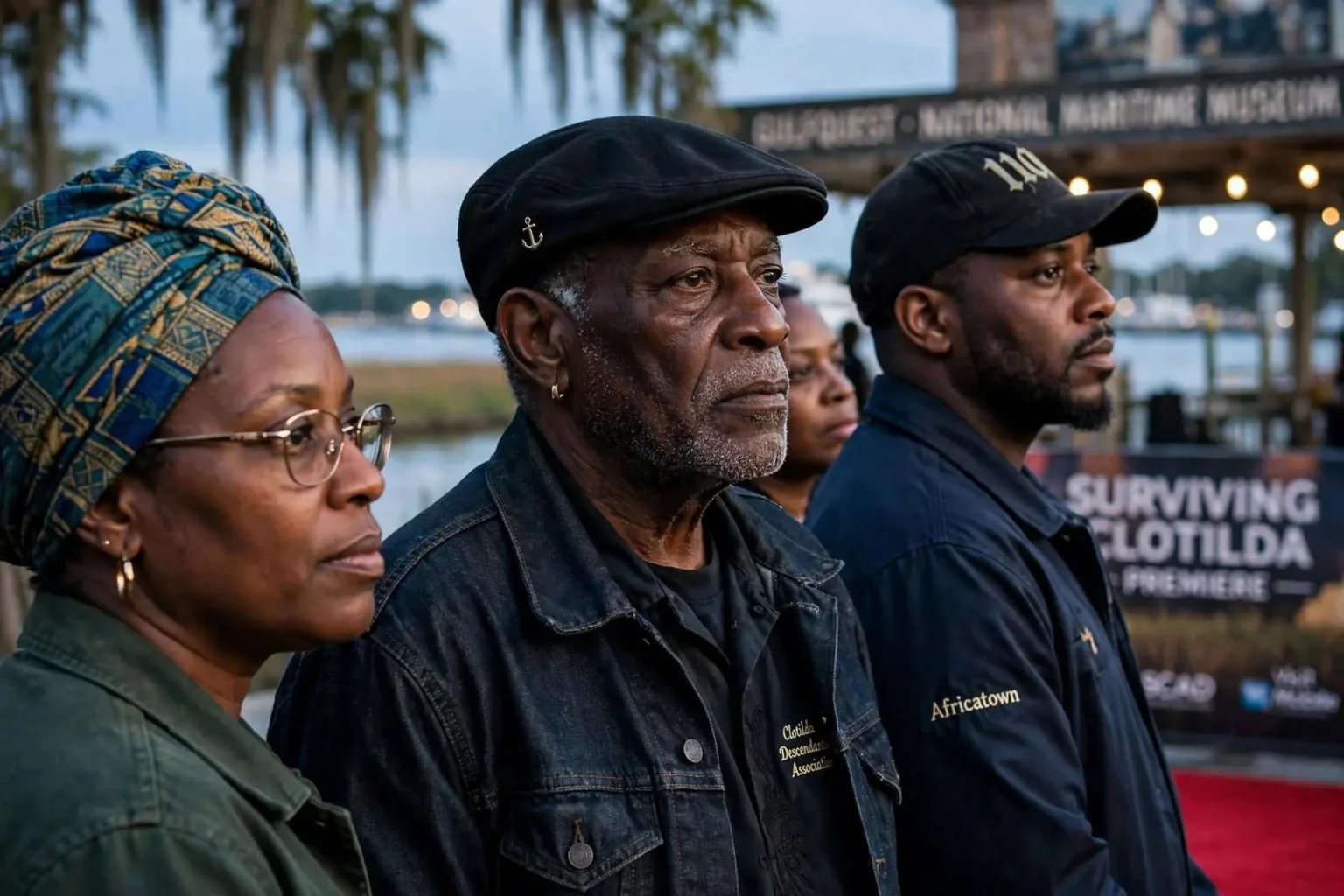
A short documentary telling the story of the Clotilda, the last known ship to bring enslaved Africans to the United States, made its public debut last week at the Savannah College of Art and Design in Georgia, drawing descendants of the ship’s survivors to the premiere and marking a new chapter in Mobile’s push to build out heritage tourism around Africatown.
The 24-minute film, titled “Surviving Clotilda,” was produced by SCAD students as part of a $180,000 performance contract between the City of Mobile and the art school’s partnership with Visit Mobile. Descendants of the 110 Africans who were smuggled into Mobile Bay aboard the Clotilda in 1860 traveled to Savannah for the screening and took part in a panel discussion afterward.
“I don’t want people to forget the story of 110,” said Darron Patterson, president of the Clotilda Descendants Association, who attended the premiere. Patterson said the film centers the voices of the people who would go on to found Africatown after slavery ended, rather than treating them as a footnote to the ship’s history. “They were the stars of the show,” he said. “I’m just proud to be a part of it. The descendants are excited about what’s happening.”
The story behind the film
The Clotilda’s voyage is one of the most consequential — and long-suppressed — chapters in American history. More than half a century after the United States banned the international slave trade, the schooner carried a captive group of 110 African men, women and children across the Atlantic and into Mobile Bay in 1860, defying federal law in an illicit voyage financed by a Mobile businessman who had wagered that he could pull it off. After the captives were delivered, the ship was scuttled and burned in the waters south of downtown Mobile to hide the evidence.
When slavery ended five years later, many of the survivors — freed but unable to afford passage home — pooled what they had and established their own community on the northern outskirts of Mobile. That settlement, Africatown, became one of the only communities in America founded and continuously occupied by Africans brought over on the last illegal slave voyage, and for generations its families passed the story of the Clotilda down orally, long after official histories treated it as legend.
Interest in the Clotilda and the community its survivors built has grown sharply since the wreckage of the ship was located in the Mobile River near Twelvemile Island, confirming decades of oral history passed down through Africatown families. The identification of the wreck followed years of searching and archival research, and its confirmation by state historians drew national and international attention to Mobile, transforming the story from family lore into documented history. That discovery has pushed city and tourism officials to invest more heavily in preserving and presenting the neighborhood’s history to visitors.
How the documentary came together
Of the $180,000 the city committed to the SCAD project, $75,000 went toward producing the documentary itself, while the remaining $105,000 is split between wayfinding and signage for an Africatown heritage experience and further development of the concept behind that experience.
Patterson said SCAD students spent time in Mobile before production began, sitting down with descendants to hear stories that had been passed through their families for generations. “They did a lot of listening to descendants,” he said. “They captured the essence of what this story is.”
That grounding in family memory shaped the finished film, Patterson said, which leans on the voices of descendants rather than on narration about the ship alone. For a community that has often watched its history filtered through outside storytellers, the production process itself — students sitting at kitchen tables, hearing the story of 110 from the people who carry it — was as meaningful as the final product.
A red carpet in Savannah
Visit Mobile President and CEO David Clark traveled to Savannah for the premiere along with Patterson and other descendants. A panel discussion following the screening included Patterson, Visit Mobile’s Emily Gonzalez, SCAD’s Jennifer Hyde and Rachel Thomas, who narrates the film.
“SCAD pulled out the red carpet for its partners,” Clark said. “A lot of work went into this and I’m proud of all of Mobile and Africatown for coming together. I’m grateful to the city for giving us the resources to do it and I’m grateful for the Africatown leadership who drove this process.”
Clark credited the collaboration among city government, the tourism office, the art school and the descendant community as the reason the project came together, describing it as a model for how the remaining pieces of Mobile’s Africatown effort will be developed. The Savannah premiere, he noted, gave the student filmmakers a professional showcase for work that will now play a central role in Mobile’s visitor experience.
From the screen to the water
Clark said the documentary is intended to anchor a new land-and-water tour for visitors to Mobile. Under the plan, tourists would first watch the film at the GulfQuest National Maritime Museum of the Gulf of Mexico before boarding a boat that would take them out on the water near the site where the Clotilda’s remains were discovered, with guides recounting the history of the ship and the 110 survivors along the way.
The structure is designed to give visitors context before they see the water itself — first the film’s account of the voyage and the community that followed, then the view of the Mobile River where the burned hull has rested for more than 160 years. Tour operators, museum staff and descendant families are expected to be involved in shaping how that narrative is delivered on the water, a detail descendants have emphasized as they negotiate their role in the growing heritage tourism effort.
The tour is expected to launch alongside the opening of Mobile County’s Heritage House Museum, which is slated to open in March. Together, the film, the museum and the water tour are meant to give visitors a fuller picture of Africatown’s origins and its place in the region’s history, while giving the community more direct involvement in how that story is told.
Local officials view the package as a significant addition to Mobile’s tourism portfolio, complementing the city’s established draws downtown and along the coast with a story that is singular to the area. The wayfinding and signage component funded through the same $180,000 contract is intended to physically connect those pieces — guiding visitors between the museum, the waterfront and the Africatown neighborhood itself.
A community telling its own story
For descendants like Patterson, the project represents a chance to make sure the story reaches a wider audience on their own terms. The Clotilda Descendants Association has spent years pressing for the story’s recognition — from the search for the wreck to the planning of memorials, museums and educational programs — and the documentary adds a new medium to that effort, one that can travel to classrooms, festivals and film screenings far beyond Mobile.
The momentum around Africatown has also brought renewed attention to the neighborhood’s needs more broadly. As visitors begin arriving, community leaders have pointed to the importance of ensuring that investment benefits the residents of Africatown itself — through jobs on the tours and at the museum, through preservation of the community’s historic churches and landmarks, and through a continuing voice for descendants in how the story is presented.
Heritage tourism on the Gulf Coast
The Africatown push arrives as heritage tourism has become one of the fastest-growing segments of the travel economy, with visitors increasingly seeking out places where history can be experienced on the ground rather than read from a plaque. Mobile’s tourism establishment has taken note: the city’s historic districts, its Civil War-era sites and its maritime attractions already anchor much of the region’s visitor marketing, and the Clotilda story adds an American history narrative of national significance that exists nowhere else in the country.
GulfQuest, the maritime museum where visitors will watch the documentary before their boat trip, sits on Mobile’s downtown riverfront and already interprets the Gulf of Mexico’s maritime history through interactive exhibits. Making it the starting point for the Africatown experience ties the Clotilda story into the broader history of the port, which was the point of entry for the ship and remains a working harbor today. The boat leg of the tour would then carry visitors south along the waterways that have shaped the city — past the landscape the survivors themselves would have known — toward the stretch of the Mobile River near Twelvemile Island where the wreck was found.
The Africatown Historic District has long been recognized for its historical significance, and the confirmation of the Clotilda’s remains has only strengthened efforts to document and protect the neighborhood’s landmarks, including its historic churches and cemeteries. Descendants and preservation advocates have described the period since the discovery as a rare window — a moment when state and local institutions, philanthropies and federal agencies have all turned their attention to a community that fought for decades to have its history taken seriously.
What visitors will find
When the full experience opens, the sequence a visitor follows is meant to mirror the arc of the story itself: arrival in Mobile, the voyage, the years of enslavement, and finally freedom and the founding of a community. The Heritage House Museum is expected to house exhibits drawing on the descendant community’s own archives and family collections, giving visitors a close look at the people behind the story rather than an abstract historical account.
City officials have described the wayfinding investment as the connective tissue of the experience — signs and markers that orient visitors who arrive downtown and guide them north to Africatown, making the neighborhood a destination in its own right rather than a footnote on a driving tour. That distinction matters to residents, who have emphasized that Africatown is a living neighborhood with families who trace their roots directly to the Clotilda’s passengers, not merely a historic site.
For the descendant families, the coming months will bring the first full test of what a decade of advocacy has built. Patterson and other leaders of the Clotilda Descendants Association have said they measure success not only in visitor numbers but in whether the story of the 110 — who they were, what they endured and what they built — becomes a permanent, accurate part of how Mobile tells its own history.
“I don’t want people to forget the story of 110,” Patterson said, “and I don’t want the world to forget about the place where they settled after slavery was ended.”