
Mobile County Animal Control impounds 38 dogs from local property
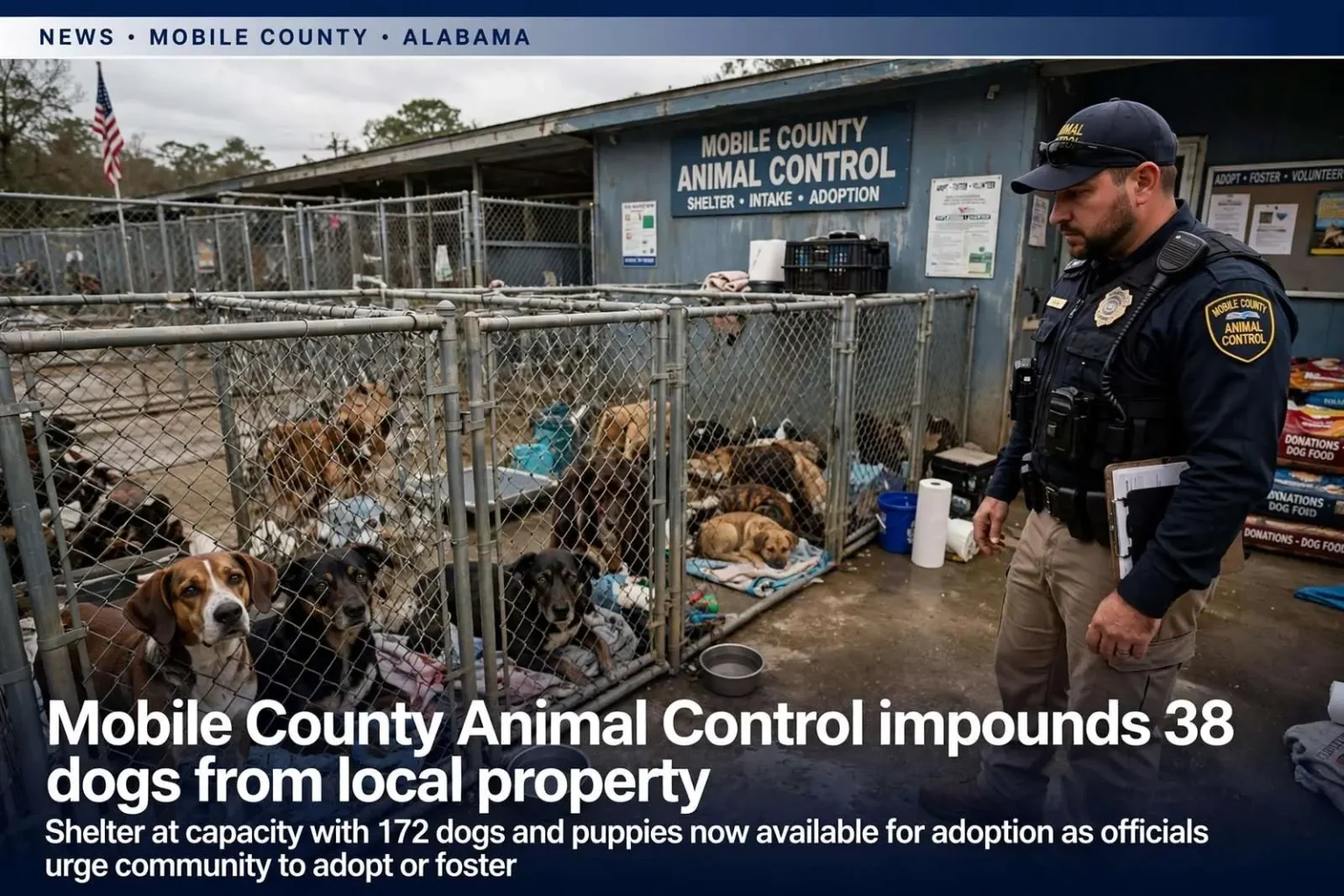
Mobile County Animal Control’s impoundment of 38 dogs from a single local property has pushed an already strained shelter system past its breaking point, and officials say the facility was at capacity before the seizure. The sudden arrival of dozens of additional animals has intensified the urgent need for Mobilians to open their homes through adoption. At least 172 dogs and puppies are currently available, and adoption applications can be submitted online through the shelter’s website.
The seizure underscores a recurring challenge for animal welfare agencies across the region. Limited kennel space collides with a steady intake of stray, surrendered and confiscated animals, and when a property yields 38 dogs at once, it can overwhelm a shelter’s ability to feed, house and provide veterinary care for every animal in its charge. Officials said the impoundment, on top of an already full shelter, is exactly the kind of scenario that adoption events and foster placements are designed to prevent from spiraling into a longer-term crisis.
The Adoption Appeal
In response, officials are calling on the community to adopt. At least 172 dogs and puppies are currently available, a number that reflects not only the recent seizure but the ongoing flow of animals through the system. Adoption applications can be submitted online, allowing prospective pet owners to begin the process before visiting the shelter in person.
Animal welfare advocates consistently stress that adoption relieves pressure on the shelter while giving an animal a second chance. With so many dogs in need, even a modest uptick in adoptions can create the space necessary to respond to the next emergency intake. Foster placements, in which a household temporarily cares for a dog until it is adopted, can provide similar relief and are often a good fit for families who are not ready to commit to long-term ownership.
Visiting and Adopting
The shelter welcomes visitors during weekday hours from 10 a.m. to 4 p.m. and on Saturdays from 10 a.m. to 2 p.m. Those considering adoption are encouraged to arrive during these windows to meet available dogs, ask staff about temperament and medical history and complete the necessary paperwork. Prospective owners are typically asked to bring a valid form of identification and to be prepared to discuss their living situation and prior experience with pets.
Beyond Adoption: How the Community Can Help
Beyond adoption, community members can support the shelter in several other ways. Donations of unopened dog food, blankets, cleaning supplies and behavioral enrichment items such as sturdy toys are commonly accepted and help stretch the shelter’s operating budget. Volunteers who can commit to regular shifts walking dogs, socializing puppies or assisting with laundry and kennel cleaning are also in steady demand, and many shelters will work around school and work schedules to accommodate volunteers.
For residents who suspect an animal welfare issue in their neighborhood, the shelter encourages reporting concerns directly to Mobile County Animal Control rather than attempting to intervene independently. Trained officers are equipped to handle unsafe animals and to investigate situations in which dogs may be living without adequate food, water, shelter or veterinary care. The recent 38-dog impoundment is one example of how those reports can lead to large-scale removals that, while necessary, place immediate pressure on shelter capacity.
What the Recent Impoundment Reveals
Large seizures like the one announced this week are not unusual for animal control agencies that serve counties the size of Mobile, where rural properties and small residential lots can sometimes shelter animals in numbers that exceed what a single caretaker can responsibly manage. When officers remove animals from a property, each dog must be examined, vaccinated if needed, photographed for adoption listings and either reunited with an owner or made available for adoption after a mandatory holding period.
The shelter’s appeal is partly a logistical necessity and partly a community reminder. Each adoption opens a kennel that can be filled by the next intake, and each foster placement keeps a dog out of the shelter entirely. With adoptions moving online and visits available six days a week, the shelter is making the process as accessible as possible for residents across Mobile and the surrounding communities.
A System Under Pressure
Animal welfare advocates across the Gulf Coast have long warned that municipal shelters operate near capacity even in normal months. Adoption events, low-cost spay and neuter programs and partnerships with rescue groups are all part of the broader strategy to keep the population of adoptable animals manageable, but the recent 38-dog seizure illustrates how quickly that balance can tip.
Mobile County, home to the city of Mobile and a string of suburban and rural communities stretching toward the Mississippi border, is one of the larger jurisdictions in Alabama by both population and geographic area. Animal welfare here involves coordination between the county’s animal control division, partner rescue organizations, veterinarians and foster networks that together handle thousands of animals each year.
What Adopters Can Expect
Adoption fees at municipal shelters are typically modest and often include spay or neuter surgery, a rabies vaccination, a microchip and a brief health screening completed before the animal leaves the facility. Many dogs adopted from shelter environments benefit from a few weeks of adjustment in a quieter home setting, particularly if they have spent time in a high-volume kennel. Shelter staff can offer guidance on introducing a new dog to other pets and to children, and they can share observations about each animal’s temperament gathered during their stay.
Prospective adopters who are not sure whether they are ready for a full-time commitment are encouraged to consider fostering first. Foster programs typically provide food, supplies and veterinary support while the foster family provides a temporary home. For the shelter, every foster placement reduces the population it must feed, clean and care for on site, and it often helps animals that have struggled in the kennel environment show a different side of their personality once they are in a home.
How to Get Started
Residents interested in adopting can begin the process online through the Mobile County Animal Control adoption page, where photos and brief descriptions of available dogs are updated regularly. After submitting an application, prospective owners are invited to visit the shelter during its operating hours to meet the animals in person and finalize the adoption. The shelter is open from 10 a.m. to 4 p.m. on weekdays and from 10 a.m. to 2 p.m. on Saturdays.
For those who cannot adopt but want to help, the shelter accepts donations of supplies and time, and community partners frequently host adoption events at pet stores and community centers around Mobile. With 172 dogs and puppies currently in care and more arriving through routine intake, officials say the shelter’s path back to a manageable population runs straight through the community’s willingness to step up, one adoption or one foster placement at a time.
A Continuing Call for Community Support
Shelter staff have emphasized that the call for adopters is not a one-time appeal tied to a single seizure but a standing invitation. Throughout the year, the Mobile County Animal Control shelter takes in stray dogs, surrendered pets and animals removed during cruelty or neglect investigations. Each of those intake streams places pressure on a fixed number of kennels, and the steady flow means that the shelter is rarely empty for long even after a successful adoption push.
The dogs currently available range from young puppies that will need training and patience to adult dogs already accustomed to living in a home. Staff work with each animal to assess behavior, address minor medical issues and prepare them for adoption, and they share that information with prospective owners to help match the right dog with the right household.
Working With Rescue Partners
Mobile County Animal Control also works with a network of rescue organizations that pull dogs from the shelter, provide foster care and then place them in permanent homes, sometimes in other states where demand for adoptable pets is higher. These partnerships help move animals through the system more quickly than the shelter could on its own, and they give adopters an additional avenue for finding a dog that suits their home and lifestyle.
Residents who want to support the shelter without adopting or fostering can still make a meaningful difference. Sharing adoption listings on social media, donating supplies and encouraging friends and family to consider adoption all help move animals out of the shelter and into permanent homes. With 172 dogs currently available and more likely to arrive, officials say the shelter’s best chance of returning to a manageable population is a community-wide effort that continues well beyond the news cycle of the latest impoundment. Every adoption, foster placement and shared listing moves the shelter closer to that goal, and the cumulative effect of small steps is what ultimately keeps animals moving into permanent homes.
Anyone with questions about the adoption process, available dogs or donation needs is encouraged to reach out to Mobile County Animal Control during regular business hours. The shelter’s staff continues to handle one of the more demanding animal welfare caseloads in the region, and community support remains the single biggest factor in how quickly the current population of more than 170 dogs finds placement.


