Mobile County volunteer teams earn grants after logging cleanup hours
Two Mobile County volunteer teams earned $500 grants through the Love Your Community Program after logging more than 50 hours of litter pickup.
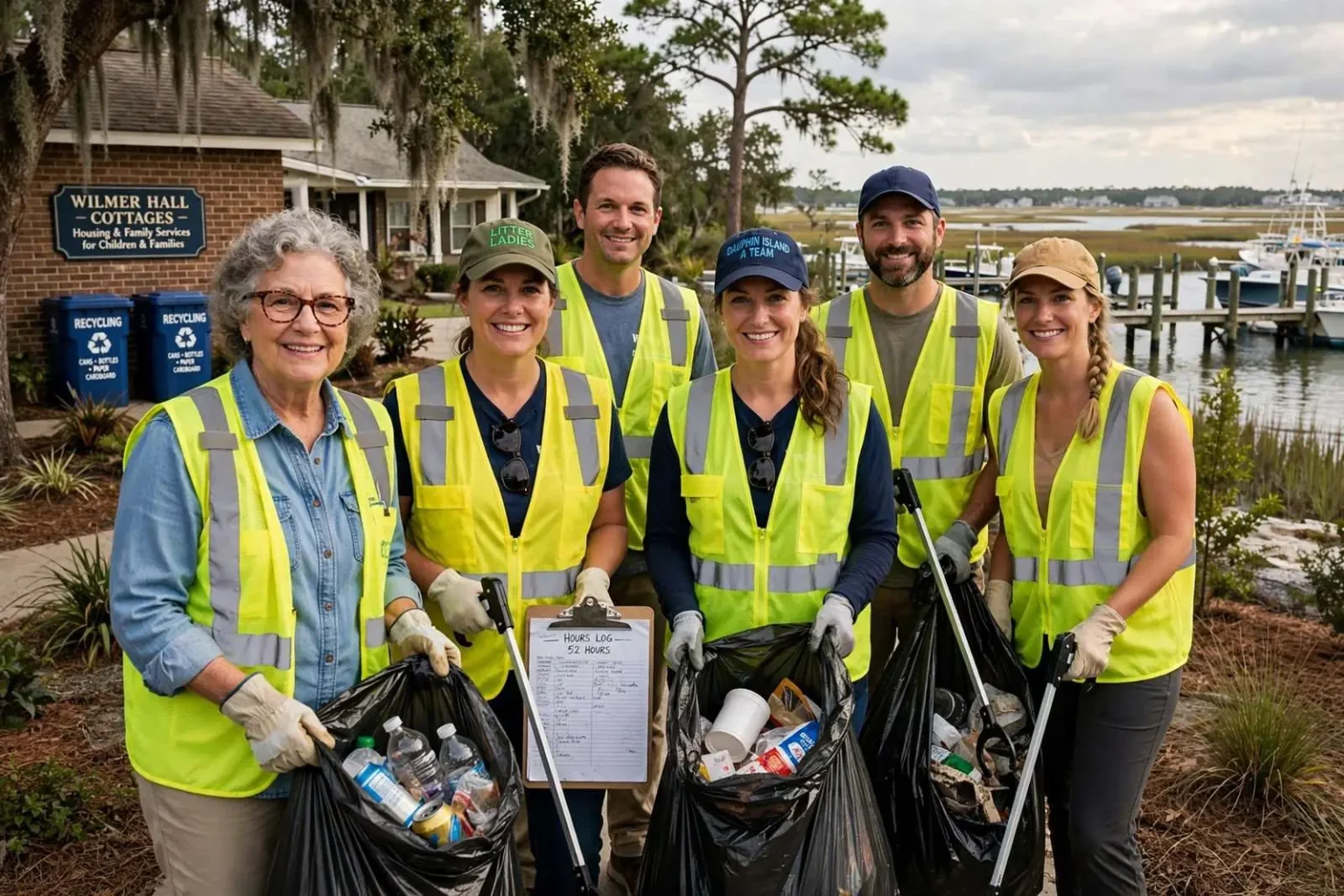
Two Mobile County volunteer teams are being recognized for their work picking up litter after each logged more than 50 hours of cleanup time. The Litter Ladies Team, led by Sallye Irving, and the Dauphin Island A Team, led by Cortney Leytham, each received $500 grants through the Love Your Community Program. The recognition puts a spotlight on the growing network of residents across Mobile County who spend their weekends and weekdays pulling trash from roadsides, ditches, shorelines, and neighborhood corridors, one bag at a time.
The Litter Ladies plan to put their grant money toward adding recycling bins at Wilmer Hall Cottages, the longtime Mobile nonprofit that provides housing and support services for children and families in need. Placing recycling containers at a residential facility serves a double purpose: it gives the young people who live and learn there a hands-on lesson in waste reduction, and it keeps cans, bottles, and paper out of the trash stream that too often ends up blown across nearby streets and storm drains.
For a volunteer group that has spent hundreds of combined hours collecting other people’s discarded trash, the choice of project tracks closely with the group’s broader message. Recycling infrastructure at community sites reduces the amount of loose litter that eventually has to be picked up by hand, and every bin added at a high-traffic location means fewer items migrating into drainage systems that feed Mobile Bay and the Tensaw Delta.
The Dauphin Island A Team will use its $500 grant to landscape an area near the Dauphin Island Marina, one of the busiest spots on the barrier island. The marina area draws anglers, boaters, birders, and tourists nearly year-round, and heavy visitor traffic tends to generate a steady supply of windblown cups, line clippings, bait bags, and food wrappers. A freshly landscaped strip does more than look tidy; maintained, attractive spaces have repeatedly been shown to deter repeat littering in a way that neglected lots do not.
Dauphin Island’s location makes the team’s work especially visible. As the first landfall for many storm systems in the Gulf and a gateway community for the Alabama Port and Bayou La Batre communities to its north and west, the island sees both seasonal crowds and storm debris. Volunteers there clear litter in an environment where trash does not just look bad, it can wash into sensitive marsh habitat and affect wildlife ranging from sea turtles to migratory shorebirds.
Grants reward sustained commitment, not one-day cleanups
The $500 grants are not handed out for a single Saturday effort. They are earned when a team crosses the 50-hour threshold of logged cleanup time, a bar designed to reward steady, sustained commitment to a particular community. Crossing that line means months of scheduled outings, coordination among team members, and repeated visits to the same roads and public spaces, which is exactly the kind of consistent presence that changes how an area looks and feels over time.
Leaders like Sallye Irving of the Litter Ladies and Cortney Leytham of the Dauphin Island A Team organize that consistency. Volunteer cleanup teams typically adopt corridors they return to again and again, learning which ditches collect trash after a rain and which bends in the road catch windblown debris. That local knowledge, built up over dozens of hours, is part of what the grant program is designed to recognize and encourage.
For the teams, the grant money also stretches far. Five hundred dollars covers safety vests, grabbers, gloves, trash bags, and the kinds of small but recurring expenses that volunteer groups otherwise pay out of pocket. For the two winning teams, it will fund lasting improvements, in the form of recycling bins at Wilmer Hall Cottages and new landscaping near the Dauphin Island Marina, rather than consumable supplies alone.
The Love Your Community Program, started in 2018 to encourage civic engagement against litter in the county, is funded by the Mobile County Commission and run with Keep Mobile Beautiful. The partnership pairs the commission’s funding reach with Keep Mobile Beautiful’s long experience organizing anti-litter campaigns, cleanup logistics, and volunteer education across the county.
Keep Mobile Beautiful has been the region’s most visible anti-litter organization for decades, coordinating large-scale community cleanups, school programs, and illegal dumping enforcement support. Affiliates in the Keep America Beautiful network like it operate on the principle that litter reduction works best when local government, businesses, and residents each own a piece of the problem. The Love Your Community Program is a direct expression of that model: county dollars flow to the grassroots teams doing the actual pickup work, and the organizing nonprofit supplies structure, tracking, and recognition.
The Mobile County Commission’s decision to fund the program reflects how costly litter and illegal dumping have become for the county. Crews and equipment that clear dumped mattresses, tires, and household garbage from rural roads and hidden easements cost taxpayers real money, and littered corridors depress property values and discourage investment in unincorporated communities from Citronelle to Grand Bay. A grant program that pays $500 to a volunteer team that prevents hundreds of pounds of trash from accumulating is, on its face, an inexpensive intervention with a visible return.
How the Time Bank tracks every hour
At the center of the program is its Time Bank, the ledger where participating teams log their cleanup hours. Sixty-one teams are now part of the program’s Time Bank, with about ten closing in on the 50-hour grant threshold. That number has grown steadily as word spreads through civic clubs, churches, neighborhood associations, and coastal communities, and it means the program now reaches every corner of the county, from downtown Mobile neighborhoods to the western shore communities and the island.
The Time Bank does more than tally numbers. It gives the county and Keep Mobile Beautiful a running picture of where volunteer coverage is strong and where gaps remain, which helps when planning supply drop-offs, safety equipment, and special cleanup events. It also creates a friendly competitive element, as teams watch their hour totals climb toward the next grant threshold.
For the roughly ten teams now approaching 50 hours, the two newest grantees offer a preview of what is ahead. Each completed team received the same $500 grant, and each chose a project that leaves something permanent behind. Teams near the threshold are already discussing similar plans, from benches and plantings at community entrances to signage and additional recycling access at gathering spots.
Program organizers have consistently emphasized that the grants are meant to be a catalyst rather than a ceiling. Teams that reach 50 hours generally do not stop there; they keep logging time because the routes they adopted stay dirty if they don’t. The two recognized teams were singled out not just for crossing the threshold but for the pattern of service it represents.
Why volunteer cleanup matters in Mobile County
Mobile County’s geography makes litter control a year-round job. Rainfall is abundant, drainage ditches line the roads in both city and county neighborhoods, and stormwater carries roadside trash directly into creeks, the Mobile-Tensaw Delta, and Mobile Bay. What starts as a cup tossed from a car window in Prichard or a bag blown out of a truck bed in Irvington can end up as floating debris in the bay within days.
Volunteer teams interrupt that pipeline. Beyond the immediate visual improvement, regular cleanup crews keep storm drains from clogging, which reduces neighborhood flooding during heavy rain events. They also remove hazards, such as glass and sharp metal, from road shoulders where cyclists and pedestrians travel, and they eliminate the accumulated piles that attract further dumping.
There is a social dimension as well. Residents who see a team working a road week after week are measurably less likely to litter there themselves, and more likely to report illegal dumping when it happens. The presence of an organized group with a name, a leader, and a logbook turns litter pickup from an anonymous chore into a community institution.
The recognition of the Litter Ladies Team and the Dauphin Island A Team also highlights the range of communities now represented in the program. One of this year’s grant recipients works in an urban institutional setting in the city of Mobile, while the other maintains one of the county’s most visited coastal destinations. The program’s 61 registered teams span an even wider map, reflecting how broadly the litter problem, and the willingness to fight it, extends across the county.
County officials have framed the Love Your Community Program as a way to give residents a direct tool for improving their own neighborhoods rather than waiting on municipal crews. The model is simple: a team organizes, registers with the Time Bank, logs hours as it works, and earns grant money it can reinvest in its community. The county supplies funding and the organizing partner supplies coordination, but the initiative comes from the neighborhoods themselves.
Getting involved
For residents interested in joining the effort, the program’s structure lowers the barrier to entry. Teams can form around a single road, a school zone, a park, or a stretch of shoreline, and leaders handle the registration and hour-logging paperwork. Supplies such as bags, vests, and grabbers are standard parts of the program’s support for active teams, and the 50-hour threshold is within reach for a group that holds even one or two cleanups a month.
The two newest grantees illustrate how small the starting commitment can be. Both teams began with a handful of neighbors and a shared frustration over litter in their communities, then built the kind of hour totals that qualify for recognition through repetition rather than marathon events. Their example is the working advertisement for the program: teams that show up regularly end up with a grant, a cleaner community, and a project that lasts.
With about ten teams closing in on the 50-hour mark, the next round of grant recipients is likely already at work somewhere in the county, filling bags on a roadside in Theodore, Semmes, Axis, or along the Causeway. When they cross the line, the Love Your Community Program will add their names to the growing list of Mobile County volunteers whose logged hours are translated into visible, permanent improvements, from recycling bins at Wilmer Hall Cottages to fresh landscaping by the water on Dauphin Island.
The $500 checks will soon convert into bins at a children’s cottage campus and new plantings by a busy marina, but the larger return accrues to the county as a whole. Every hour in the Time Bank represents trash that never reached a drainage canal, a marsh edge, or a roadside ditch, and every completed project makes a small piece of Mobile County harder to litter and easier to love.