Retired Mobile Firefighters Spend Their Week Building Wheelchair-Height Garden Beds at the Mulherin Home
Members of the Mobile Fire Retirees Association planted fruit trees and built raised, wheelchair-accessible garden planters at the Mulherin Home this week — and put out a call for fresh produce donations.
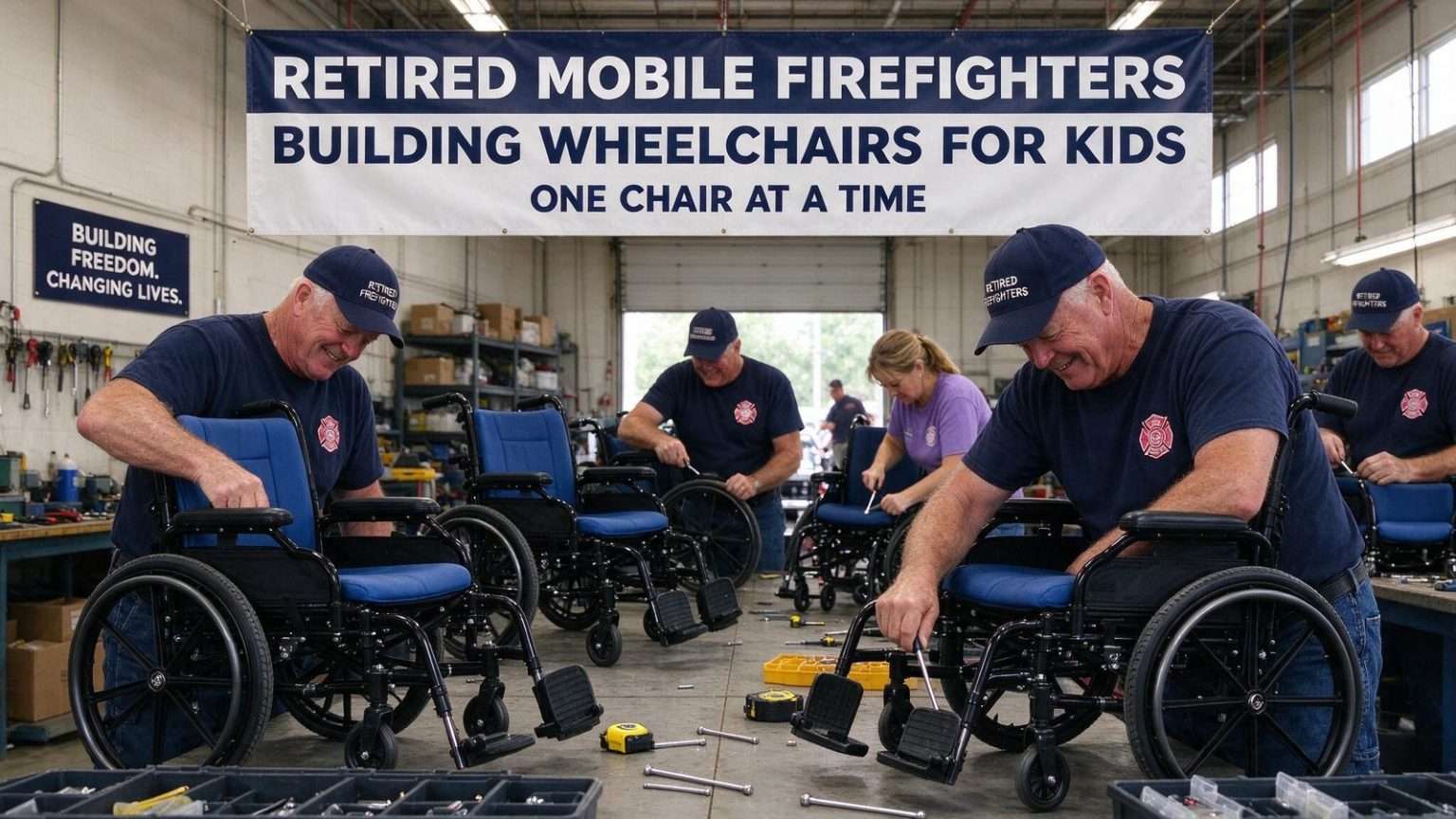
Retired Mobile firefighters are spending their week building wheelchairs for children with disabilities, transforming a workshop into a custom assembly line that produces mobility equipment tailored to the specific needs of each child who will receive one. The project is part of a national program that has matched volunteer builders with children who need custom-fitted mobility equipment, and the Mobile team is among the most active in the country.
How the Build Works
The volunteer builders work from a kit of parts that includes a frame, wheels, seating components and accessories tailored to the child’s measurements and medical needs. The assembly process takes most of a week, with volunteers rotating through the different stations to apply their particular skills, and the finished wheelchair is then fitted to the child in a final session that includes adjustments and family training.
Each chair is built to order based on a specific child’s measurements and needs, which means the volunteers are doing real engineering work rather than simply assembling identical chairs. The adjustments include seat depth, back angle, footrest position and a range of other specifications that determine how well the chair will fit the child and how effectively it will support their mobility.
Why Mobile Firefighters Got Involved
Mobile’s retired firefighters have a long history of community involvement, and the wheelchair build is the kind of hands-on volunteer work that fits the group’s skill set. Firefighters are accustomed to working with tools, following technical specifications and collaborating on projects that require attention to detail, and the chair-building process rewards those skills.
The group learned about the national program through their existing networks and decided to host a build in Mobile. The first build was a success, and the group has continued to host annual builds that have produced dozens of chairs for children across the region.
What the Week Looks Like
The build week typically begins with the arrival of the kits and the setup of the workshop space, which is usually donated by a local business or community organization. Volunteers then spend the next several days assembling the chairs, with shifts that run from morning into the afternoon and that accommodate volunteers who want to contribute a few hours or a full day.
By the end of the week, the chairs are ready for delivery, and the families whose children will receive the chairs are invited to a fitting session where the children try out their new chairs and the volunteers make any final adjustments. That session is typically one of the most rewarding parts of the build for the volunteers, who get to see the children experience the mobility that the chairs provide.
How the Children Are Selected
The children who receive the chairs are typically referred to the program by medical professionals, schools and social service agencies that work with children who need custom mobility equipment. Insurance coverage for custom-fitted chairs can be limited, and the volunteer-built chairs fill a gap for families who cannot afford the out-of-pocket cost of a commercial chair or whose insurance does not cover the specific configuration their child needs.
The volunteer builders work closely with the families and the referring professionals to make sure each chair is built to the specifications that will best serve the child. The process includes an initial assessment, the build itself and the fitting session, with the volunteers remaining available for follow-up adjustments as the child grows and their needs change.
What It Means to the Families
For the families who receive the chairs, the program provides more than just a piece of mobility equipment. The chairs are built specifically for their children, with the kind of customization that commercial chairs often cannot match without significant additional cost. The families also get the satisfaction of seeing a community of volunteers come together to support their child’s mobility.
For many of the children who receive the chairs, the new equipment represents a significant upgrade from what they had been using, whether that means a better fit, more functionality or simply a chair that is in good working order. The volunteer builders hear stories from families about how the chairs have changed daily life, from making it easier to navigate school to enabling outings that were previously difficult.
How to Get Involved
The Mobile build is supported by volunteers who contribute their time and by donations from local businesses and individuals who fund the purchase of the chair kits. Anyone who wants to volunteer for future builds can reach out to the organizers through the local retired firefighters’ association, and donations can be made through the association’s charitable arm.
The build is also a useful model for other communities that want to bring similar programs to their area. The national organization that supports the build provides training and resources, and local volunteer groups can partner with schools, medical facilities and social service agencies to identify children who would benefit from the chairs.
How the Skills Transfer
The volunteers who build the chairs bring a wide range of skills, and the program is structured so that each volunteer can contribute in a way that matches their experience. People with mechanical or carpentry backgrounds can work on the structural assembly, while those with backgrounds in seating, padding or upholstery can focus on the comfort components. Volunteers with less technical experience can assist with logistics, materials handling and quality checks, and family members and friends of the volunteers often join in to help with the simpler tasks.
The collaborative nature of the build is part of what makes the experience rewarding. Volunteers who might not otherwise have a chance to work on a project of this kind get to apply their skills in a setting where the impact is immediate and visible. The build also creates opportunities for volunteers to learn from one another, with experienced builders mentoring first-timers and the whole group working together to solve problems as they arise.
The Fitting Day
The week culminates in a fitting day that brings the children and their families together with the volunteers. The children try out their new chairs, and the volunteers make any final adjustments to ensure that the fit is right. For many of the children, this is the first time they have had a chair that fits them properly, and the moment they realize how much easier it is to move around is one of the most powerful parts of the build.
Families leave the fitting day with a chair that is ready to use, along with documentation about the chair’s specifications and instructions for any adjustments they can make on their own. The volunteers typically follow up with the families over the coming weeks and months to make sure the chair is working well, and they remain available for additional adjustments as the child grows or their needs change.
Why Mobile’s Program Stands Out
Mobile’s retired-firefighter wheelchair build is one of a number of similar programs across the country, but it has earned a reputation for the quality of the chairs it produces and the dedication of the volunteers who run it. The group’s commitment to getting the fit right for each child has made it a trusted partner for the medical professionals and social service agencies that refer families to the program.
For Mobile, the build is also a visible example of the kind of volunteer work that retired public-safety professionals take on. The retired firefighters’ association is active in a wide range of community projects, and the wheelchair build is one of the most visible. The program’s reputation has helped attract new volunteers and new donors, which has made it possible to keep the annual builds running and to expand the number of chairs produced each year.
Looking Ahead
Future builds are planned for the coming years, with the volunteer group aiming to continue producing chairs for children across the region. The program has also explored partnerships with local schools and therapy providers to expand the number of families served and to make sure that the chairs produced match the clinical recommendations of the children’s medical teams.
For families interested in learning more about the program or referring a child for a future build, the local retired firefighters’ association can provide information about how the application process works and what kinds of documentation are typically required. Volunteers who want to support the program through donations or by contributing their time can also reach out through the association’s regular channels.
The Broader Impact of the Program
The retired firefighters’ wheelchair build is part of a broader network of community programs that connect skilled volunteers with families who need custom-fitted equipment. The national organization that supports the build has trained volunteer groups in cities across the country, and the Mobile program has become one of the more established builds in the Southeast. Local media coverage of the annual build has helped raise awareness of the program, and the program’s reputation has brought in referrals from social workers and medical professionals well beyond Mobile County.