Mobile Mayor Teases Possible Return of Carnival Cruise Line
Mobile Mayor Sandy Stimpson hinted at bringing a Carnival cruise ship back to the city after visiting the cruise line's Miami headquarters this week.
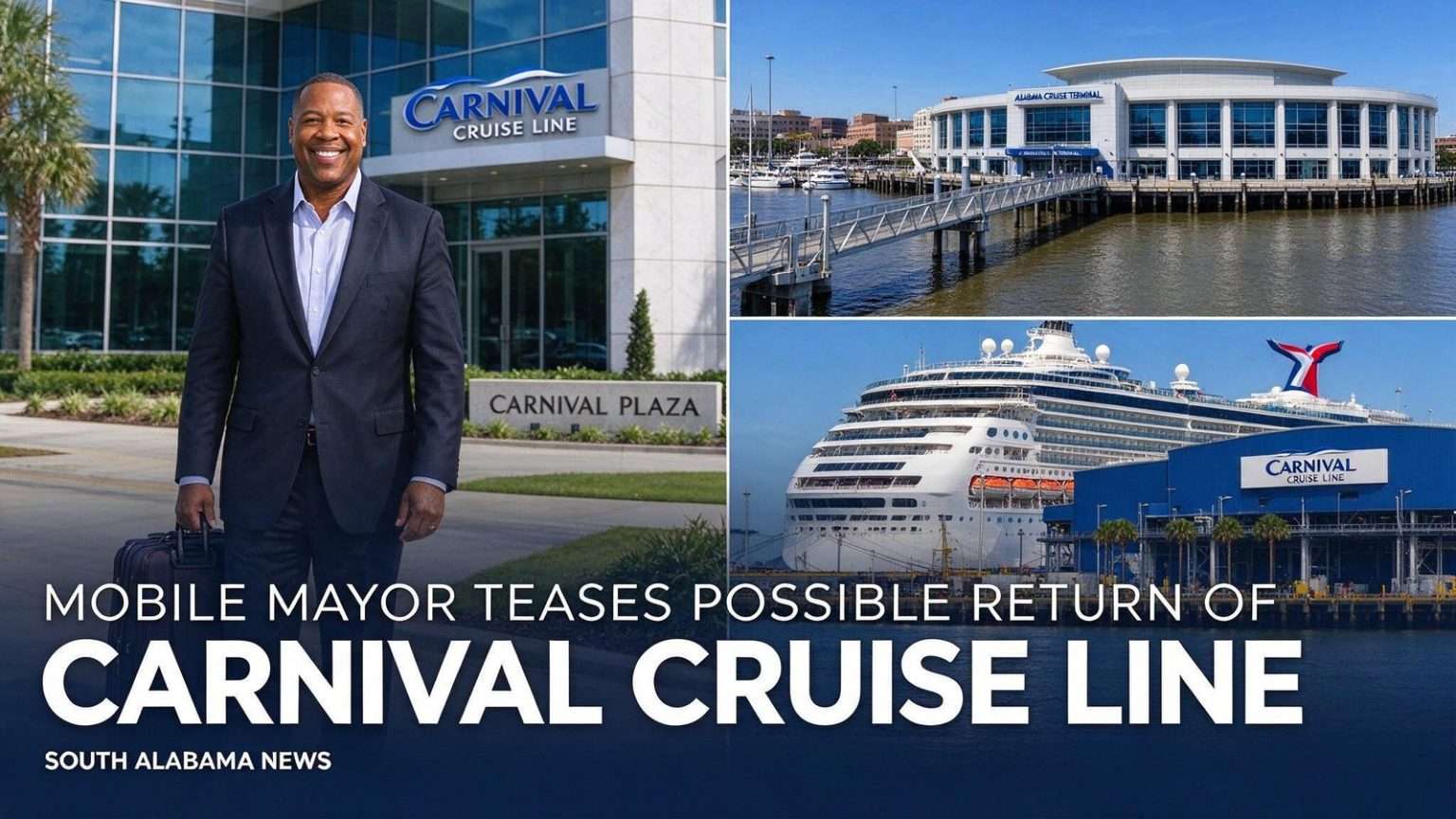
Mobile Mayor Sandy Stimpson sparked speculation about the possible return of cruise ship service to the city after posting a photo from a visit to Carnival Cruise Line’s headquarters in Miami. The social media post sent ripples through a downtown that has watched its waterfront terminal sit largely idle for regular sailings, and it set off a round of speculation that city hall made no move to quiet.
The visit came on the heels of Stimpson’s new tourism initiative aimed at positioning Mobile as a stronger travel destination. The mayor has framed the effort as an economic development play, arguing that every visitor Mobile attracts multiplies into hotel nights, restaurant meals and sales tax revenue that the city currently leaves on the table.
Word of the Miami trip, given Carnival’s presence there along with several other major cruise operators, quickly led residents and observers to connect the dots about what the mayor might be planning. Within hours of the post, comments and shares were stacking up from residents who remember when cruise ships were a routine sight on the Mobile River.
Stimpson fueled the speculation directly, posting an image of himself outside Carnival’s headquarters with a playful caption asking how he would “fit this in my suitcase.” The post offered no further details, but the timing and location were enough to generate buzz around the possibility of cruise service returning to the Alabama Cruise Terminal.
City officials did not release additional information at the time, but a press conference was scheduled for the mayor’s return to Mobile, when more concrete details were expected to be shared publicly.
A Terminal Waiting for Ships
The prospect of renewed cruise activity carries particular significance for Mobile’s downtown waterfront. The Alabama Cruise Terminal, built years earlier to host regular cruise ship departures, has instead spent much of its recent history hosting proms, charity galas and other private events rather than the ship traffic it was designed for.
The facility was constructed with ocean-going vessels in mind, complete with customs and boarding infrastructure, and its underuse has been a recurring topic at city council budget discussions. Maintenance and debt service on the terminal continue regardless of how many events it books, making the search for a cruise partner an economic question as much as a tourism one.
Mobile previously hosted Carnival sailings for years before the line redeployed its Mobile-based ship, a change that local officials at the time attributed to the company’s broader fleet decisions rather than any failing of the local market. Since then, city leaders have made repeated attempts to lure cruise operations back, and each effort has been met with interest from residents who remember the ships departing from downtown.
The Tourism Push Behind the Trip
In outlining his broader tourism push, Stimpson pointed to the economic upside such initiatives could bring to the region, including job creation in the hospitality sector, increased visitor numbers, higher hotel occupancy and additional tax revenue for the city. The initiative treats tourism as a coordinated effort — conventions, festivals, historic attractions and the waterfront all marketed together — rather than a series of one-off promotions.
Mobile’s hospitality industry has grown around attractions like the USS Alabama Battleship Memorial Park, the historic districts south of Government Street and a downtown entertainment scene centered on Dauphin Street. Cruise service would plug directly into that mix, since embarkation days fill hotels and restaurants with passengers arriving the night before departure.
City officials have pointed to peer ports along the Gulf Coast when making the case, noting how cruise operations anchor broader tourism economies in neighboring markets. Whether Mobile can recapture that role depends on decisions made far from the Alabama Cruise Terminal, in the corporate offices the mayor visited in Miami.
Support From Washington
The tease drew reaction from local political figures as well. U.S. Rep. Bradley Byrne publicly offered his support for the effort on social media shortly after Stimpson’s announcement, signaling backing from Mobile’s congressional delegation for the tourism push. Federal support matters in cruise-related matters, from customs operations to port infrastructure funding that can flow through federal channels.
Byrne’s endorsement added weight to the mayor’s Miami trip, and other local officials echoed the sentiment, arguing that Mobile’s deepwater port and highway connections make it a natural cruise embarkation point for cruisers across the central Gulf Coast who currently drive to New Orleans or Florida to sail.
Residents eager for more detail were left waiting for the scheduled announcement, with many hoping the hints translated into a firm commitment to bring regular cruise ship service back to the Mobile waterfront after years of an underused terminal.
Why Cruise Service Matters Downtown
When cruise ships sailed regularly from Mobile, downtown businesses built their weekends around embarkation days. Parking lots filled, restaurants served early dinners to families boarding afternoon departures, and hotels offered park-and-cruise packages that kept rooms occupied through the week. Merchants have long told city officials that the return of that traffic would be felt immediately along Dauphin Street and in the business district that grew up around the convention center.
The Alabama Cruise Terminal sits on the riverfront within walking distance of that district, a location advantage that port cities elsewhere have used to full effect. City leaders have also noted that cruise operations would put the terminal’s customs and security infrastructure back to work, capacity that currently sits unused while the building hosts proms and charity galas on weekends.
What the Mayor’s Announcement Could Include
Until the press conference, city officials declined to say what the Miami visit produced. A firm cruise contract, an exploratory agreement or simply the start of a longer negotiation are all possible outcomes of a headquarters visit, and mayors in port cities have learned not to promise sailings before the paperwork is signed.
What residents do know is that the mayor made the trip in person, posted about it publicly and scheduled an announcement on his return — a sequence that suggests the tourism initiative has a waterfront centerpiece. Stimpson has made downtown revitalization a theme of his administration, and recapturing the cruise business has been a standing item on the city’s economic development wish list since the terminal went quiet.
Waiting on the Waterfront
For now, the speculation continues. Local social media has been filled with memories of past sailings and wish lists of destinations residents would like to see, from the western Caribbean itineraries that once operated out of Mobile to shorter Gulf cruises that would appeal to first-time cruisers across the region.
The mayor’s office has promised details when he returns to Mobile, and city hall watchers expect the announcement to address both the tourism initiative and the terminal’s future. Whether the suitcase caption turns out to be a negotiation that closed or a courtship that continues, the episode has already accomplished one thing: it put the Alabama Cruise Terminal back at the center of the city’s conversation about its waterfront.
South Alabama News will provide coverage of the mayor’s announcement and any details about cruise service returning to Mobile as they are released.
The History of Cruising From Mobile
Mobile’s run as a cruise port showed both the promise and the fragility of the business. The Alabama Cruise Terminal opened along the riverfront with Carnival as its anchor, and for years the city was a departure point for Gulf itineraries that drew passengers from across Alabama, Mississippi and the Florida panhandle. The arrangement put Mobile on the same map as much larger Gulf ports and gave the city a regular stream of out-of-town visitors who arrived, parked and often stayed a night on either side of their voyage.
When the line redeployed its Mobile-based vessel, the terminal was left without a regular tenant, and the city began searching almost immediately for a replacement. Successive administrations have kept the effort alive, working through port authorities, economic development groups and direct contacts with the cruise industry, but no long-term sailing schedule has returned to the riverfront since.
The terminal’s second life as an event venue has kept the lights on, but officials have never described it as the building’s purpose. Proms, charity galas and corporate gatherings pay the bills, while the customs facilities and boarding infrastructure built for ships sit idle most weeks of the year.
What a Return Would Require
Bringing a cruise line back involves more than an invitation. A sailing schedule requires a committed vessel, staffing for customs and security, parking capacity for week-long departures and agreements on the fees and revenue splits that make the operation viable for both the line and the city. Ports across the Gulf compete for the same limited number of ships, and the terms a city can command depend on its market reach.
Mobile’s pitch rests on geography: a deepwater riverfront minutes from Interstate 10, a draw region that includes hundreds of thousands of residents within a two-hour drive, and a downtown that has grown far more visitor-friendly since the last ship sailed. The mayor’s Miami visit suggests the city believes the industry is again willing to listen.
Until the announcement, city officials have declined to characterize the talks, and the mayor’s playful caption remains the only official clue about what, if anything, is coming back to the Alabama Cruise Terminal.