
Mobile Vacationers Ride Out Category 5 Hurricane Irma on Antigua
Two Mobile couples weathered Category 5 Hurricane Irma while vacationing on Antigua as the record-breaking storm swept across the Atlantic.
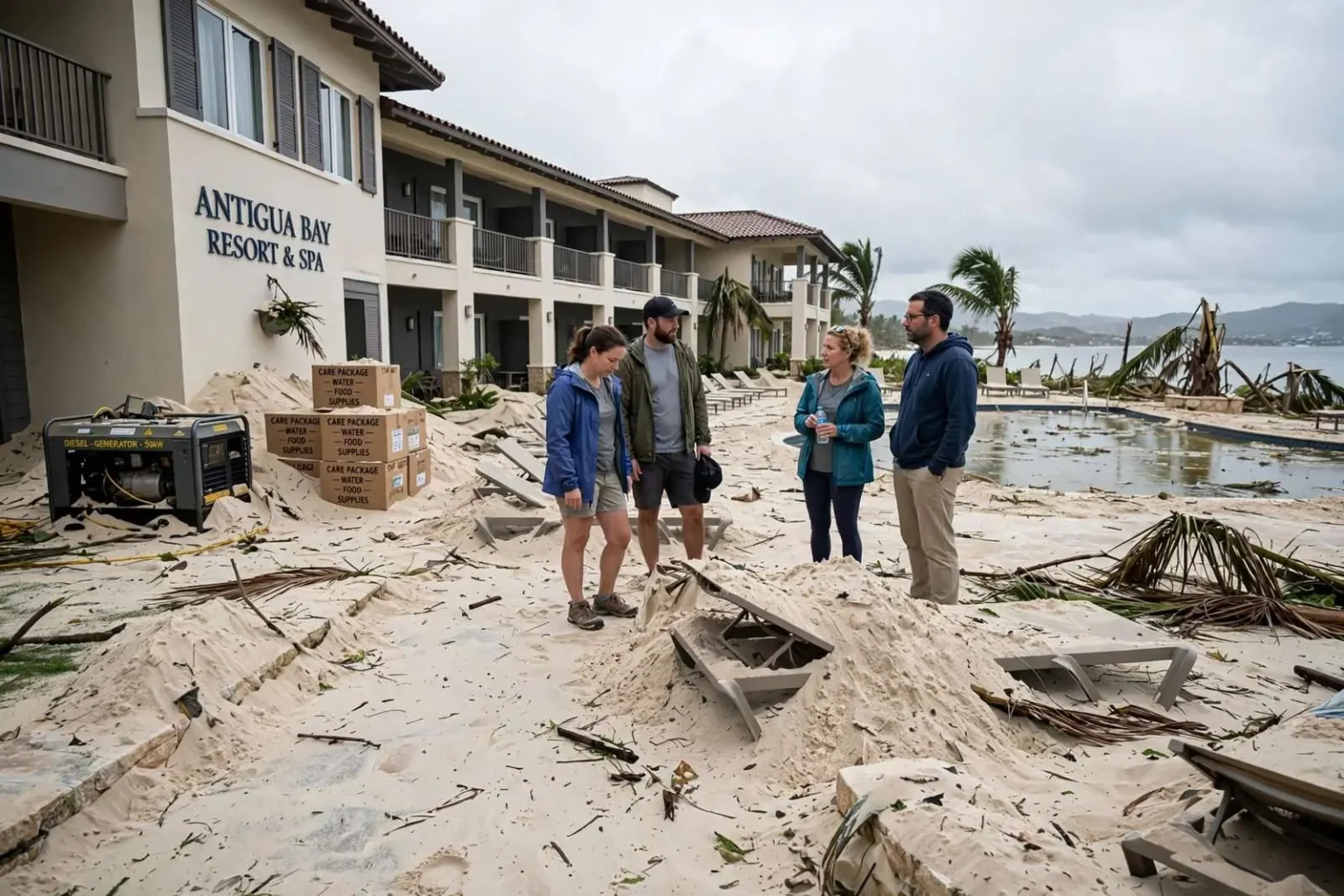
Two couples from Mobile spent their Caribbean vacation hunkered down inside a resort as Hurricane Irma — then the strongest hurricane ever recorded in the Atlantic — hammered the island of Antigua east of Puerto Rico. What was supposed to be a relaxing getaway turned into an unplanned lesson in island survival, as one of the most powerful storms in modern recordkeeping bore down on the Leeward Islands with sustained winds that topped every previous Atlantic measurement.
The couples’ itinerary put them in the storm’s path by accident of timing rather than recklessness. Antigua sits in the northeastern Caribbean, an island of roughly 108 square miles known for its 365 beaches — one for every day of the year, locals like to say — and for a tourism economy built on sailing, resorts and warm-water escapes. September sits at the statistical peak of the Atlantic hurricane season, when sea surface temperatures across the tropical Atlantic reach their highest and the conditions that spin up major hurricanes align most reliably. Travelers in that window generally accept a modest risk; in 2017, that risk arrived in historic form.
Kim Boruty, one of the Mobilians on the trip, said everyone at the resort came through the storm safely, though many locals on the island dealt with flooded homes. That split experience — guests riding out the storm in a sturdy resort while island residents faced water in their own houses — was one of the defining features of Irma’s passage through the region. Visitors could count themselves fortunate to be on high ground in modern construction; for Antiguans whose homes sat in low-lying areas, the flooding that followed the wind and rain meant damaged belongings, ruined floors and months of recovery in a small island economy.
‘We slept through most of it’
Boruty said the category 5 storm was less terrifying than expected from inside the resort, which fared well overall. “A couple times the wind rattled the doors, the glass doors, but it wasn’t really bad, we slept through most of it,” she said. “Some of the people in some of the taller buildings felt the sway of the building as the winds kicked up, but we did not.” Her account reflects the strange disorientation of riding out a major hurricane in solid construction: a storm catastrophic enough to make international headlines can sound, from behind well-sealed glass doors, like little more than an endlessly howling night.
That contrast between perception and reality is worth underlining. By every meteorological measure, Irma was historic — a storm with sustained winds near 185 mph that held category 5 strength longer than any hurricane on record in the Atlantic basin. Guests who slept through the worst of it at a well-built resort were not experiencing the same storm that tore apart islands to the east; they were experiencing the margin that good construction and good fortune provide. Buildings in the Caribbean are built to demanding hurricane codes for exactly this reason, and the resort’s performance showed the value of that engineering.
The morning after
The aftermath was visible everywhere outside: sand blown across much of the resort’s lawns. Boruty measured roughly a foot to a foot and a half of it. The image captures the peculiar physics of a hurricane’s landfall — a storm surge and sustained winds that lift a beach and redeposit it across gardens, walkways and pool decks, transforming manicured resort grounds overnight. In a matter of hours, landscaping that takes years to establish can be buried under the very sand that draws guests to the island in the first place.
Resort staff handed out care packages so guests could stay sheltered in their rooms overnight, and the property had a generator stocked with enough diesel fuel for several days. That preparation is the difference between an inconvenience and an emergency. Hurricanes routinely knock out power across entire islands, and on a small territory like Antigua, restoration can take days or weeks depending on the damage to transmission lines. A resort that has planned for the contingency — fuel on hand, food staged, guests informed — can keep its visitors sheltered and fed while the island around it begins the harder work of recovery.
The staff’s performance through the storm also speaks to a reality of Caribbean hospitality that most visitors never see: hotel employees are not just serving guests during a hurricane, they are living through it themselves, with their own homes and families exposed to the same wind and water. The care packages that reached guest rooms during the storm were carried by people who would, the next morning, be checking on flooded neighborhoods of their own.
Getting home
Boruty was scheduled to fly home that Thursday — but with Irma still carving a destructive path across the Atlantic, she worried her flight path might cross the storm a second time. “That’s definitely a possibility, and a concern,” she said. The worry was well founded. Irma’s westward track meant that airports and air corridors across the region were closing or operating under threat for days, and travelers throughout the Caribbean faced cancellations, rebookings and route changes as airlines weighed whether aircraft and passengers could safely transit the storm’s edges.
The logistics of getting home during a major hurricane are more complicated than most travelers realize. Airlines pull aircraft out of the projected path days in advance, and airports in the storm’s corridor close to all but the most essential flights. For vacationers stranded behind the storm, seats out can be scarce: scheduled flights fill instantly with displaced travelers, and charter options carry prices to match. The Mobilians’ experience — a planned Thursday departure suddenly clouded by a storm that would not leave the region — was being repeated by thousands of other visitors across the Leeward Islands, Puerto Rico and beyond that same week.
Her final concern — that the flight home might itself cross the storm — captured a detail that only hurricane-season travelers think about. Storm avoidance is not just about where you are; it is about where you have to fly to get anywhere else. Airlines reroute around the edges of major systems when they can, adding hours and burning fuel, and they ground routes entirely when the forecast leaves no clean corridor. For a traveler on a small island with limited daily departures, a single day of cancelled flights can turn into a week of waiting, which is exactly why visitors throughout the Caribbean spent that week refreshing airline websites and rebooking through regional hubs.
Even so, she was glad she made the trip. “We did get to experience a few days in paradise — gorgeous weather, beautiful beaches and wonderful people,” she said. “It’s just the last couple of days that weren’t so great.” It is a fair summary of what storm-season travel to the Caribbean means. The same warm waters that make the region a paradise from winter through summer are the fuel that powers hurricanes from June through November, and September — the climatological peak of the Atlantic season — is when the two realities most often collide.
A historic storm season
Irma’s passage marked a singular moment in Atlantic hurricane history. Records set by the storm — its sustained intensity, its duration as a category 5 system, its accumulation of Accumulated Cyclone Energy — placed it at or near the top of every major measuring stick, and its destruction across Barbuda, Saint Martin, the Virgin Islands and the Florida Keys made it one of the costliest hurricanes ever recorded. For Antigua, the storm’s brush with the island was a serious blow, particularly to low-lying neighborhoods and the electrical grid, but far less catastrophic than what neighboring Barbuda suffered, where the storm’s direct passage forced a full evacuation of the island for the first time in its modern history.
The Mobile travelers’ story carries a practical lesson for anyone planning Caribbean travel during hurricane season. Travel insurance that covers storm interruptions, a resort with a documented hurricane plan, and the flexibility to accept a changed itinerary are the difference between an ordeal and an adventure. The region’s resorts have invested heavily in storm readiness precisely because September travel remains part of the business, and guests who understood that — as the Mobilians clearly did — rode out a historic storm in comfort and flew home with a story none of them had planned for.
For the two Mobile couples, the trip delivered everything a Caribbean vacation promises — sun, sand and hospitality — plus a chapter they never expected: sheltering through the strongest Atlantic hurricane ever measured, sleeping through the worst of it, and watching a beach migrate across the lawn. It was not the itinerary they booked, but it is one they will not forget.


